IIJS Bharat 2026 Notes: Where Lab Grown Diamonds Are Headed

Vinamra Gupta
Author
You cannot offer the best price in the world unless you know what the world is charging. So we go find out, at the source, every time. These are my notes from the floor.

[Journal]

I spent this past week in Mumbai at IIJS Bharat Premiere 2026, the biggest gem and jewelry trade show on earth after Hong Kong. Five days, two venues, the Jio World Convention Centre in BKC and the Bombay Exhibition Centre in Goregaon, more than two thousand exhibitors across three thousand six hundred stalls, and somewhere north of fifty thousand trade visitors from over sixty countries.
I did not go to buy a booth or shake hands for photos. I went to do what our family has done for over 35 years in this trade: walk the floor, sit with growers and cutters, compare goods against prices with my own eyes, and come home knowing more than I left with.
This is the part of Lab Grown Dreams that customers never see, and it is exactly the reason we can sell certified lab grown stones in Bangkok at prices that make people double check the tag. You cannot offer the best price in the world unless you know what the world is charging. So we go find out, at the source, every time. These are my notes from the floor.

Why a Bangkok Dealer Flies to Mumbai
Let me explain the geography of this trade for a second, because it is the foundation of everything else in this article.
India cuts and polishes the overwhelming majority of the world’s diamonds, and over the past few years it has also become the beating heart of lab grown production. The growing reactors, the cutting factories, the export machinery, an enormous share of it runs through India. Mumbai and Surat are to diamonds what Bangkok is to colored stones.
So when the entire Indian industry gathers in one place for five days, that floor becomes the single most honest picture of where the lab grown market actually is. Not where a marketing report says it is. Where it is, in goods and numbers, stall after stall.
Bangkok gives us our workshop, our cutting tradition, and our position in the Jewelry Trade Center where the Southeast Asian trade happens. Mumbai gives us the sourcing intelligence. Put the two together and you get what our customers experience: certified stones at factory prices, because we buy the way the trade buys, informed and at the source, and we sell with no middleman on top.

Observation One: Lab Grown Is Not a Section Anymore, It Is the Show
A few years ago, lab grown had a corner at shows like this. A designated zone you could walk past. Not anymore. Lab grown material was everywhere at IIJS 2026, woven through the entire exhibition, from loose goods to finished jewelry to the machinery halls where the growing and cutting equipment itself was on display.
That last part matters more than people realize. When a country’s machinery expo fills with equipment for growing and processing lab grown diamonds, you are not looking at a trend. You are looking at infrastructure. Trends reverse. Infrastructure does not.
For buyers, the signal is simple. The industry has voted with its capital, and the debate you still hear at retail counters about whether lab grown is here to stay was settled on floors like this one a while ago. I said the same thing when gemological institutes started coming to us to study lab grown material. The rooms where the trade actually thinks have moved on. Only the rooms where the trade sells at four times markup are still arguing.
Observation Two: Quality at the Top End Keeps Climbing
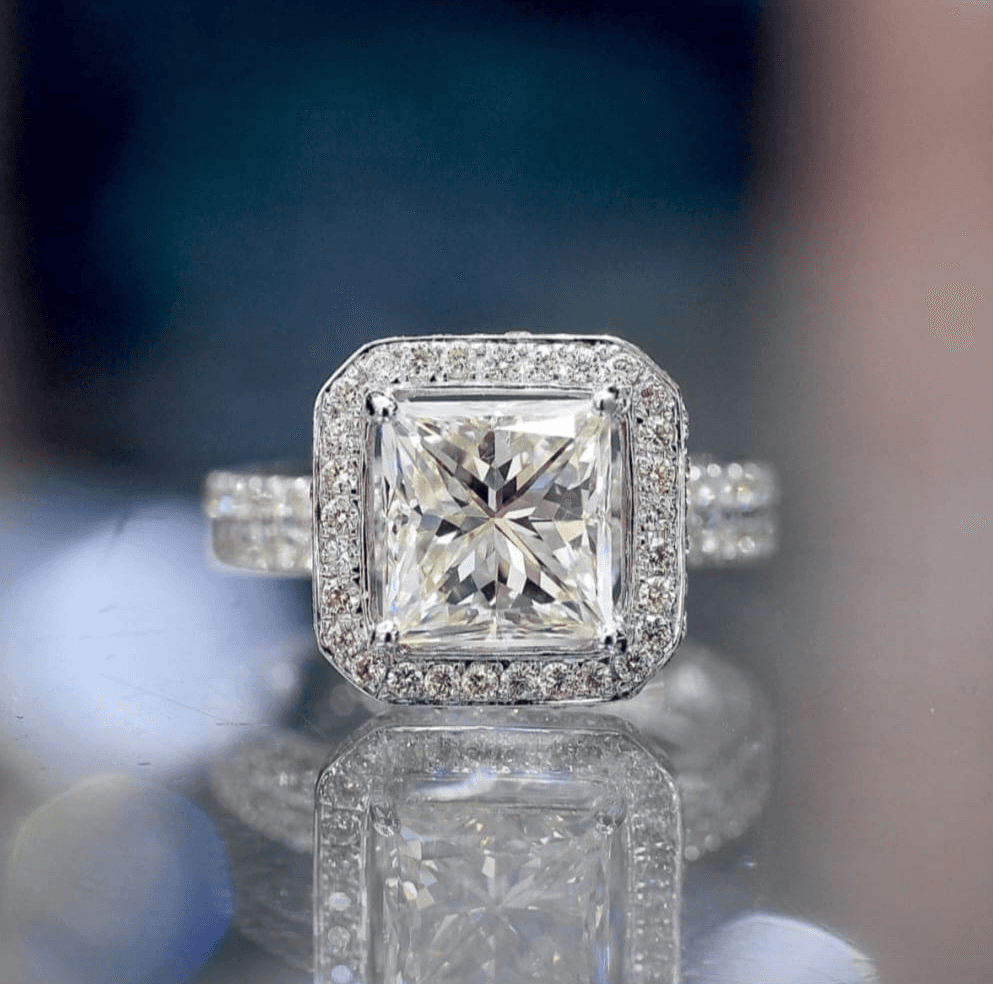
The most exciting thing I saw in Mumbai was not price. It was quality. The best CVD material on that floor was simply spectacular. Color, clarity, cut precision from Indian factories that have spent decades perfecting their craft on mined goods and now point that entire skill base at grown material.
This is what I keep telling customers who saw a dull lab grown stone somewhere in 2021 and made up their minds. The material has moved. The gap between an average grower and a great one is wide, and it shows up in the stone on your hand. Which is exactly why sourcing matters, and why we select stones in person rather than ordering from a catalog. Every stone that reaches our counter at JTC survived a comparison against hundreds of others, first at shows like this, then under our own loupe. The ones that did not survive are being sold by somebody else.
The same climb is happening in lab grown color. The emerald, ruby, and sapphire material we cut in Bangkok gets better every year, and the interest we saw in lab grown color at the show tells me the world is catching on to what we have been saying: the colored stone story might end up even bigger than the diamond one.
Observation Three: Prices Keep Finding Their Honest Level
Here is the observation that affects your wallet directly. Lab grown prices at the production level continue to slide as capacity grows and efficiency improves. Every season, the same money buys a bigger, better stone at the source.
Now the uncomfortable question: is that drop reaching you? Walk into a retail showroom in most of the world and the answer is no, or not fully, or not yet. Retail prices move down slowly and reluctantly, because every layer between the factory and the display case has a margin to protect. The wider the gap between source price and street price, the more the middle layers earn.
This is the entire reason Lab Grown Dreams is built the way it is. When we buy at the source with current information from the floor at Mumbai, and sell directly from our own office at JTC with no middleman in the chain, the honest price reaches you the same season it reaches us. Our price list is not a discount off retail. It is the real number, published, which is why we put our CVD price list online where anyone can check it.
I also keep this honest in the other direction. Falling prices mean lab grown diamonds are not an investment vehicle, and I have written before about why the investment framing is the wrong way to buy any stone. You buy the stone for the moment and the person. Falling source prices just mean the moment costs you less.

Observation Four: The Trade Winds Favor Our Buyers
One more thing from Mumbai that matters especially to our international customers. The talk of the show on the policy side was trade agreements. India’s new trade deals, including the agreement with the UK that came into force this summer, are reshaping how gems and jewelry move between markets, and the whole export machinery around the show was buzzing with it.
For our wholesale buyers in the UK, Europe, and the Middle East, the direction of travel is good news: a more connected, more competitive supply chain that rewards buyers who source close to production. That has always been our pitch to the trade. Buy from where the goods are, through someone who lives inside the market, instead of through three intermediaries who each saw the stones after you could have.
And for private customers flying to Bangkok, nothing changes except the confidence. The tailored suit logic applies to stones more than ever. Come to the source, pay the source price, fly home with the certificate.
What Happens With Everything We Learned
Research is only worth the airfare if it changes what happens at the counter. Here is what this trip changes.
Our stone selection for the coming months was shaped by what we saw and compared in Mumbai, which means better material at sharper prices arriving at our office at JTC. Our price list gets updated against the freshest possible picture of source pricing, so the number you see reflects this week’s market, not last year’s. And our advice gets sharper, because when you sit across from me and ask whether to buy now or wait, whether to go bigger in lab grown or finer in color, my answer comes from the trade floor, not from a trend article written by someone who was never there.
That is the whole philosophy of this business in one sentence: we do the research so you get the price. My family did it for 35 years with mined stones and Bangkok colored goods, and I do it now with lab grown, from the same building on Silom Road.
If you want the results of all this homework, come see them. Visit Lab Grown Dreams at the Jewelry Trade Center, 919 Silom Road, Bangkok, browse our certified CVD diamonds, start a custom piece, or message me on WhatsApp and ask me anything about what I saw in Mumbai. I love talking about this stuff, and the first conversation is free.
Frequently Asked Questions
What is IIJS Bharat? IIJS Bharat is India’s premier B2B gem and jewelry exhibition, organized by the Gem and Jewellery Export Promotion Council. The 2026 Premiere edition ran across the Jio World Convention Centre and the Bombay Exhibition Centre in Mumbai, with more than 2,100 exhibitors and over 50,000 trade visitors, making it one of the largest jewelry trade events in the world.
Why does Lab Grown Dreams attend trade shows like IIJS? Lab Grown Dreams travels from Bangkok to major sourcing events like IIJS Mumbai to research lab grown diamond quality and pricing directly at the production source. This firsthand market research is how the company keeps its factory prices at the lowest honest level, buying informed and selling with no middleman.
Are lab grown diamond prices going down in 2026? At the production level, lab grown diamond prices have continued to decline as growing capacity and efficiency increase. Retail prices fall more slowly because of markups in the supply chain, which is why buying directly from a source-level dealer captures the savings that retail stores absorb.
Is India important for lab grown diamonds? Yes. India dominates global diamond cutting and polishing and has become one of the largest producers of lab grown diamonds, with Mumbai and Surat at the center of the industry. Trade events like IIJS reflect the most current state of the lab grown market worldwide.
Where can I buy lab grown diamonds at source prices? From dealers who operate at the trade level rather than the retail level. Lab Grown Dreams sells IGI and GIA certified lab grown diamonds at factory price from the Jewelry Trade Center in Bangkok, with pricing informed by direct sourcing research at events like IIJS Mumbai, and ships worldwide with verification available before payment.
Is lab grown jewelry a passing trend? The evidence from inside the industry says no. Lab grown material now runs throughout major trade shows rather than occupying a niche section, manufacturing equipment for growing and processing lab grown diamonds fills the machinery expos, and gemological institutes are building lab grown reference collections. The industry has invested in lab grown as permanent infrastructure.
Keep reading: Factory Price Custom Jewelry at JTC Bangkok: How to Buy Direct and Skip Every Middleman AIGS Came to Lab Grown Dreams to Source Lab-Grown Gemstones Are Lab-Grown Gemstones Worth Buying? Investment Myths Debunked CVD Diamond Price List for Bangkok