Inside the GIT Research Symposium: What Thailand's Gem Science Means for Diamond Buyers

Vinamra Gupta
Author
Most people who buy a diamond never think about the science that sits behind the certificate in the box. But that science is quietly one of the most important things protecting them, and this year Thailand put it centre stage.
[Journal]
Inside the GIT Research Symposium: What Thailand's Gem Science Means for Diamond Buyers

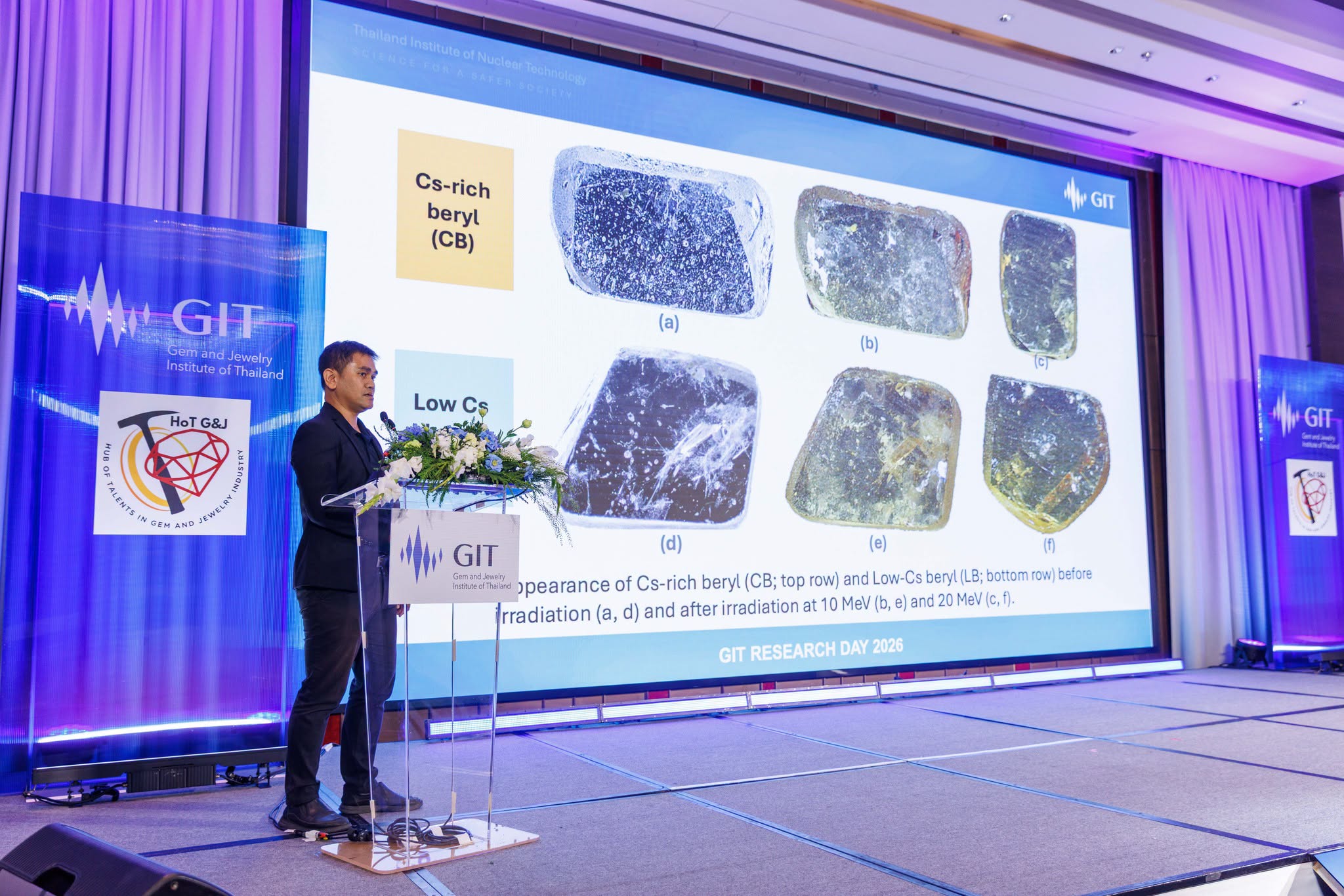
Most people who buy a diamond never think about the science that sits behind the certificate in the box. But that science is quietly one of the most important things protecting them, and this year Thailand put it centre stage. The Gem and Jewelry Institute of Thailand, GIT, the country's national gemmological authority, held its first International Bangkok Jewelry Hub Symposium, bringing researchers, executives and industry experts together to talk about where the gem and jewellery world is heading.
I pay close attention to events like this, because I sit inside this trade every day at the Jewelry Trade Center in Bangkok, and the direction the research points tells me what my customers will care about next. What struck me most is how neatly the future GIT is describing lines up with the way we already work. Let me walk you through what the symposium was actually about, what GIT's research is focused on, and why all of it is genuinely good news if you are buying a diamond in 2026.
What the Symposium Was Actually About
Let me be accurate about the event, because the specifics matter. According to GIT, the 1st International Bangkok Jewelry Hub Symposium was held in February at the Queen Sirikit National Convention Center, during the Bangkok Gems & Jewelry Fair. It was opened by the National Research Council of Thailand and keynoted by GIT's Director General, Mr. Sumed Prasongpongchai, on the theme of advancing sustainability in Thailand's gem and jewellery industry. The broader programme centred on enhancing productivity, sustainability, and the global competitiveness of smaller makers.
Source: Gem and Jewelry Institute of Thailand (GIT), git.or.th

In plain terms, this was Thailand's gem science community setting the agenda for the future of the trade. And that agenda, when you look at what GIT's research teams are actually working on, comes down to a handful of themes that matter enormously to buyers.
What GIT's Research Is Focused On
Here are the priorities driving GIT's work right now, drawn from the institute's own reporting, and why each one should matter to you.

Sustainability was the keynote theme, GIT's push toward a responsible, sustainable Thai gem and jewellery industry. Traceability is the one GIT describes as no longer a niche concern: the institute is rolling out a national due-diligence standard and issues identification reports with QR codes so buyers can instantly verify authenticity, more than 14,500 reports in a single recent year. Treatment detection is where GIT's scientists track new and subtle stone treatments, including difficult low-temperature and multi-step diffusion methods that can evade standard testing, so that certification stays honest. And SME competitiveness runs through it all, helping smaller makers raise their standards and compete on the world stage.
Read those together and a single message emerges, one that changes everything about how you should buy.
The Real Takeaway: Verify, Don't Trust
If I had to compress the whole direction of this research into one idea, it would be this. The gem trade is moving away from "trust the seller" and toward "verify it yourself."

For most of history, buying a stone meant trusting a person, their word, their reputation, their story about where a gem came from. GIT's entire research direction, traceability you can check, QR-verifiable reports, rigorous detection, standardised due diligence, is about replacing that trust with proof. Origin becomes data you can audit. Grading becomes consistent and standards-based. Authenticity becomes something you confirm on your own phone rather than something you hope is true.
This is the most important shift in the trade, and it is wonderful for buyers. It means the power is moving to you.
Why This Is Exactly How We Already Work
Here is why I follow this research so closely and feel genuinely excited about where it is going. The future GIT is describing is the present we already live in.
Everything we sell is built on verify-don't-trust. Every diamond we offer is IGI or GIA certified, and we ask you to check the certificate number yourself, online, before you pay a single baht. We publish our pricing openly. We let independent laboratories vouch for every stone rather than asking you to take our word. When the national research institute spends its symposium arguing that the trade must move toward provable authenticity and honest disclosure, I read that as the industry catching up to a standard we set for ourselves from day one.
It is also why we work so naturally alongside the science. GIT is the regional authority on corundum, the mineral family behind sapphire and ruby, and we grow and cut a full spectrum of lab-grown corundum ourselves. We are not on the sidelines of this conversation about standards and testing. We are in the middle of it, in the same building trade, making material to a standard we are proud to have examined.
What This Means for You as a Buyer
Let me make it practical, because research only matters if it changes what you do.
The direction of the entire trade is now firmly on your side. So use it. Insist on an independent certificate for any diamond or coloured stone, and verify the number yourself on the laboratory's website before you pay. Ask about treatment and disclosure, and buy from sellers who answer plainly. Value traceability and honest documentation, because the whole industry is being rebuilt around them. A seller who welcomes every one of these checks is a seller working with the future. A seller who resists them is working against it, and against you.
This is the standard we hold ourselves to, and honestly it is why I find events like the GIT symposium so encouraging. The science, the standards, and the direction of the trade are all moving toward exactly the kind of honesty we built our business on.
Excited for What Comes Next
I walked away from following this research more optimistic than ever about where jewellery is going. A trade built on provable authenticity, honest disclosure, traceable origin, and consistent standards is a trade that finally serves the buyer as well as it serves the seller. That is the future GIT's scientists are building toward, and it is the future we are already living in at our workshop.
If you want to buy a diamond the way the whole industry is learning it should be done, verified, certified, transparently priced, from a maker at the source, that conversation is exactly what we are here for. Browse our certified lab-grown diamonds or the corundum colour catalogue, or message me on WhatsApp with anything you want to know. Lab Grown Dreams, at the Jewelry Trade Center, 919 Silom Road, Bangkok.
Details of the symposium are reported by the Gem and Jewelry Institute of Thailand (GIT); see git.or.th for the authoritative record. This article is our own commentary on what that research means for buyers.
Frequently Asked Questions
What is GIT, the Gem and Jewelry Institute of Thailand? GIT is Thailand's national gemmological institute, a public organisation that provides gemstone and jewellery testing and certification, develops standards, conducts research, and transfers knowledge to the industry. It is a recognised regional authority, particularly in the characterisation of corundum, the mineral family of sapphire and ruby.
What was the GIT symposium in 2026 about? According to GIT, the 1st International Bangkok Jewelry Hub Symposium was held in February 2026 during the Bangkok Gems & Jewelry Fair, keynoted by GIT's Director General on advancing sustainability, under a theme of enhancing productivity, sustainability, and the global competitiveness of smaller makers.
What is gemstone traceability, and why does it matter? Traceability means being able to verify a stone's authenticity and origin through documented, checkable data rather than a seller's word. GIT issues identification reports with QR codes for instant verification and is rolling out a national due-diligence standard, reflecting an industry-wide shift toward provable authenticity that protects buyers.
Does this research relate to lab-grown diamonds? GIT is primarily a natural-gem testing and standards body. The relevance to lab-grown is the broader direction of the trade: toward independent certification, honest disclosure, and verifiable authenticity, the same standards on which certified lab-grown diamonds are sold and verified.
How do I verify a diamond myself? Ask for an independent certificate from a laboratory such as IGI or GIA, then enter the report number on that laboratory's official website to see the full grading before paying. This simple step, central to the industry's move toward verification, protects you regardless of where you buy.
Why does Thailand lead in gem research and testing? Thailand, and Bangkok in particular, is one of the world's major centres for gemstone cutting, treatment, and trade, with deep expertise built over generations. Its national institute, GIT, conducts internationally respected research and testing, which is why so much of the world's gem science and standards work happens here.
Keep reading: The Full Corundum Colour Catalogue AGTA Meets the Royal Thai Government: What US-Thailand Gemstone Trade Means for Buyers AIGS Came to Lab Grown Dreams to Source Lab-Grown Gemstones Shop Certified Lab-Grown Diamonds
