Oval vs Round Diamond: The Shape Race of 2026, Settled by a Cutter

Vinamra Gupta
Author
If you forced me to crown a winner, I would not, because I would be doing you a disservice. Round is the sparkle champion and the safe classic. Oval is the value-and-presence champion and the modern favourite.

[Journal]
Oval vs Round Diamond: The Shape Race of 2026, Settled by a Cutter

This is the question I get more than any other at the design table, and it has only intensified in 2026: oval or round? People arrive genuinely torn, because both are gorgeous, both are timeless, and the internet is full of confident opinions that contradict each other.
So let me do something the internet rarely does and answer it from the bench, honestly, without pretending one shape is objectively better. Because the truth is that oval and round win on different things, and the right answer depends entirely on what you personally care about. Here is everything I would tell you if you were sitting across from me.
The Honest Head-to-Head
Let me put the two shapes next to each other on the things that actually matter, rather than the things marketing likes to talk about.
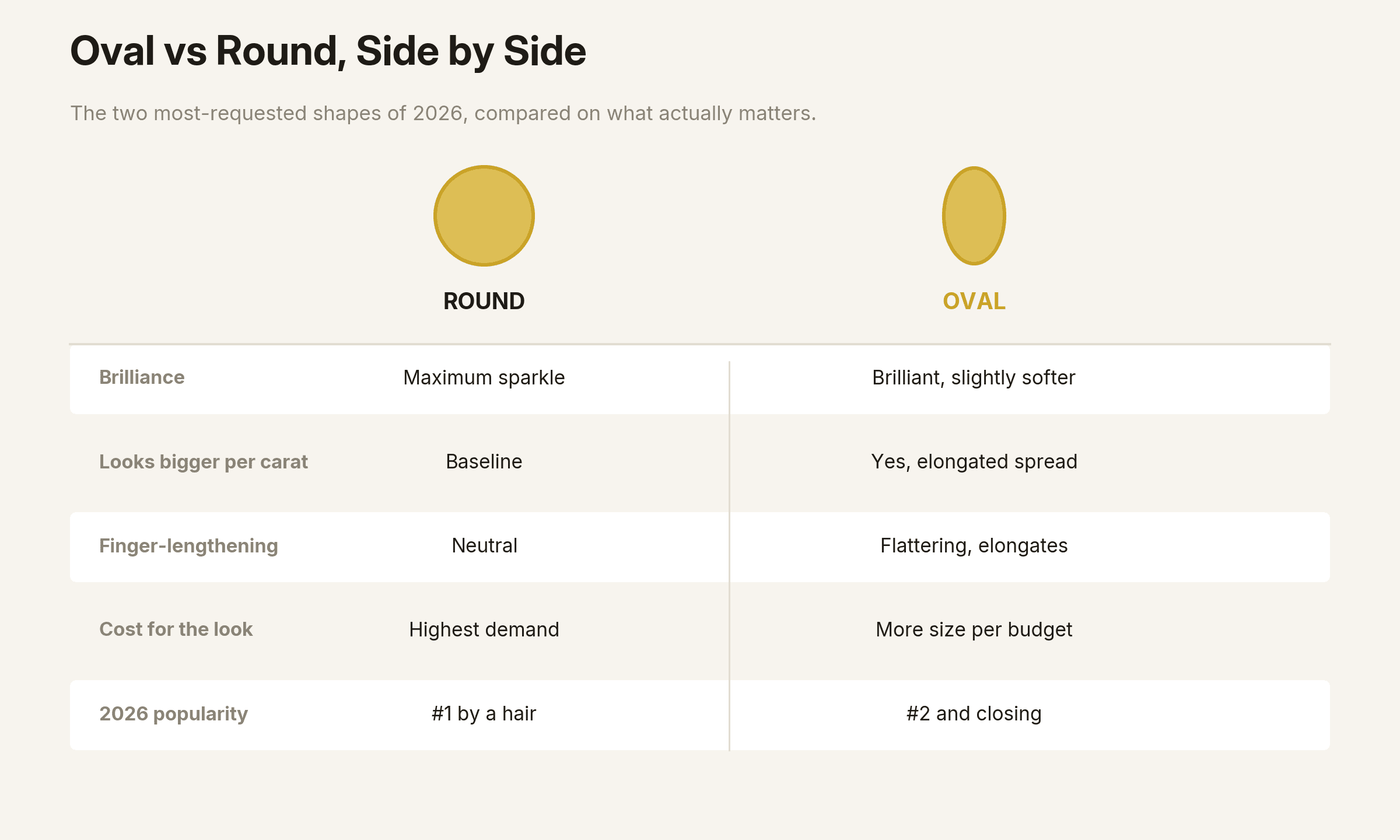
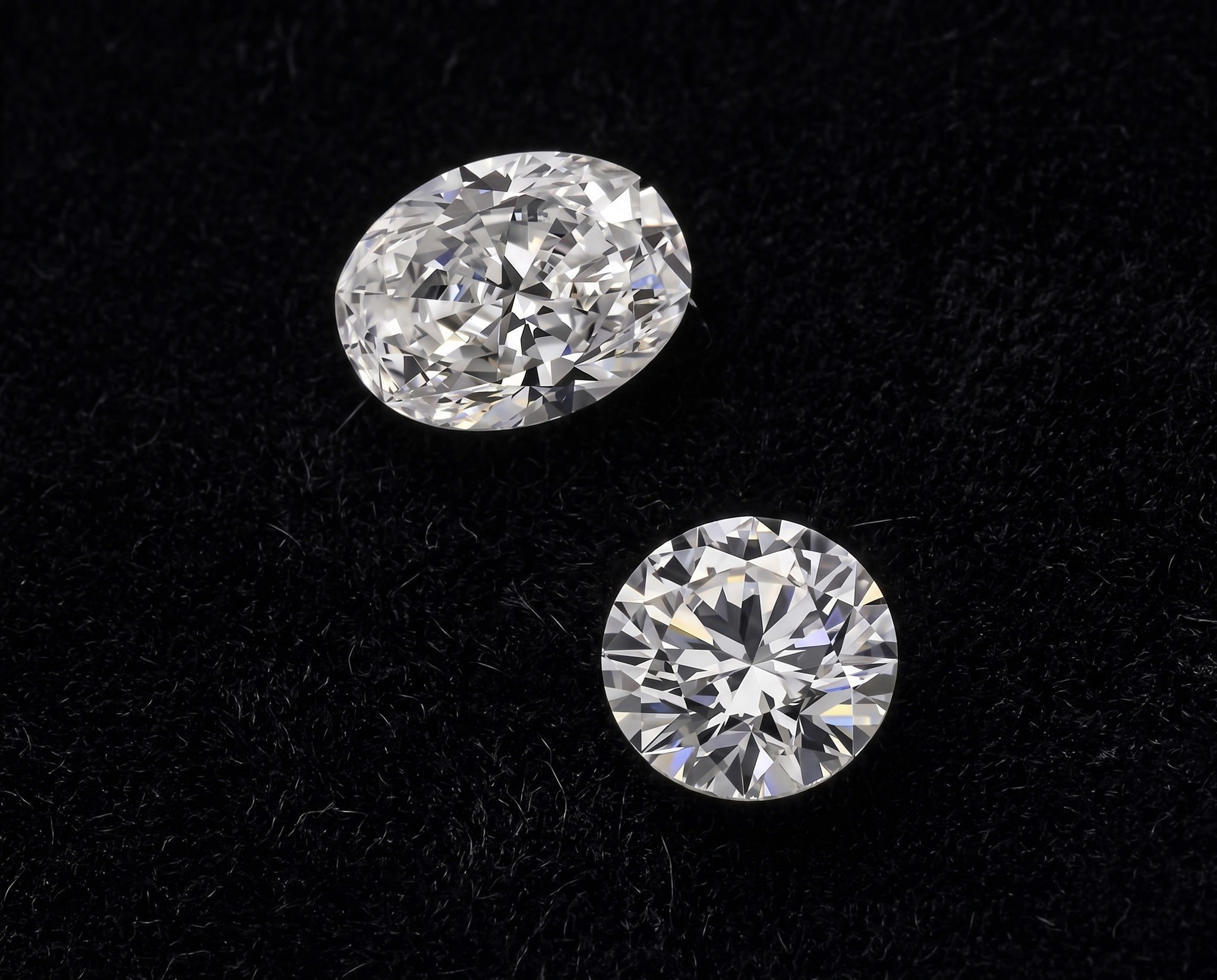
Round wins on pure sparkle. The round brilliant is the most engineered cut in existence, refined over a century specifically to return the maximum amount of light, and nothing throws sparkle quite like it. If a diamond that fires like a disco ball is your dream, round is genuinely hard to beat.
Oval wins on presence and value for the look. It carries almost all of that brilliance while spreading across more of the finger, flattering the hand, and looking larger for the same weight. For a lot of people, that combination is the whole ballgame.
Neither is the “correct” choice. They are answers to different questions.
The Size Difference Nobody Explains Properly
Here is the single most practical thing to understand, and it is where oval quietly pulls ahead for many buyers.
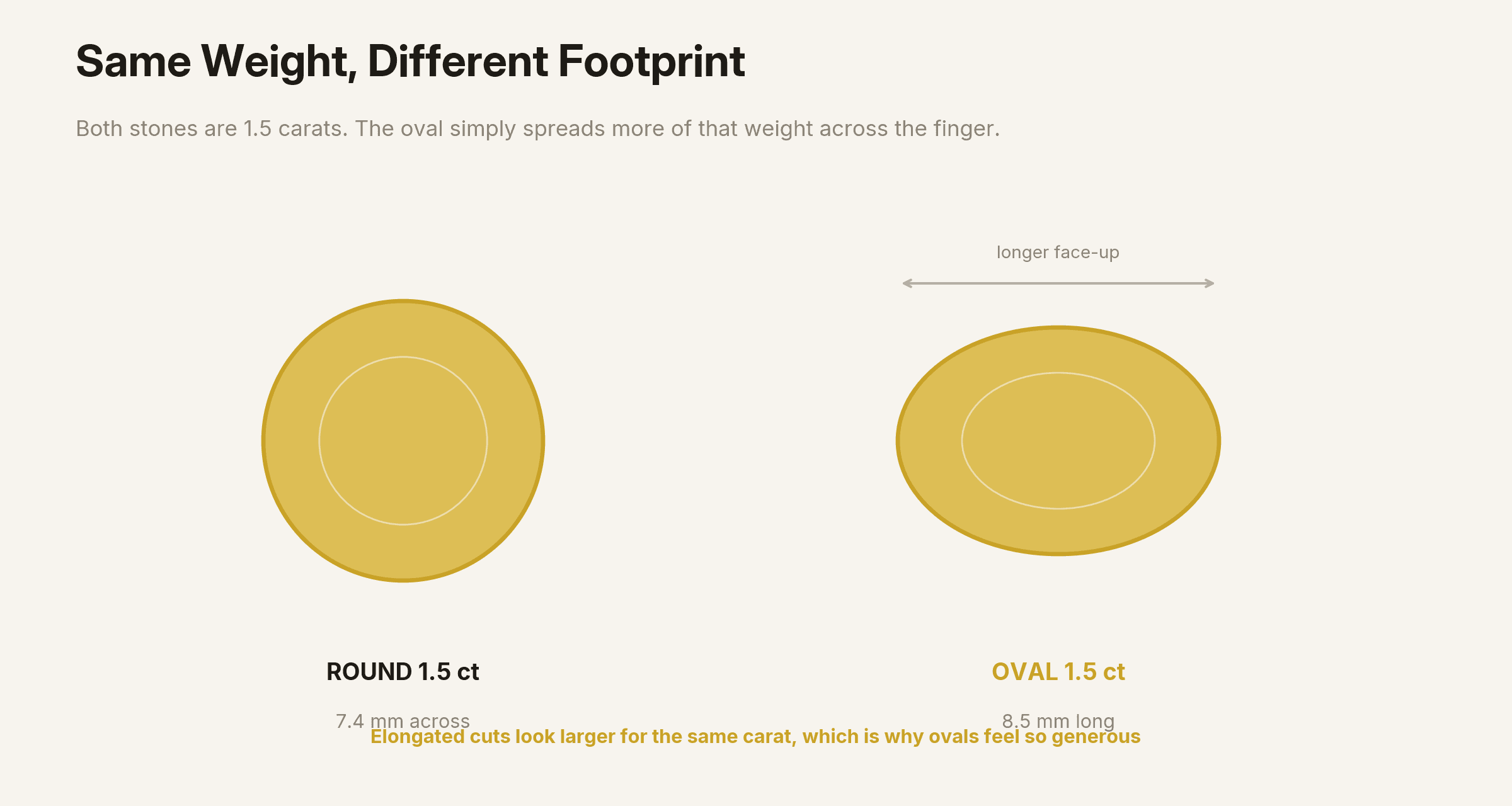
Those two stones weigh exactly the same. Same carat, same price bracket. But the oval spreads its weight into a longer footprint, so it faces up larger and reads as the bigger stone on the hand. This is not a trick or an illusion, it is simply geometry, and it is why so many people who want maximum presence for their budget end up choosing oval. If size on the finger matters to you, this one chart probably settles the debate. I went deeper on how carat and face-up size actually relate in my guide to the three carat look, which is worth a read alongside this.
So Why Is Round Still Winning?
If oval looks bigger and costs less for the look, you would think it would have taken over completely. It nearly has, but not quite.
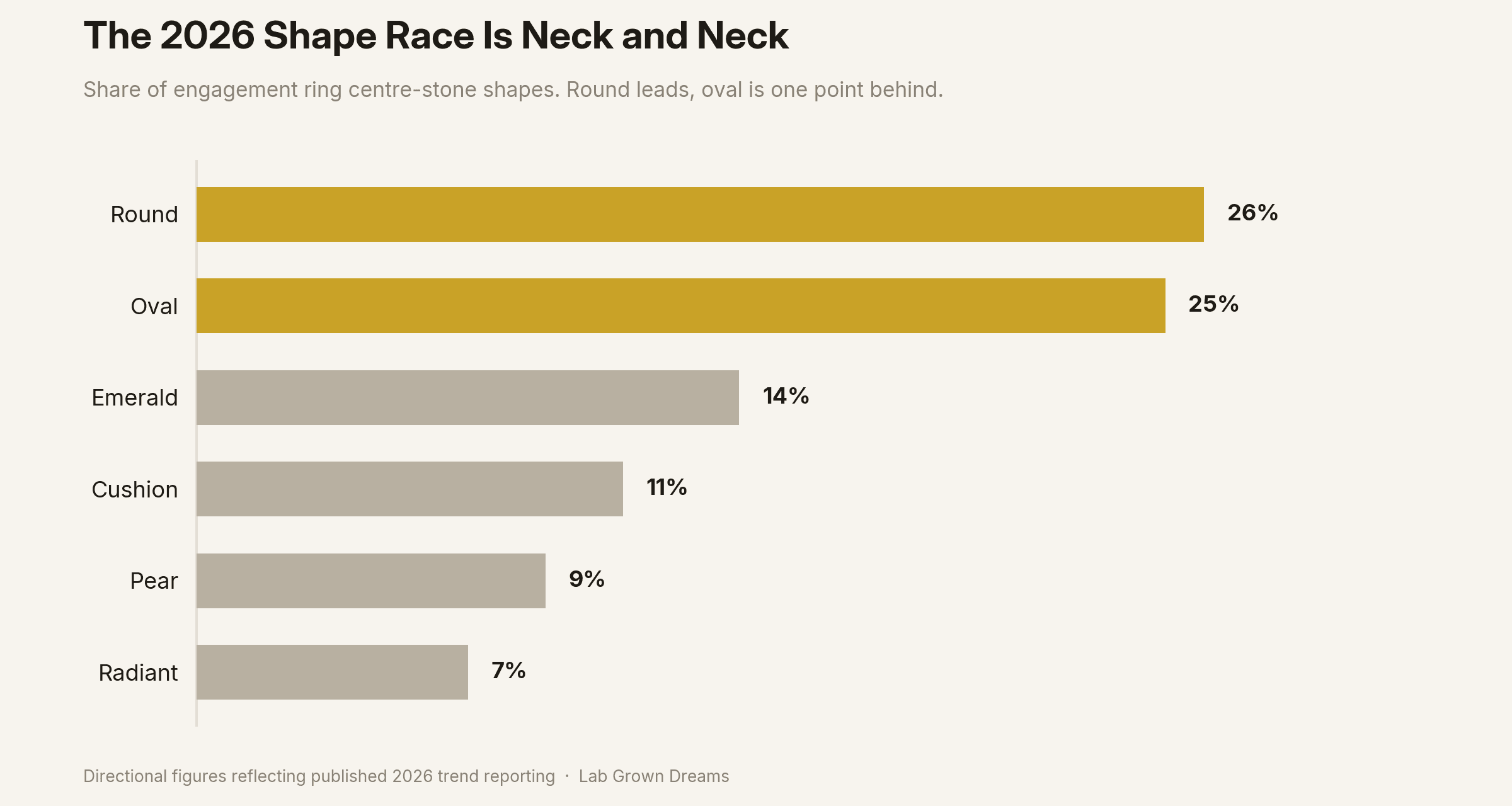
Round still sits at the top in 2026, with oval one point behind and closing the gap fast. Round holds on for three reasons: it is the traditional, safe, universally loved choice, it delivers that unmatched sparkle, and it hides certain flaws more forgivingly than elongated shapes do. That last point matters. Round is the easy shape to get right. Oval demands more from the cutter, which brings me to the part most articles never tell you.
The Oval Warning Nobody Gives You
If you choose oval, there is one thing to watch for, and knowing it puts you ahead of most buyers. It is called the bow-tie.
Every oval has the potential for a dark bow-tie shape across its centre, caused by how light behaves in an elongated cut. In a well-cut oval it is faint or invisible. In a poorly cut one it is an obvious dark band that never goes away. You cannot polish it out later. It is baked in at the cutting stage.
This is exactly why buying an oval is a shape where the cutter and the individual stone matter enormously, far more than with a round. You cannot buy an oval safely from a spec sheet alone, you have to see the actual stone, ideally in person or on honest video, and check how it handles light across the centre. It is the difference between an oval that glows and one that has a shadow through its heart. The impartial GIA overview of diamond cut explains why cut governs a stone’s beauty, and every stone we show carries a certificate you can verify, but for ovals especially, your own eyes are the final check.
Why This Is a Great Time to Choose Either
Both shapes get dramatically more attainable in lab-grown, which changes the calculation in a lovely way. Because the stone costs a fraction of a mined equivalent, you can prioritise cut quality without flinching, which is the smartest money you can spend in either shape but especially in oval, where cut is everything. You can also go a little larger, or put more of your budget into an exceptional cut rather than raw size. Either way, you are choosing on beauty rather than on what you can just afford.
How to Actually Decide
Here is the simple framework I give people who are stuck.
Choose round if you want maximum sparkle, a classic look that will never date, and the reassurance of the safest, most forgiving cut. Choose oval if you want the largest look for your budget, a flattering elongating effect on the finger, and a slightly more modern, distinctive feel, and you are willing to look at individual stones to find a well-cut one.
And if you genuinely cannot decide, the best move is to see both in person at the same size, on your own hand, in normal daylight. It sounds obvious, but nine times out of ten the hand makes the decision the head could not. That is a big part of what a good consultation is for.
The Verdict
If you forced me to crown a winner, I would not, because I would be doing you a disservice. Round is the sparkle champion and the safe classic. Oval is the value-and-presence champion and the modern favourite. The real winner is the one that makes you smile when it is on the hand, and that is a decision best made with the actual stones in front of you.
Want to compare both at the source? Start your design online or message me on WhatsApp and I will show you well-cut examples of each so you can decide with your eyes, not a spec sheet. Lab Grown Dreams, 919 Silom Road, Bangkok, and worldwide by video.
Frequently Asked Questions
Does an oval diamond look bigger than a round diamond? Yes. For the same carat weight, an oval diamond spreads into a longer shape and faces up larger than a round, so it appears bigger on the finger. This is why ovals are popular with buyers who want maximum size for their budget.
Which sparkles more, oval or round? Round diamonds generally sparkle the most, as the round brilliant cut is specifically engineered to return the maximum amount of light. Ovals are also very brilliant but slightly softer, and a well-cut oval still has exceptional fire.
What is a bow-tie in an oval diamond? A bow-tie is a dark shape that can appear across the centre of an oval or other elongated diamond, caused by how light passes through the cut. In a well-cut oval it is minimal or invisible, but in a poorly cut one it is prominent, which is why ovals should be viewed individually before buying.
Is oval or round better for an engagement ring? Neither is objectively better. Round suits those who want classic maximum sparkle and the most forgiving cut, while oval suits those who want a larger look for their budget and a flattering, elongating effect on the finger. The best choice depends on personal priorities.
Are oval diamonds cheaper than round? For a similar look, oval diamonds often cost less than round, because round brilliants are in the highest demand and lose more rough during cutting. Choosing lab-grown makes either shape far more attainable and lets buyers prioritise cut quality.
Which diamond shape is most popular in 2026? Round remains the most popular engagement ring shape in 2026, with oval very close behind and continuing to gain share. Together they account for around half of all centre stones, well ahead of emerald, cushion, pear, and radiant.
Keep reading: The 3 Carat Look for the Price of One East-West Engagement Rings: Why Everyone Turned Their Diamond Sideways Toi et Moi Explained: The Two-Stone Ring Everyone’s Saving Shop Certified Lab-Grown Diamonds