The 3 Carat Look for the Price of One: How Lab-Grown Rewrote the Size Rules

Vinamra Gupta
Author
[Journal]
For most of the history of this trade, a three carat diamond was a fantasy for almost everyone. Not because people did not want the look, but because the price climbed so steeply with size that a stone that big sat firmly in celebrity and heirloom territory. Then lab-grown arrived and quietly deleted that rule.
Today the three carat look is one of the most requested things at my design table, and the people asking are not celebrities. They are ordinary couples who did the math and realised the big, confident stone they assumed was out of reach is suddenly, comfortably within it. Let me show you exactly what that size looks like, clear up the carat confusion that trips everyone up, and explain how lab-grown changed the game.
First, What a Carat Actually Is
This is the single biggest misunderstanding in diamond buying, so let me fix it before anything else. A carat is a unit of weight, not size. And because it measures weight, doubling the carat does not double what your eye sees.
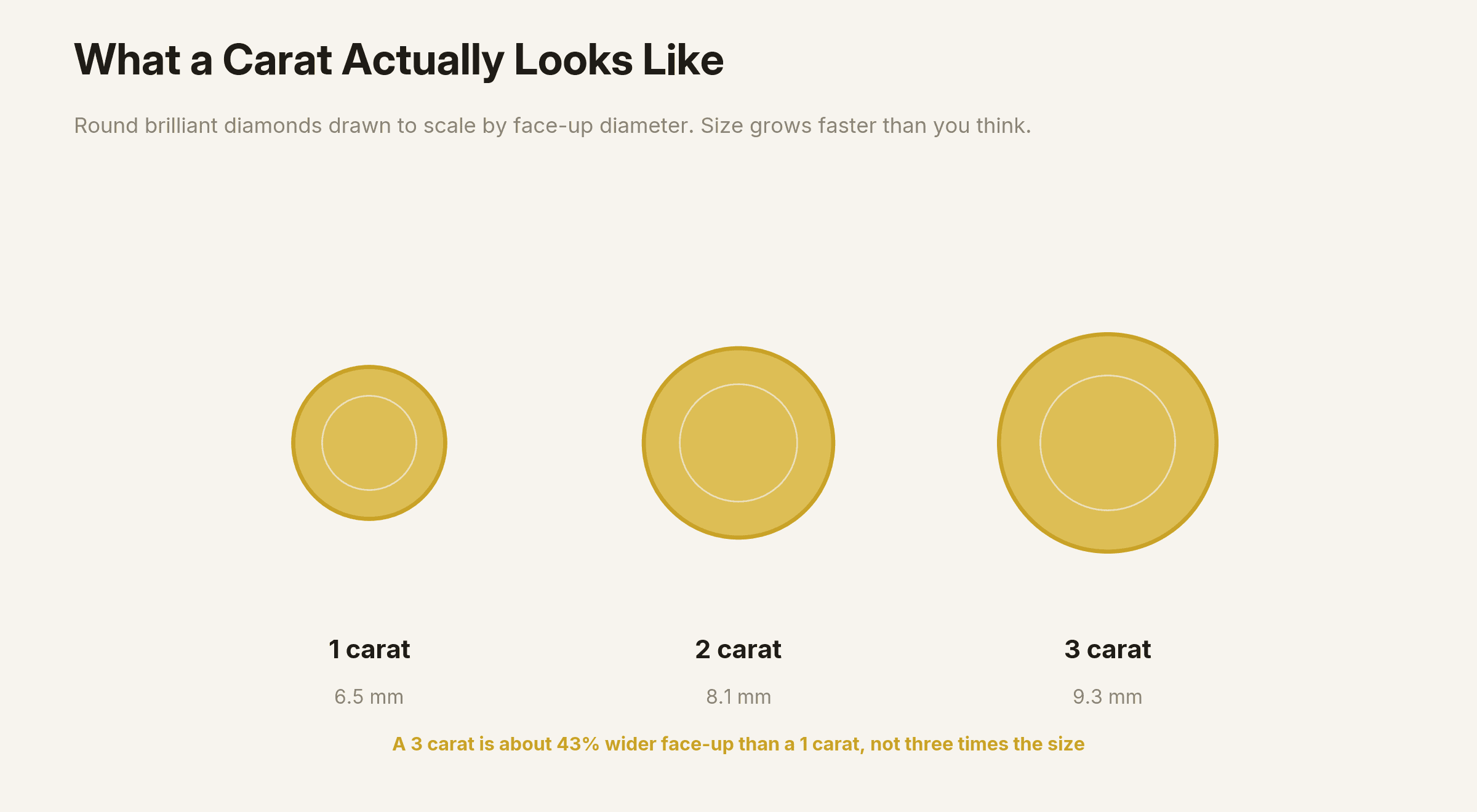
Look at those to scale. A three carat stone is not three times the width of a one carat. It is roughly forty percent wider across the face. That sounds like less until you see it in person, because the eye reads area, not diameter, and a three carat covers dramatically more of the finger. It reads as a serious, unmistakable stone. The point is that carat numbers exaggerate the jump in a way millimetres tell more honestly, which is exactly why understanding the real spread helps you shop smart. The impartial GIA explanation of carat weight is worth a read if you want the full background.
The Reference Every Buyer Should Screenshot
Because carat is weight and millimetres are what people actually see, this little table is the most useful thing in the article. Keep it on your phone.
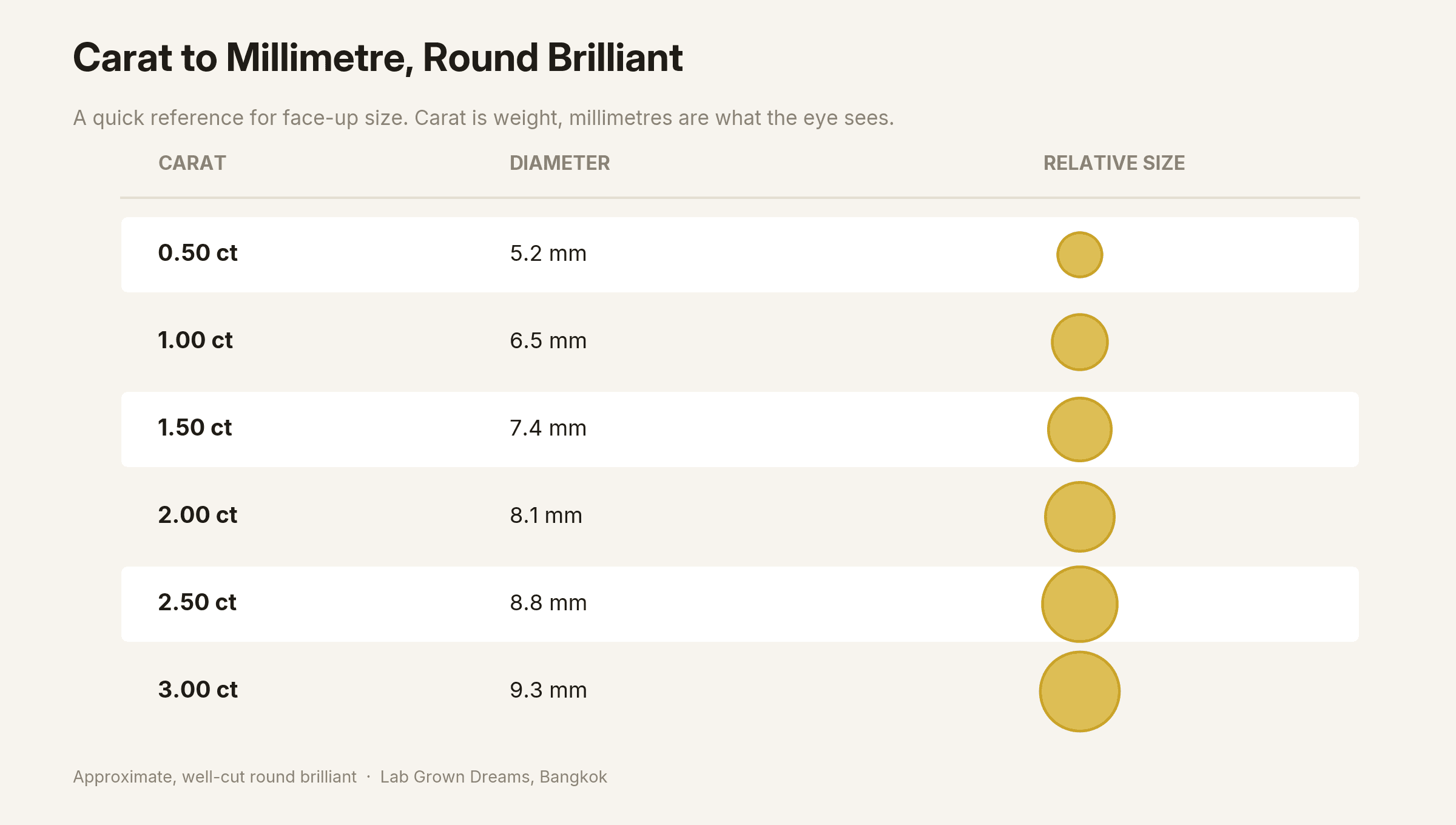
When someone tells me they want a stone that “looks about this big,” we almost always end up talking in millimetres, not carats, because that is the honest measure of presence on the hand. A well-cut stone also faces up larger than a poorly cut one of the same weight, which is why cut quality matters as much as size, but this table gives you a reliable starting point for a well-cut round brilliant.
How Lab-Grown Rewrote the Rule
Here is the part that changed everything. With mined diamonds, price does not rise in a straight line with size. It jumps, hard, at each major carat milestone, because large mined stones are genuinely rare. A three carat mined diamond does not cost three times a one carat. It can cost many times more.
Lab-grown diamonds are chemically and optically identical to mined ones, graded by the same laboratories on the same standards, but they are not constrained by that rarity curve. Which produces the single most eye-opening comparison in modern jewelry.
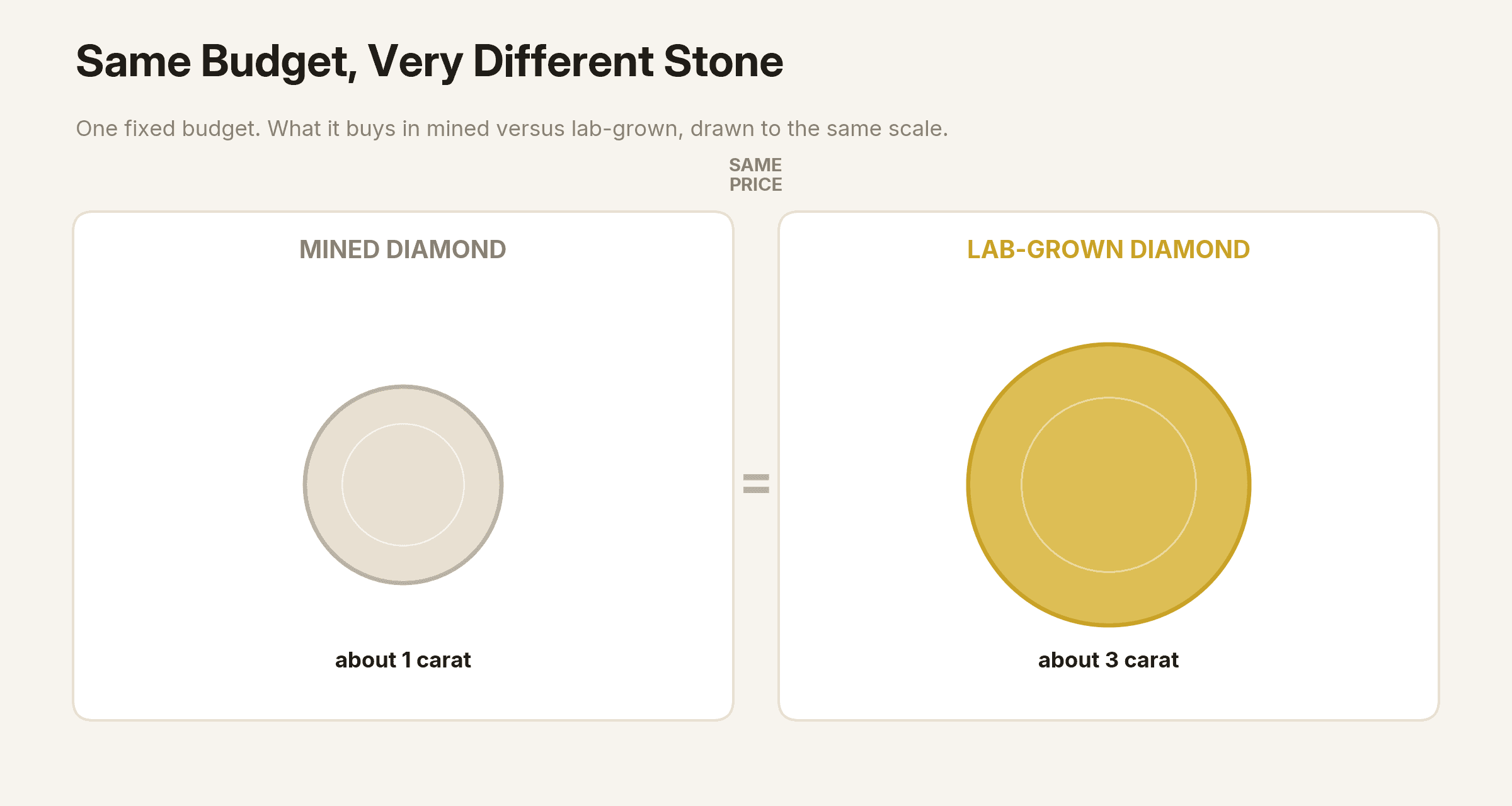
The same budget that buys a modest mined stone buys a substantially larger lab-grown one, drawn there to the same scale so you can see the difference honestly. This is why the three carat look stopped being a luxury and became a choice. You are not compromising on the diamond. It is a real, certified diamond. You are simply refusing to pay the rarity premium that never made the stone any more beautiful in the first place.
I will be honest in the other direction too, because that is how I run this. Going big is not automatically the right call for everyone. A larger stone wants the right setting, the right finger, and a lifestyle that suits it, and sometimes a slightly smaller, exceptionally cut stone is the more beautiful answer. That is a conversation, not a formula.
Choosing Size Well, Not Just Big
A few honest pointers from the bench for anyone chasing the big look.
Cut before size, always. A brilliantly cut two carat outshines a dull three carat every time, because cut is what makes a diamond return light. Do not spend your whole budget on weight and starve the cut.
Match the stone to the hand. Larger stones sit beautifully on longer fingers and can overwhelm very slender ones, though setting choices can balance this. It is worth trying sizes on before deciding.
Think about the setting early. A three carat centre changes everything about the band, the prongs, and how the ring wears day to day. This is exactly the kind of thing to plan from the start, and what to bring to a first consultation covers how to prepare for that conversation.
And consider shape. If you want maximum spread for your carat, elongated cuts like oval and marquise face up larger than a round of the same weight, and they pair beautifully with modern settings like the east-west orientation.
The Look Is Yours Now
The three carat diamond used to be a symbol of a certain kind of wealth. Lab-grown turned it into a symbol of a certain kind of smarts. Same stone, same certification, same light, without the rarity tax. Whether you go for the full three carat statement or land somewhere that fits your hand and your taste, the point is that the decision is finally yours to make on your terms.
If you want to see real stones at real sizes, that is the best part of buying at the source. Start your design online or message me on WhatsApp with the size you are picturing, and we will show you exactly what it looks like before you commit. Lab Grown Dreams, 919 Silom Road, Bangkok, and worldwide by video.
Frequently Asked Questions
How big is a 3 carat diamond? A well-cut round brilliant three carat diamond measures roughly 9.3 millimetres across the face. That is about forty percent wider than a one carat stone, not three times wider, because carat measures weight rather than diameter. On the hand it reads as a large, prominent stone.
Why are lab-grown diamonds so much cheaper at larger sizes? Mined diamond prices jump sharply at larger carat weights because big mined stones are rare. Lab-grown diamonds are not limited by that rarity, so their price rises far more gently with size. This lets the same budget buy a substantially larger lab-grown stone than mined.
Is a 3 carat lab-grown diamond a real diamond? Yes. A lab-grown diamond is chemically, physically, and optically identical to a mined diamond, graded by the same laboratories using the same standards, and comes with an independent certificate that can be verified online.
What is the difference between carat and millimetres? Carat is a measure of a diamond’s weight, while millimetres measure its physical face-up size. Two stones of equal carat can look different sizes depending on how they are cut, which is why millimetre diameter is often the better guide to how large a diamond appears.
Does a bigger diamond always look better? Not necessarily. Cut quality determines how much light a diamond returns, so a smaller, well-cut stone can outshine a larger, poorly cut one. The best choice balances size, cut, the wearer’s hand, and the setting rather than chasing carat weight alone.
Which diamond shapes look biggest for their carat? Elongated shapes such as oval and marquise tend to look larger face-up than a round diamond of the same carat weight, because their length spreads across more of the finger. This makes them popular for buyers who want maximum visual size.
Keep reading: East-West Engagement Rings: Why Everyone Turned Their Diamond Sideways What to Bring to Your First Bespoke Jewelry Consultation The Complete Insider Guide to Buying Custom Jewelry in Bangkok Shop Certified Lab-Grown Diamonds