Lab Grown Corundum: The Complete Guide to the Most Versatile Gem on Earth

Vinamra Gupta
Author
On the Mohs scale of hardness, corundum sits at 9, second only to diamond at 10. That hardness is not an abstract number. It is what lets a corundum stone stand up to a lifetime of daily wear, resist scratching, and hold its polish and brilliance for decades.

[Journal]
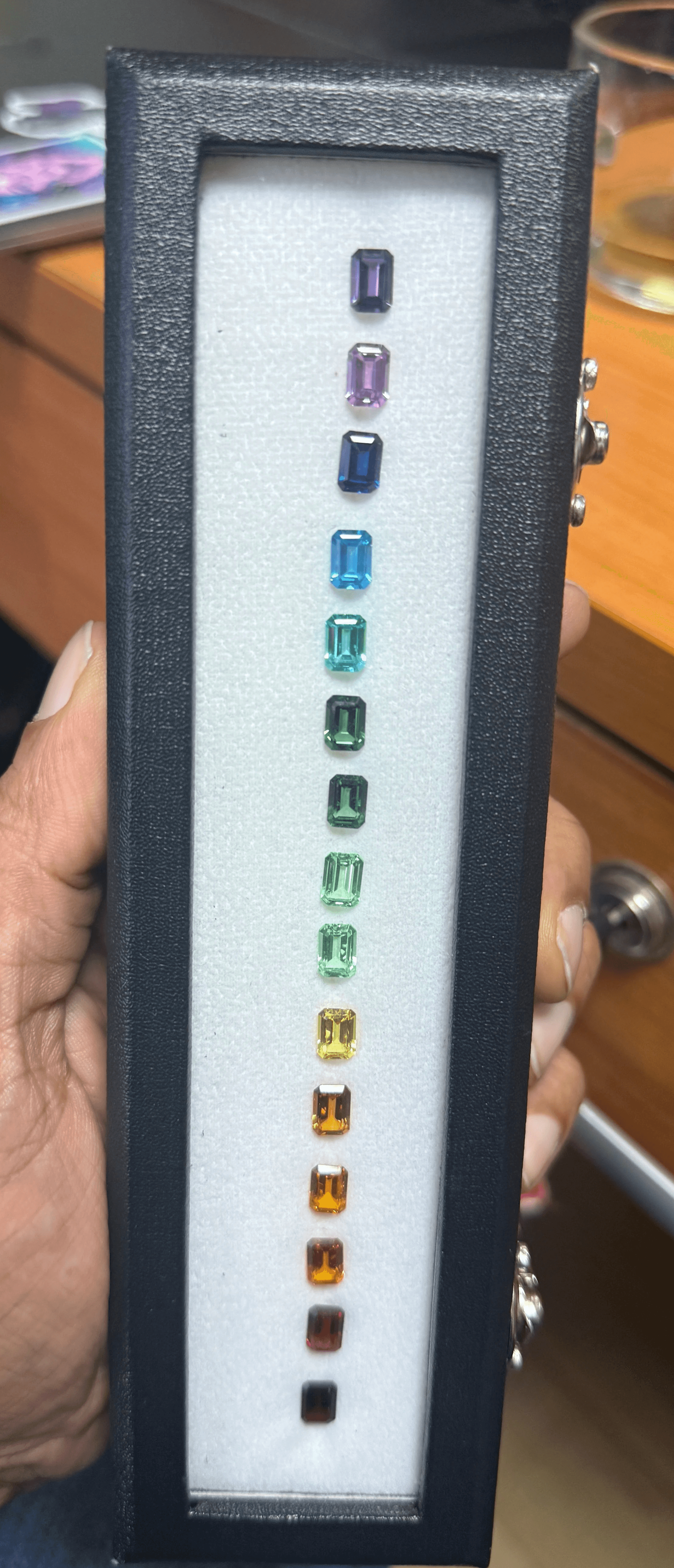
Most people have never heard the word corundum, yet almost everyone has admired it. Sapphire is corundum. Ruby is corundum. They are the same mineral, aluminium oxide, and the only real difference between a blue sapphire and a red ruby is a trace of a different element inside the same crystal. Once you understand that, a door opens, because it means this single material can be grown in almost any colour you can imagine.
That is exactly what we do. We grow and cut lab grown corundum in a full spectrum of colours at our facility in Bangkok, and I genuinely do not know of another colour catalogue like ours anywhere on the internet. This guide is the complete picture: what corundum is, how it is grown, every colour it comes in, how it compares to natural stones, and why for so many buyers it is simply the smartest choice. I have spent my life in this trade, so let me show you the most versatile gem material on earth.
What Corundum Actually Is
Let me start with the science, kept simple, because it explains everything that follows. Corundum is a crystalline form of aluminium oxide, written Al₂O₃. In its pure form it is colourless. Add a whisper of chromium and it turns red, and we call it ruby. Add traces of iron and titanium and it turns blue, and we call it sapphire. Every other colour, violet, teal, yellow, green, orange, comes from different trace elements inside that same crystal structure.
So sapphire and ruby are not different gems that happen to look similar. They are the same gem, corundum, wearing different colours. This is the single most important fact in this entire guide, and it is the reason a corundum colour catalogue can exist at all. When you can guide the trace chemistry, you can grow the colour you want, on purpose, rather than hoping the earth produced it somewhere.
Why Corundum Is Such a Remarkable Material
Beyond colour, corundum has a physical quality that makes it one of the finest materials in all of jewellery. It is extraordinarily hard.
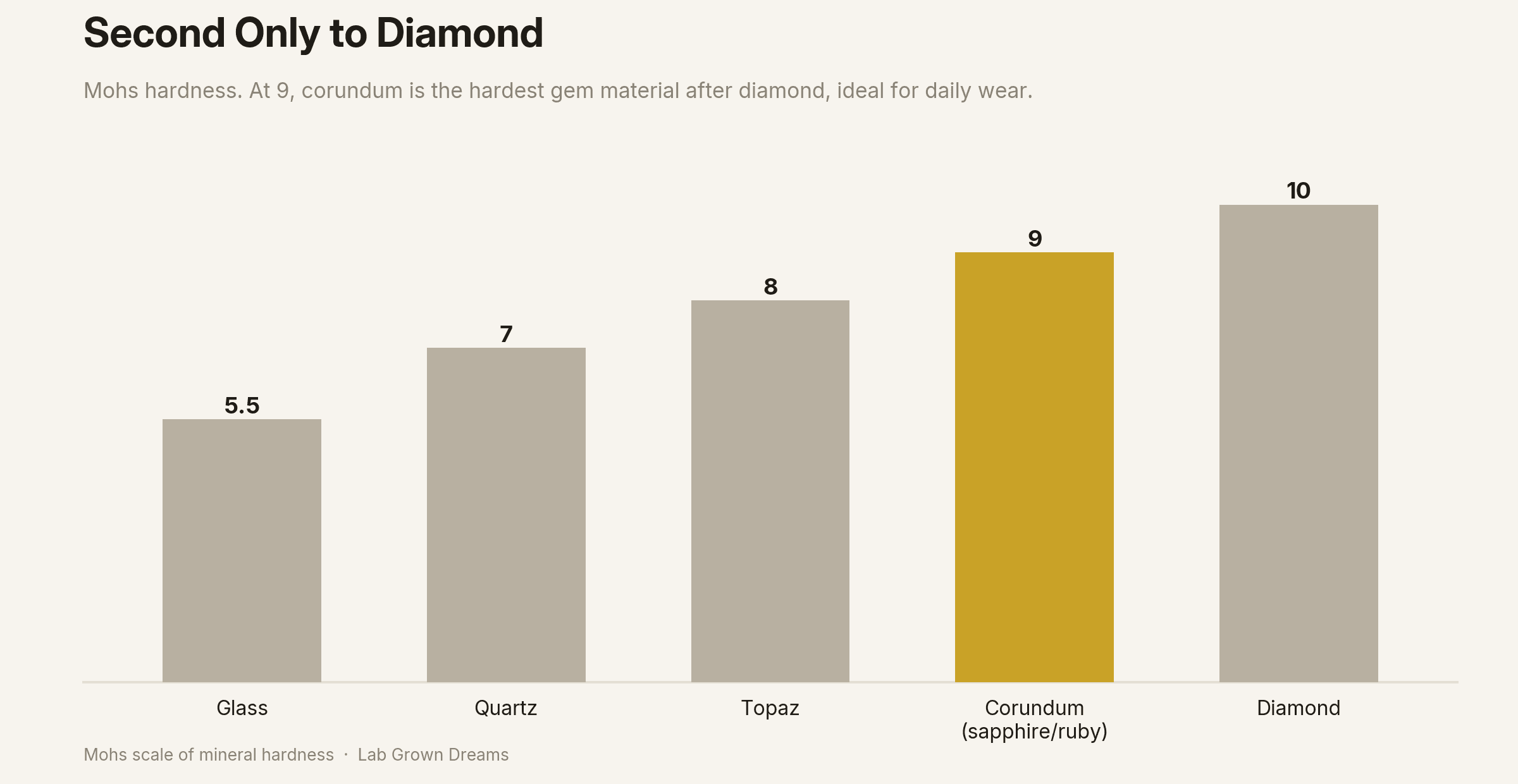
On the Mohs scale of hardness, corundum sits at 9, second only to diamond at 10. That hardness is not an abstract number. It is what lets a corundum stone stand up to a lifetime of daily wear, resist scratching, and hold its polish and brilliance for decades. It is why sapphires and rubies have been treasured as engagement and heirloom stones for centuries, and why corundum is trusted in settings that get worn every single day. When you choose corundum in any colour, you are choosing one of the toughest, most enduring gem materials that exists.
Every Colour We Grow
Here is where corundum becomes genuinely thrilling, and where our catalogue is, as far as I know, unmatched. Because we guide the colour as the crystal grows, we offer a full, deliberate spectrum rather than whatever happened to come out of the ground.
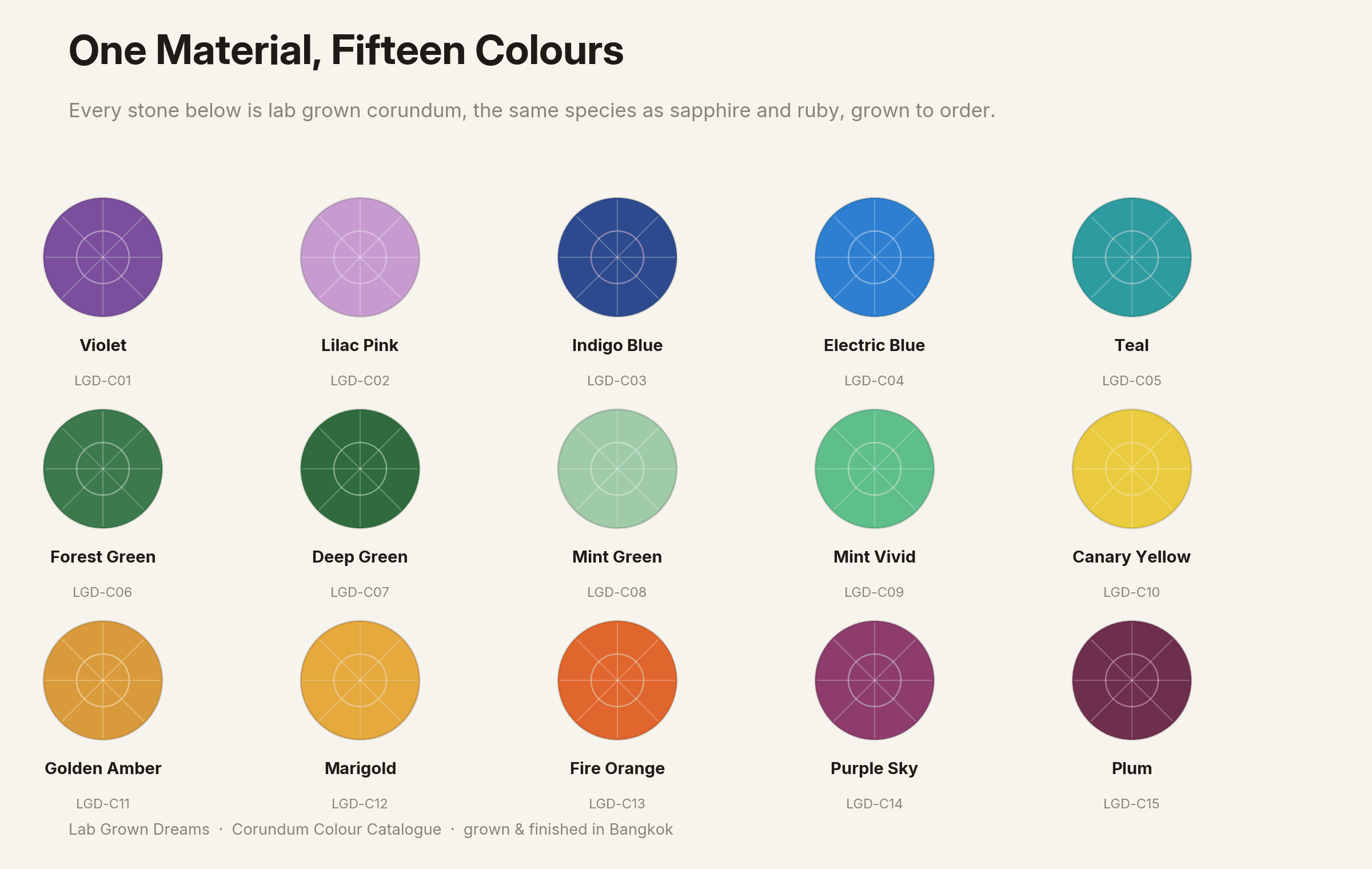
Fifteen distinct colours, each grown to order and each with its own reference number, from the cool violet of LGD-C01 to the deep plum of LGD-C15. Let me walk you through the families, and you can click straight through to any colour that speaks to you.
Violet and pink. A saturated Violet with a cool, gallery-like depth, and a softened Lilac Pink for romantic colour stories. These are the colours for something a little different from the expected.
Blue and teal. The heart of the sapphire tradition. A deep Indigo Blue with the visual weight of classic sapphire, a clear, energetic Electric Blue for modern contrast, and a balanced, mineral Teal that sits beautifully between blue and green.
Green. A whole range, from grounded Forest Green and rich Deep Green to the pale, airy Mint Green and a fresh Mint Vivid Green that reads brightly even in small calibrated cuts.
Yellow and orange. Pure warmth. A vivid Canary Yellow, a honeyed Golden Amber, a confident Marigold, and a Fire Orange designed to hold attention.
Deep jewel tones. For richer, more directional colour stories, the jewel-toned Purple Sky and a deep, sophisticated Plum.
You can see the whole range, with photography of each stone, in the full corundum colour catalogue.
How Lab Grown Corundum Is Made
People often ask whether a grown stone is somehow less real, and the honest answer from someone who makes them is no, it is genuinely the same mineral, produced with control instead of luck. There are two established methods we work with, and both produce real corundum.
The flux method grows corundum slowly from a molten flux over an extended period, allowing the crystal to form in conditions that echo how it grows in nature. The Czochralski method, also called pulling, grows a large single crystal by drawing it steadily from melted feedstock. Both are respected, well-understood processes that have been refined over decades, and both yield hard, brilliant, real corundum. The difference from mined material is not authenticity, it is consistency and control. We can grow a specific colour, to a reliable clarity, in the quantity a project needs, which nature simply cannot promise.
Lab Grown vs Natural Corundum
So how does it stack up against a mined sapphire or ruby? Here is the honest comparison.
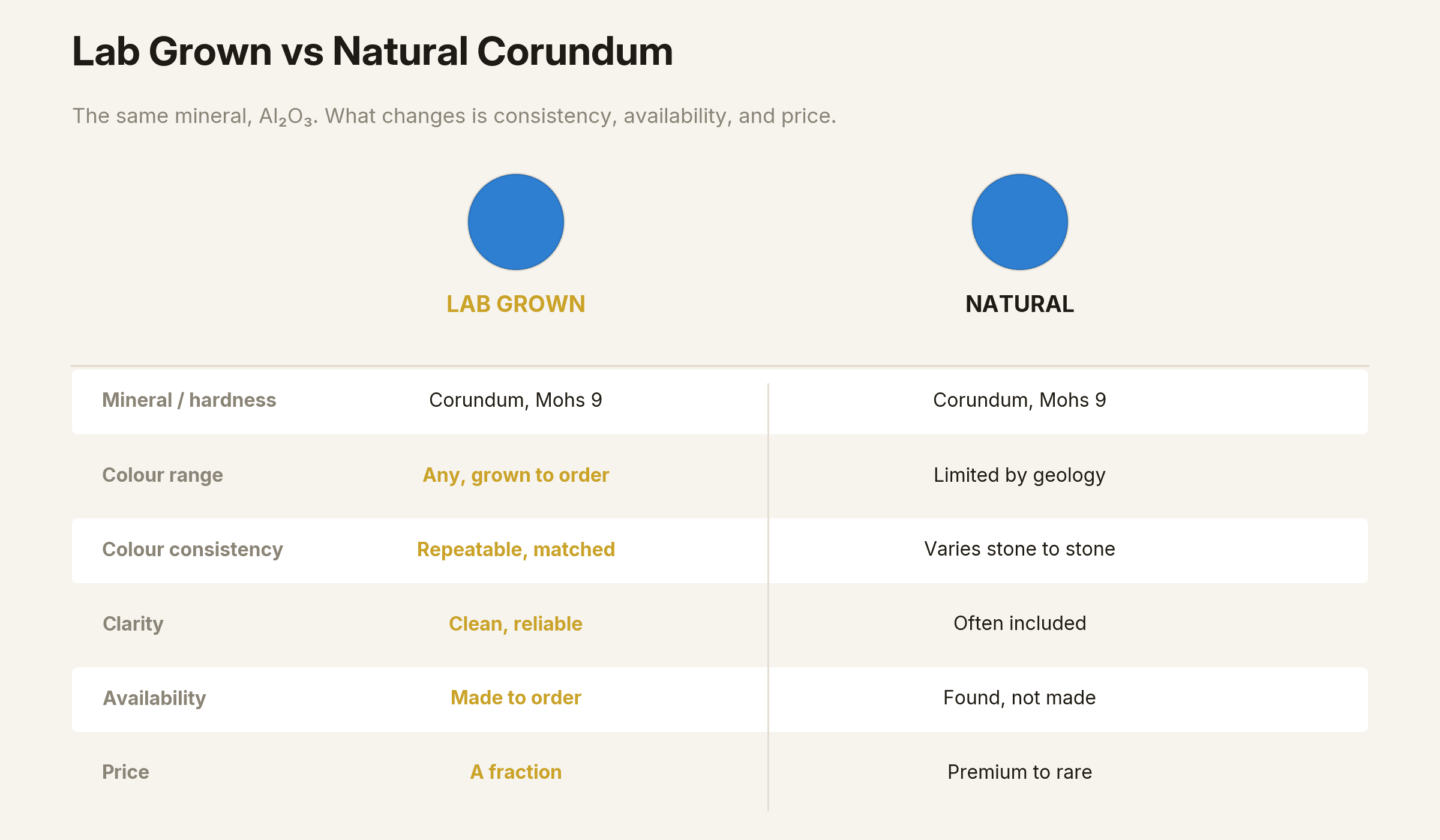
The mineral is identical, and so is the hardness. Where lab grown pulls ahead for most buyers is everything downstream of geology. The colour range is open rather than limited to what the earth produced. The colour is repeatable, so you can match stones across a pair of earrings or a whole collection, which is extremely difficult with natural material. Clarity is clean and reliable. Availability is made to order rather than found by chance. And the price is a fraction of fine natural corundum, especially in the vivid, clean colours that command the steepest premiums in mined stones.
None of this makes natural stones lesser. A fine natural sapphire carries its own romance and rarity. But if what you want is beautiful, durable, consistent colour at a sensible price, in exactly the shade you are picturing, lab grown corundum is hard to argue with.
Who Buys Lab Grown Corundum, and Why
In my experience the material suits three kinds of buyer especially well.
Designers and brands love it because they can specify an exact colour and get it reliably, match stones across a collection, and hit a price point that keeps a piece commercially viable. The ability to order the same colour again next season is worth an enormous amount to a working brand. This is where our wholesale and made-to-order model fits perfectly.
Custom and bespoke clients love it because they can have the precise colour of a memory, an eye, a favourite shade, in a stone tough enough to wear every day. When someone wants a teal that does not quite exist in nature at a reasonable price, corundum answers.
Collectors of colour love it simply because the spectrum is so complete. Owning a run of corundum colours, from mint to marigold to plum, is a joy that mined material could never make affordable.
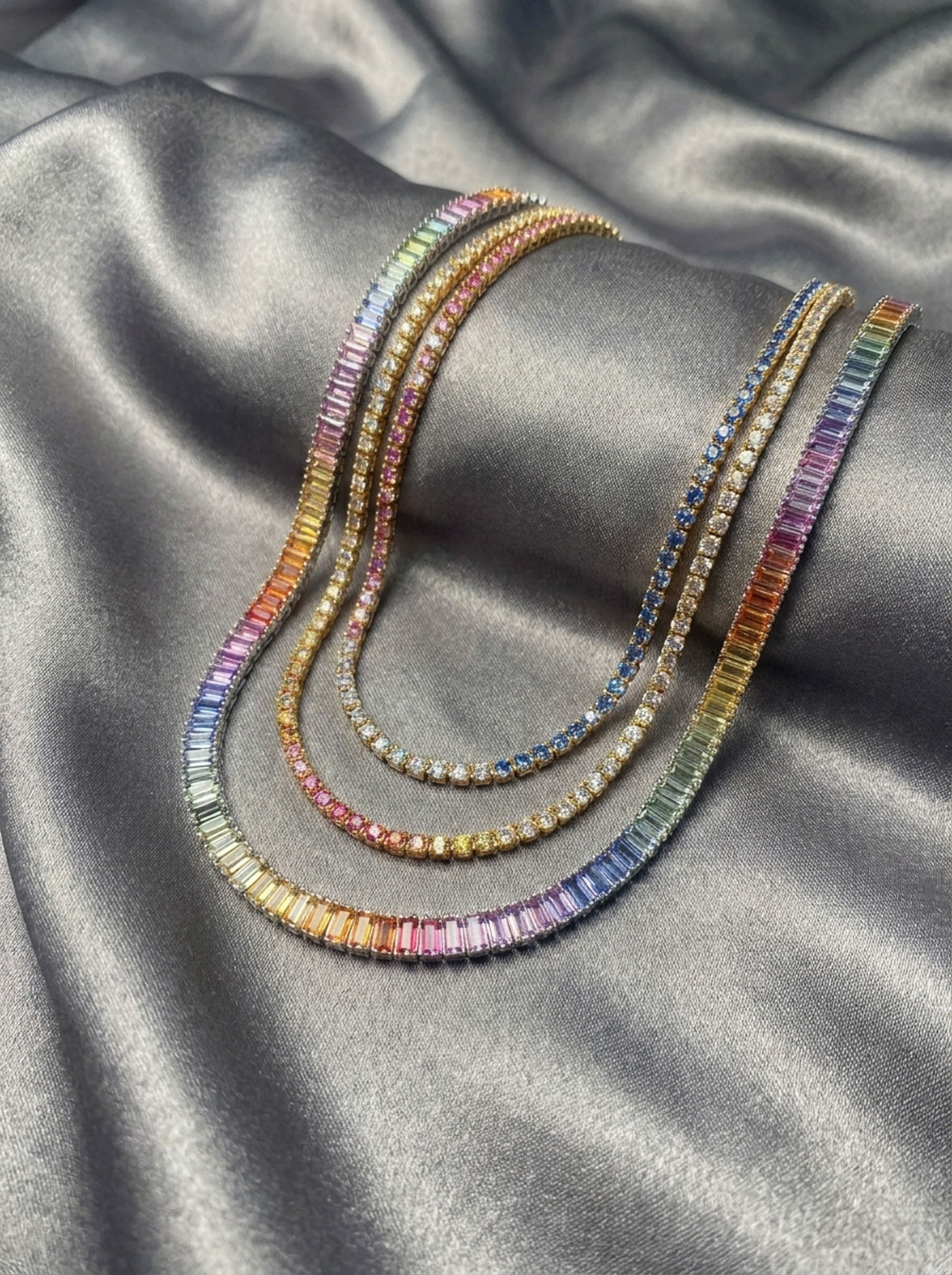
Corundum, Sapphire, and Ruby: Clearing Up the Names
One quick clarification, because the naming trips people up. Since sapphire and ruby are both corundum, our lab grown sapphires and lab grown rubies are corundum too, they are simply the traditional names for the blue and red members of the family. When we talk about the corundum catalogue, we are talking about the whole colour spectrum of that one material, including but not limited to the classic sapphire blues and ruby reds. If you came looking for a specific sapphire or ruby, those pages are there for you. If you are open to the full rainbow, the corundum catalogue is where the material really shows what it can do.
How to Order
The beauty of a made-to-order material is that you are not limited to what is sitting in a case. The process is simple. Pick a colour from the catalogue and note its reference number, tell us your size, preferred cut, and quantity, and we confirm stock or cutting time, pricing, and shipping against your final specification. Wholesale orders and single bespoke stones are equally welcome, everything grown and finished at our facility in Bangkok.
If you would like to judge the colour in person, we can also arrange a physical tray so you can see the real stones in real light before you commit, which for serious colour work is worth doing.
Start by browsing the full corundum colour catalogue, then send us the reference number of any colour that speaks to you on WhatsApp and we will come back with pricing for your sizes. Lab Grown Dreams, at the Jewelry Trade Center, 919 Silom Road, Bangkok, supplying designers, brands, and private clients worldwide.
Frequently Asked Questions
What is lab grown corundum? Lab grown corundum is crystalline aluminium oxide (Al₂O₃) grown in a controlled setting rather than mined. It is the same mineral as natural sapphire and ruby, with the same hardness of 9 on the Mohs scale, and it can be produced in a full range of colours by guiding the trace elements as the crystal grows.
Is lab grown corundum the same as sapphire and ruby? Yes. Sapphire and ruby are both corundum, distinguished only by colour, blue for sapphire, red for ruby, caused by different trace elements. Lab grown corundum is the same mineral and can be grown in those colours and many others.
Is lab grown corundum real? Yes. It is genuinely corundum, chemically and physically identical to mined corundum, produced by established methods such as flux and Czochralski growth. The difference from natural corundum is consistency and control, not authenticity.
How hard is corundum? Corundum rates 9 on the Mohs scale of hardness, second only to diamond at 10. This makes it exceptionally durable and well suited to jewellery worn every day.
How is lab grown corundum made? It is produced by controlled crystal growth, most commonly the flux method, which grows the crystal slowly from a molten flux, and the Czochralski or pulling method, which draws a single crystal from melted feedstock. Both yield real, hard, brilliant corundum.
What colours does lab grown corundum come in? Because colour comes from trace elements guided during growth, lab grown corundum can be produced in a wide spectrum. Lab Grown Dreams offers fifteen colours, including violet, lilac pink, indigo and electric blue, teal, several greens, canary yellow, golden amber, marigold, fire orange, purple sky, and plum.
Can I buy lab grown corundum wholesale? Yes. Lab Grown Dreams supplies lab grown corundum both wholesale and as single bespoke stones, grown and finished to order in Bangkok, with colour matching across a collection and pricing confirmed against your final specification.
Why choose lab grown corundum over natural? Lab grown corundum offers an open colour range, repeatable colour matching, reliable clarity, made-to-order availability, and a price that is a fraction of fine natural corundum, all in the same durable mineral. Natural stones retain their own rarity and romance, but for consistent, affordable, custom colour, lab grown is the practical choice.
Keep reading: The Full Corundum Colour Catalogue Lab Grown Sapphires Lab Grown Rubies Fancy Coloured Lab-Grown Diamonds: Pink, Blue, Yellow and Beyond
