Lab-Grown Coloured Gemstones: A Jeweller's Guide to Emerald, Ruby and Sapphire

Updated
A lab-grown emerald is real beryl, a lab-grown ruby and sapphire are real corundum, with the same chemistry, hardness and beauty as their natural counterparts. The only difference is origin, which is also why they cost far less.
[Journal]
Lab-Grown Coloured Gemstones: A Jeweller's Guide to Emerald, Ruby and Sapphire

Most people come to lab-grown stones through diamonds. They discover you can have a real, certified diamond for a fraction of the mined price, and that is usually where the conversation stops. But there is a whole side of this world that far fewer people know about, and it is honestly the part I find most exciting: lab-grown coloured gemstones. Real emerald, real ruby, real sapphire, grown rather than mined, in colours that mined stones charge a fortune for.
I make these every day, so let me be your guide. This is the overview I wish every buyer had before they started: what these three stones actually are, how they compare, how to choose between them, and how to turn one into a piece of jewellery that is genuinely yours. If diamonds were your door into lab-grown, consider this the room you did not know was behind it.
What Are Lab-Grown Coloured Gemstones?
Lab-grown coloured gemstones are real emeralds, rubies, sapphires and other coloured stones created in controlled conditions instead of being mined. They are not imitations. A lab-grown emerald is real beryl, a lab-grown ruby and sapphire are real corundum, with the same chemistry, hardness and beauty as their natural counterparts. The only difference is origin, which is also why they cost far less.

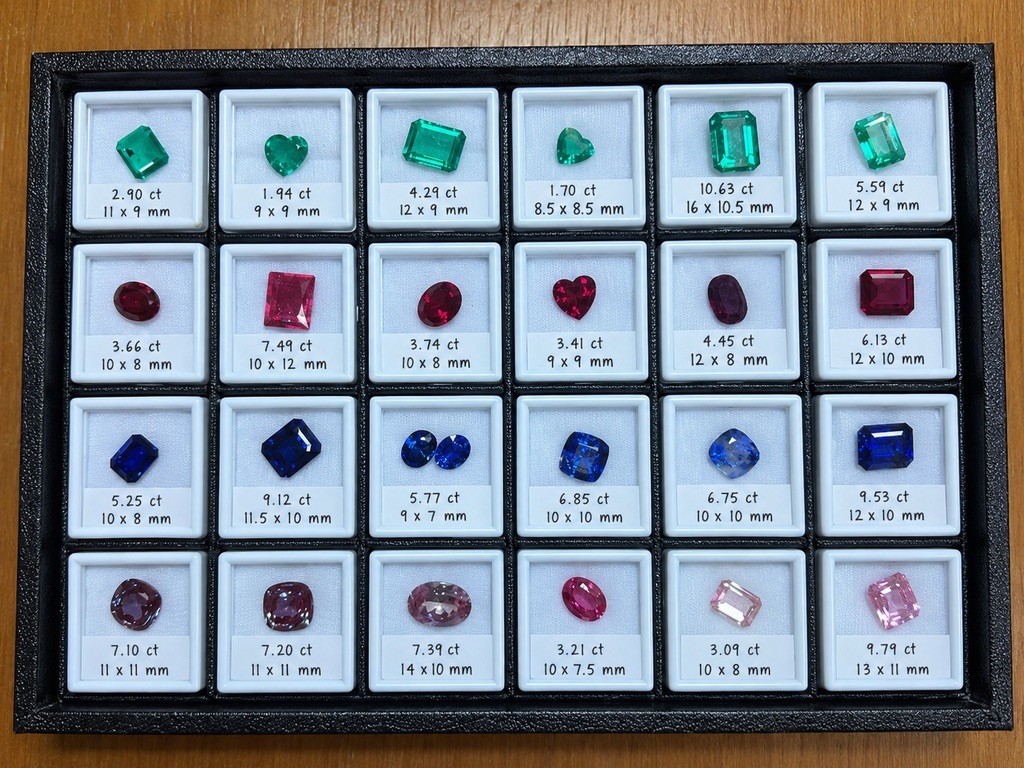
That chart is the whole family on one page. The three headliners are emerald, the green beryl coloured by chromium; ruby, the red corundum; and sapphire, which is corundum in every colour other than red, from classic blue through teal, pink, white and the lotus-coloured padparadscha. Beyond the big three, the same technology grows alexandrite, the remarkable stone that shifts colour between daylight and lamplight, and spinel, a brilliant stone long loved by collectors. One honest note that sets us apart: you cannot grow a Paraiba tourmaline, because tourmaline cannot be synthesised commercially, so what is sold as "lab Paraiba" is really Paraiba-colour sapphire, and we label it exactly that way. Everything here is a genuine gem, certifiable, and made to be worn. You can read the science of how they are grown in our lab-grown gemstone guide.
Are Lab-Grown Coloured Stones Real Gems?
Yes. A lab-grown emerald, ruby or sapphire is a real gemstone, chemically and physically identical to the mined version, just created in a lab rather than dug from the earth. It is completely different from a simulant like cubic zirconia or glass, which only imitates the look. This is the single most important thing to understand, because the word "lab" makes people assume "fake," and that is simply wrong.
Think of it the way you would think of ice from a freezer versus ice from a frozen lake. Both are real ice, the same thing, one just made in controlled conditions. A lab-grown ruby is real ruby in exactly that sense. It has the same red, the same hardness, the same sparkle, and it will last exactly as long. What it will not have is the mining, the inflated price, or the uncertain origin. In many cases a lab-grown coloured stone is actually cleaner and more vivid than an affordable mined equivalent, because it formed without the chaos that leaves most mined stones included and cloudy. Real stone, better odds, honest price.
How Durable Are They? Which Can You Wear Every Day?
Durability depends on the stone, and it matters most for rings. Lab-grown ruby and sapphire are both corundum, sitting at 9 on the Mohs hardness scale, which makes them superb for everyday rings and lifelong wear. Lab-grown emerald is softer, at 7.5 to 8, and like all emeralds benefits from a slightly more protective setting, which makes it better suited to pendants, earrings, and rings worn with a little care.

This is the practical heart of choosing a coloured stone, and most sellers skip it. Ruby and sapphire are, after diamond, among the hardest gem materials there are, which is why sapphire has been a favourite for engagement rings for generations. You can wear a lab-grown sapphire or ruby ring every single day without a second thought. Emerald is a different character. It is a beautiful but more delicate stone, naturally included, and it rewards a setting that protects its edges and a little gentleness in wear. None of this makes emerald a worse choice, it simply means an emerald is happiest as a piece you treasure rather than one you garden in. When we design around any of these, we match the setting to the stone's nature, so your piece lasts.
Emerald, Ruby or Sapphire: Which Lab-Grown Stone Should You Choose?
Choose by the colour you love and the life the piece will live. Emerald is for the person drawn to rich, classic green and happy to treat the piece with a little care. Ruby is for bold, passionate red in a stone tough enough for daily wear. Sapphire is the most versatile, offering every colour from royal blue to soft pink to crisp white, in a stone as hard-wearing as ruby.

Let that chart point you, because with coloured stones most people genuinely start from a colour. If green speaks to you, emerald is the classic, and a lab-grown emerald gives you that colour in a real stone without the mined premium. If you want red, there is nothing like a lab-grown ruby, and because it is corundum it will take daily wear beautifully. If you want blue, or honestly any colour at all, lab-grown sapphire is the most flexible stone in the world, and it includes the neon teal we cut as Paraiba-colour sapphire. Want something that changes colour through the day, go for lab-grown alexandrite. And you do not have to choose only one, because one of the most beautiful things you can do is pair a coloured stone with white diamonds, which brings us to how these actually become jewellery.
How Do Lab-Grown Coloured Stones Become Jewellery?
They become jewellery exactly the way any fine stone does, set into rings, pendants, earrings and bracelets, on their own or paired with diamonds. The advantage of starting from a lab-grown coloured stone is that your budget stretches dramatically further, so the money can go into a bigger stone, a finer setting, or a fully custom design built around you.
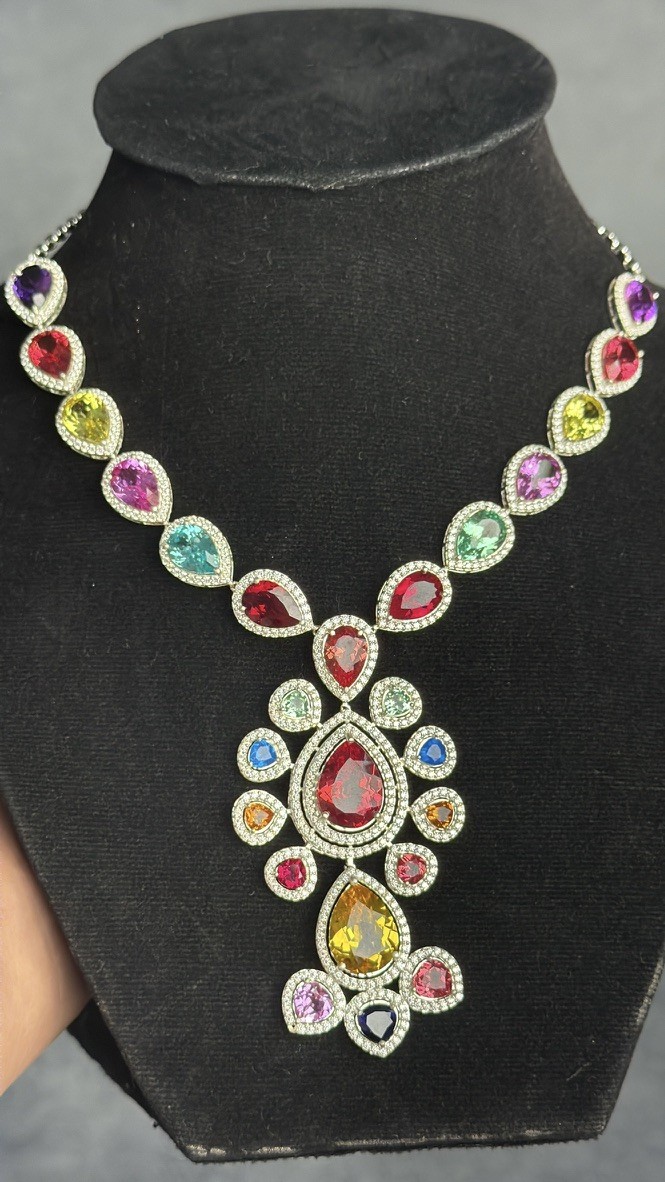
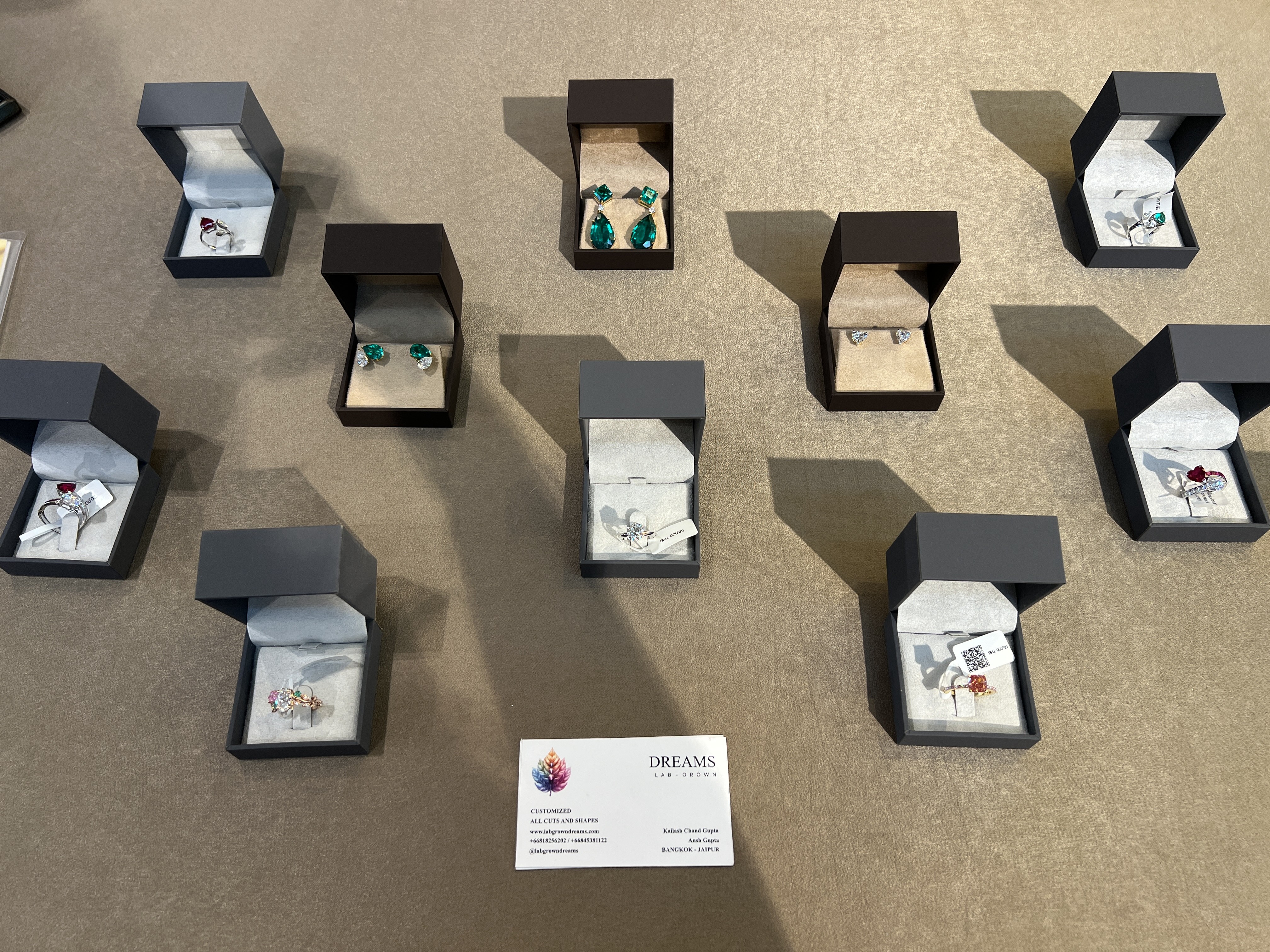
This is where it gets genuinely fun, and where a maker beats a shop. A deep green emerald flanked by white diamonds. A ruby as the heart of a three-stone ring. A teal sapphire set east-west for something nobody else is wearing. Because we grow and cut stones and build the jewellery in-house, you are not choosing from a case, you are choosing a stone and a design and watching it made. You can see a coloured stone as the centre of an engagement ring, as a meaningful birthstone piece, or as a colourful everyday ring that costs a fraction of what the mined version would. Start with a custom design, explore bridal, or see where your budget lands on the diamond side with our lab-grown diamond price list.
Why Buy Lab-Grown Coloured Stones From Us
We are a family business in the heart of the Bangkok gem trade, at the Jewelry Trade Center on Silom Road, with over 35 years behind us, and we work in both lab-grown and natural stones. That means when you ask us a question about a coloured stone, you get a straight answer from someone who actually grows, cuts, and sets them, not a storefront reading a spec sheet.
It also means honesty about what each stone is. We label every piece for exactly what it is, we certify where it counts, and we will tell you plainly when a mined stone or a different choice would serve you better. Whether you are buying your first coloured-stone piece or sourcing as a designer or brand, we can make it, at factory-direct prices, and ship it worldwide. Message us on WhatsApp with the colour or the piece you have in mind, and we will show you what is possible. Lab Grown Dreams by KC Gems House, Jewelry Trade Center, 919/513C Silom Road, Bangkok.
Frequently Asked Questions
What are lab-grown coloured gemstones? Lab-grown coloured gemstones are real emeralds, rubies, sapphires and other coloured stones created in controlled laboratory conditions instead of being mined. They have the same chemistry, hardness and appearance as natural stones, because they are the same mineral, and they are completely different from simulants like cubic zirconia, which only imitate the look. They cost far less than mined stones of similar quality.
Are lab-grown emeralds, rubies and sapphires real? Yes. A lab-grown emerald is real beryl, and lab-grown ruby and sapphire are real corundum, identical in chemistry and hardness to their mined counterparts. The only difference is that they were grown rather than dug from the earth. They are often cleaner and more vivid than affordable mined stones, and they can be certified by a gem laboratory.
Which lab-grown coloured stone is best for an everyday ring? Lab-grown sapphire and ruby are best for everyday rings, because both are corundum and sit at 9 on the Mohs hardness scale, just below diamond. Lab-grown emerald is softer, at 7.5 to 8, and is a little more delicate, so it is better suited to pendants and earrings, or to rings worn with some care in a protective setting.
Are lab-grown coloured stones cheaper than mined ones? Yes, significantly. Because they are produced in controlled conditions rather than mined, lab-grown coloured gemstones typically cost a fraction of the price of comparable natural stones. This means your budget can go toward a larger stone, a finer setting, or a fully custom design, without compromising on the fact that it is a real gem.
Can lab-grown coloured stones be set with diamonds? Absolutely. Pairing a lab-grown coloured stone with white diamonds is one of the most popular and striking combinations, for example an emerald or sapphire centre with a diamond halo or diamond side stones. Because the coloured stone is affordable, you can create a generous, high-impact design for far less than an all-natural equivalent.
Is there a lab-grown Paraiba tourmaline? No. Tourmaline cannot be grown commercially, so genuine lab-grown Paraiba tourmaline does not exist. What is honestly sold under that look is Paraiba-colour sapphire, a real lab-grown sapphire in the electric neon colour, which we label as exactly that. Any seller offering "lab-grown Paraiba tourmaline" is not describing the material accurately.
Do lab-grown coloured gemstones come certified? They can be, and for a significant stone we recommend it. A report from a recognised gem laboratory confirms the stone's identity and that it is lab-grown, which protects you as a buyer. We disclose the nature of every stone we sell in writing, so you always know precisely what you are getting.
Keep reading: Lab-Grown Emeralds Lab-Grown Rubies Lab-Grown Sapphires Order a Custom Coloured-Stone Piece