Inside Thailand's Gem Trade: How the Industry Helped Customs Value Seized Diamonds, and Why It Protects You

Vinamra Gupta
Author
Updated
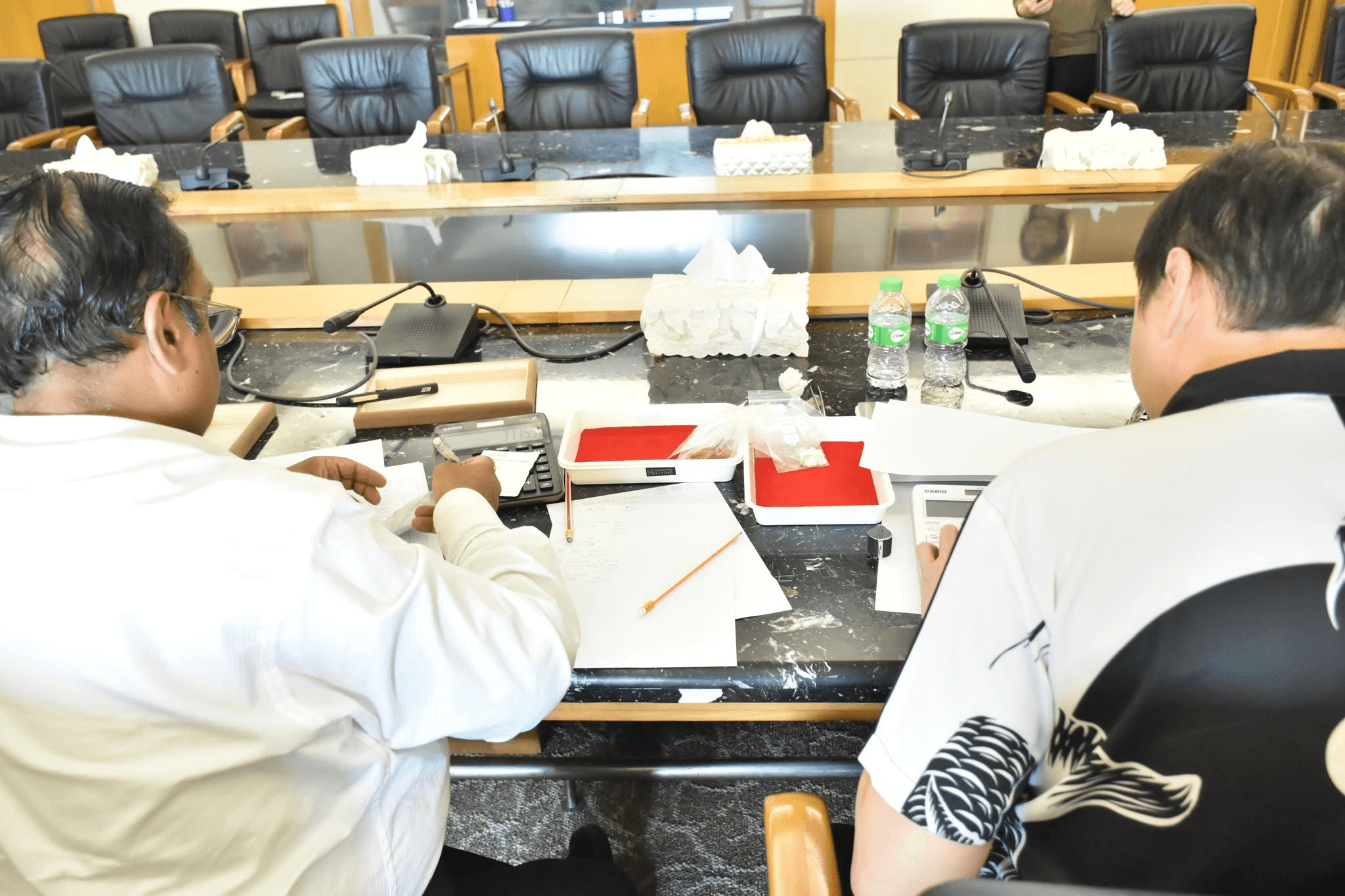
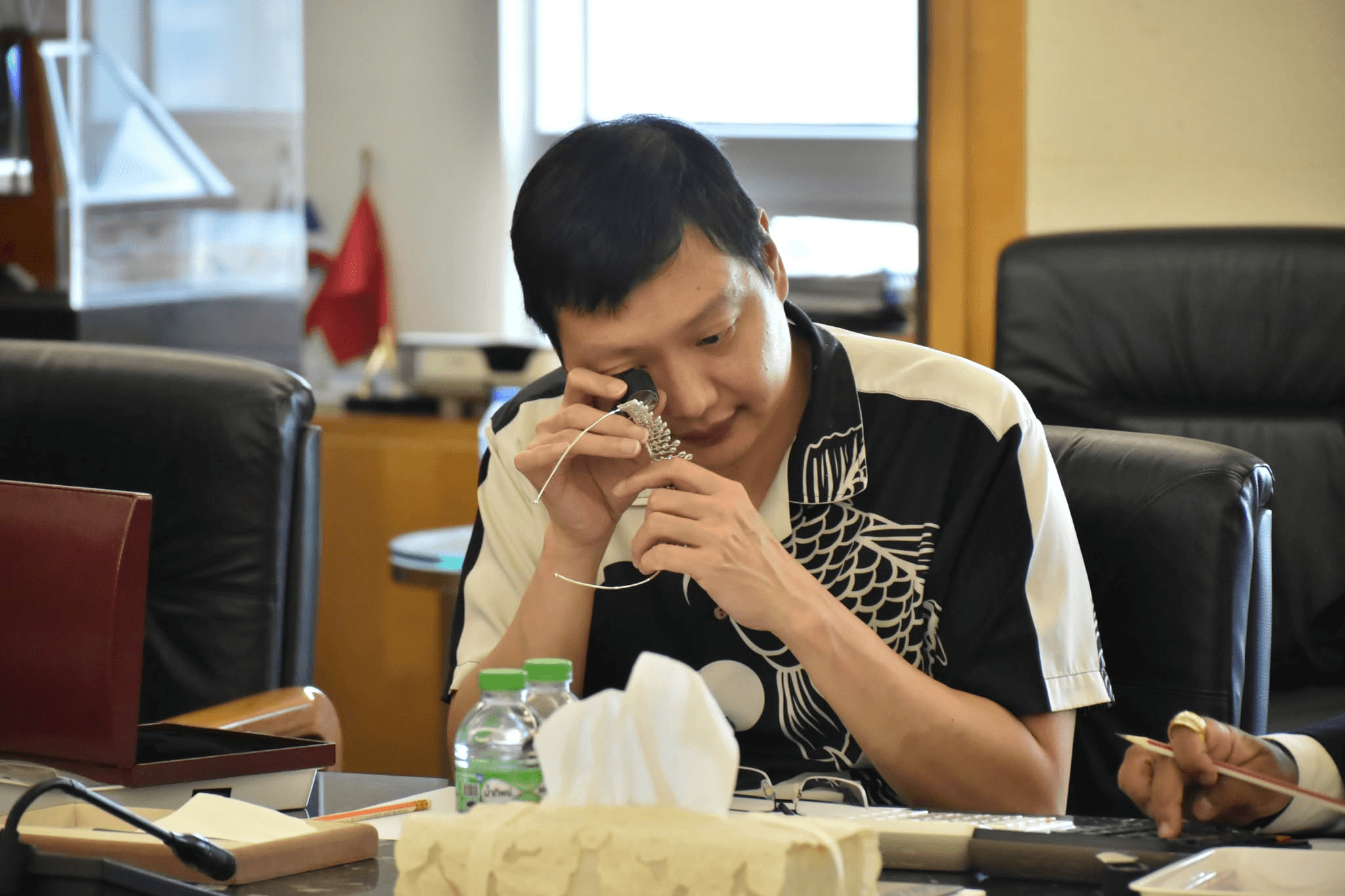
On 8 October 2026, the Thai Gem and Jewelry Traders Association, together with the Gem, Jewelry and Precious Metal Confederation of Thailand, sent its own experts to support the Suvarnabhumi Airport Customs Bureau in inspecting and valuing diamonds that had been seized for illegal importation.

[Journal]
Inside Thailand’s Gem Trade: How the Industry Helped Customs Value Seized Diamonds, and Why It Protects You
Something happened in Bangkok last week that most buyers will never hear about, and it is exactly the kind of thing that should make you trust a Thai gemstone more, not less. On 8 October 2026, the country’s gem and jewellery industry sat down next to Customs officials and helped the government do its job. I want to tell you what happened, because it says everything about how this trade actually works, and why where you buy a stone matters as much as the stone itself.
I run a gem and jewellery business in Bangkok, at the Jewelry Trade Center on Silom Road, with over 35 years of family history in this trade. So I am not reporting this from the outside. This is my industry policing itself, in public, in partnership with the state, and it is the clearest possible signal of something I tell buyers constantly: Thailand’s gem trade is one of the most serious, most accountable gem markets in the world. Here is the story, and here is what it means for anyone buying a stone from this country.
What Actually Happened at Suvarnabhumi?
On 8 October 2026, the Thai Gem and Jewelry Traders Association, together with the Gem, Jewelry and Precious Metal Confederation of Thailand, sent its own experts to support the Suvarnabhumi Airport Customs Bureau in inspecting and valuing diamonds that had been seized for illegal importation. In other words, the industry’s own specialists helped the government correctly value stones that someone had tried to bring into the country without following proper customs procedure.
The detail matters, so let me be precise about it. The Thai Gem and Jewelry Traders Association, known as the TGJTA, and the Gem, Jewelry and Precious Metal Confederation of Thailand, the GJPCT, are the two leading bodies representing this industry in Thailand. Their most senior people were directly involved: TGJTA President Chompol Pornjindarak, GJPCT President Somchai Pornjindarak, and TGJTA Vice President Hemant Kumar Jain coordinated with Customs officials to provide expert assessment of the seized diamonds. These were stones brought in without going through the proper channels, the classic profile of high-value goods moved to evade tax, which is exactly why Thai Customs keeps such a close watch on gems and jewellery. The context is real and current: only a day later, on 9 October, Customs at the same airport seized more than a kilogram of gold hidden inside a speaker, which tells you how actively this border is policed.
Why Would a Whole Industry Help the Government Value Seized Goods?
The industry helps because a clean, credible market is worth more to every honest business in it than any single smuggled parcel is worth to a cheat. When the trade’s own experts help Customs value seized stones accurately, they protect tax revenue, deter smuggling, and above all defend the reputation of Thailand as a place you can buy gems with confidence. It is self-interest of the best kind.
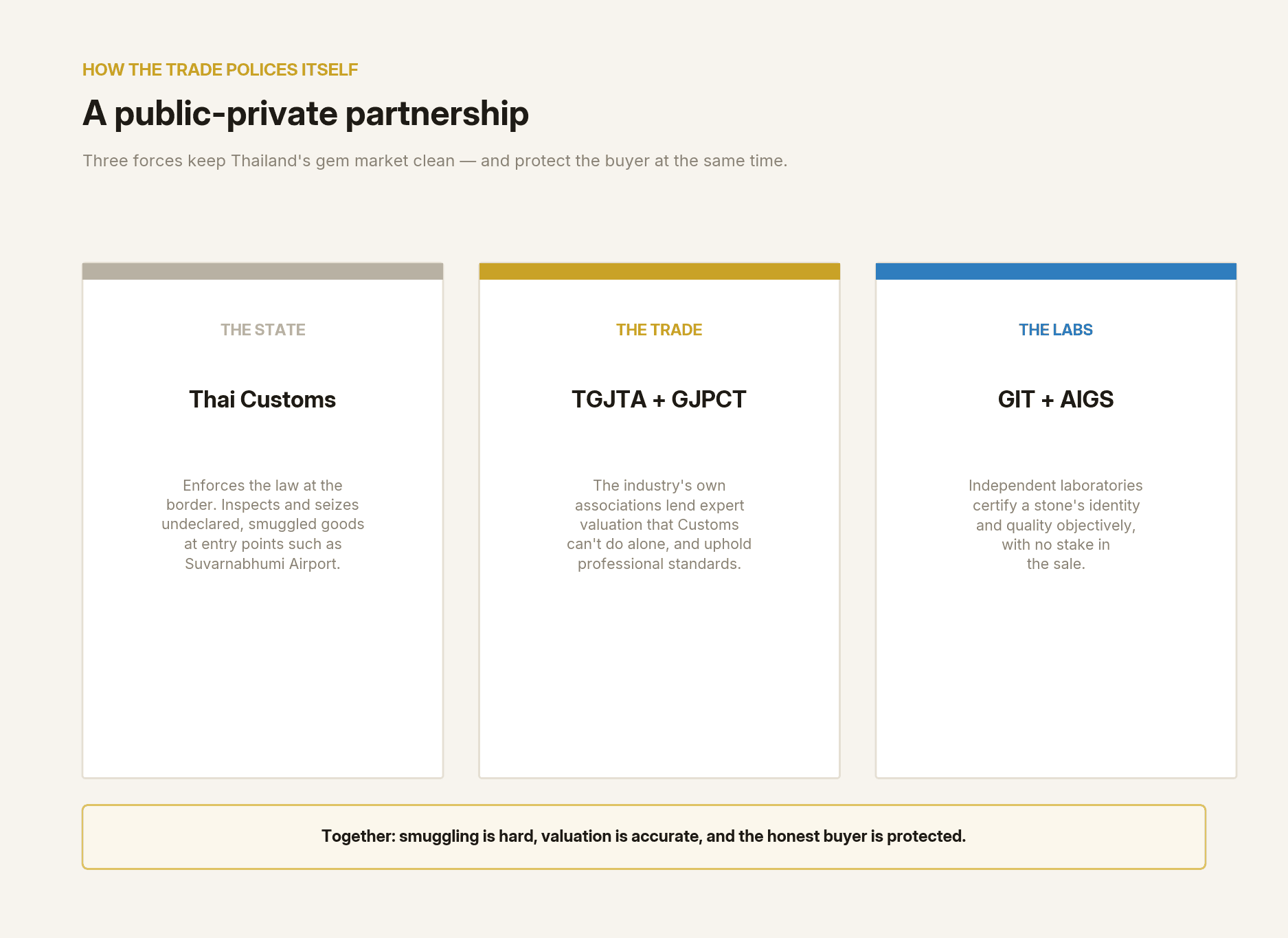
This is what a mature industry looks like, and it is genuinely rare. Think about who is at that table. On one side, Thai Customs, enforcing the law at the border. On the other, the trade associations that represent thousands of legitimate businesses, lending the deep technical skill needed to value a diamond correctly, something Customs officers are not trained to do alone. Backing both are Thailand’s independent gem laboratories, among the most respected in the world. Each plays a part, and the result is a market where smuggling is hard, valuation is accurate, and the honest majority is protected from being undercut by the dishonest few. The associations themselves described this as a public-private partnership built to improve transparency, raise industry standards, and defend the credibility of Thailand’s gem and jewellery sector on the world stage. That is not corporate language to me. That is the ground I build my business on.
What Does This Mean If You’re Buying a Gemstone or Diamond?
It means that when you buy from a legitimate, established business inside the Thai trade, you are buying in one of the most accountable gem markets on earth, where stones are properly imported, independently certified, and backed by a real paper trail. The same system that helps Customs catch smuggled diamonds is the system that protects you as a buyer.
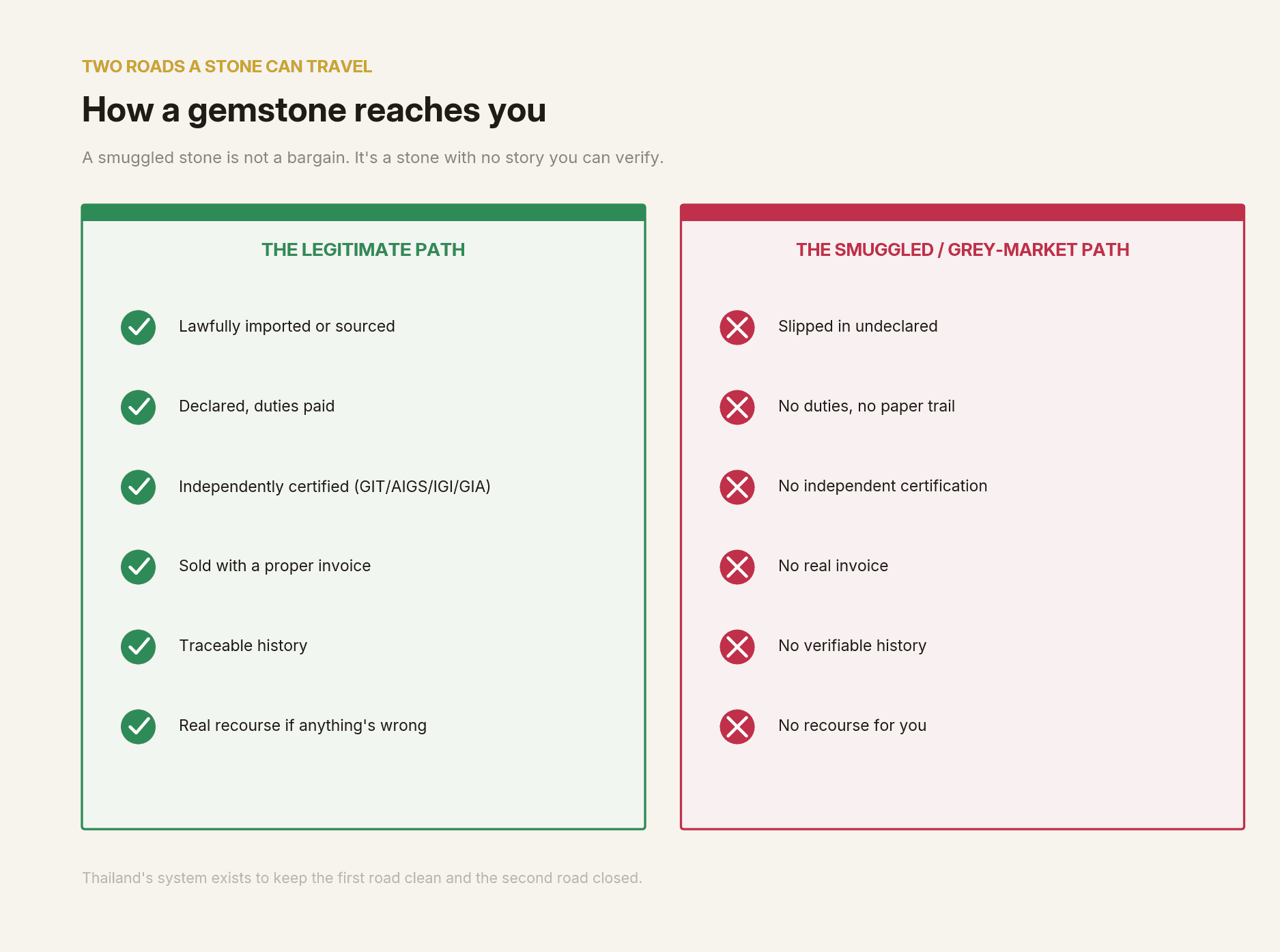
Here is the part most buyers never think about. A gemstone can reach you by two very different roads. The legitimate road means the stone was lawfully imported or lawfully sourced, declared, with duties paid, independently certified by a lab like GIT or AIGS, and sold to you with a proper invoice that states exactly what it is. The grey-market road means a stone that slipped through without paperwork, without certification, without a traceable history, and, crucially, without any recourse for you if it turns out to be something other than what you were told. A smuggled stone is not a bargain. It is a stone with no story you can verify and no protection behind it. The entire point of the system that was on display at Suvarnabhumi is to keep the first road clean and the second road closed, and that protects the buyer every bit as much as it protects the tax base.
How Thailand’s System Protects the Honest Buyer
Thailand’s system protects honest buyers through layers that reinforce each other: active Customs enforcement at the border, trade associations that uphold professional standards and assist the state, and independent laboratories that certify stones objectively. Buy within that system and you inherit all three layers of protection automatically.
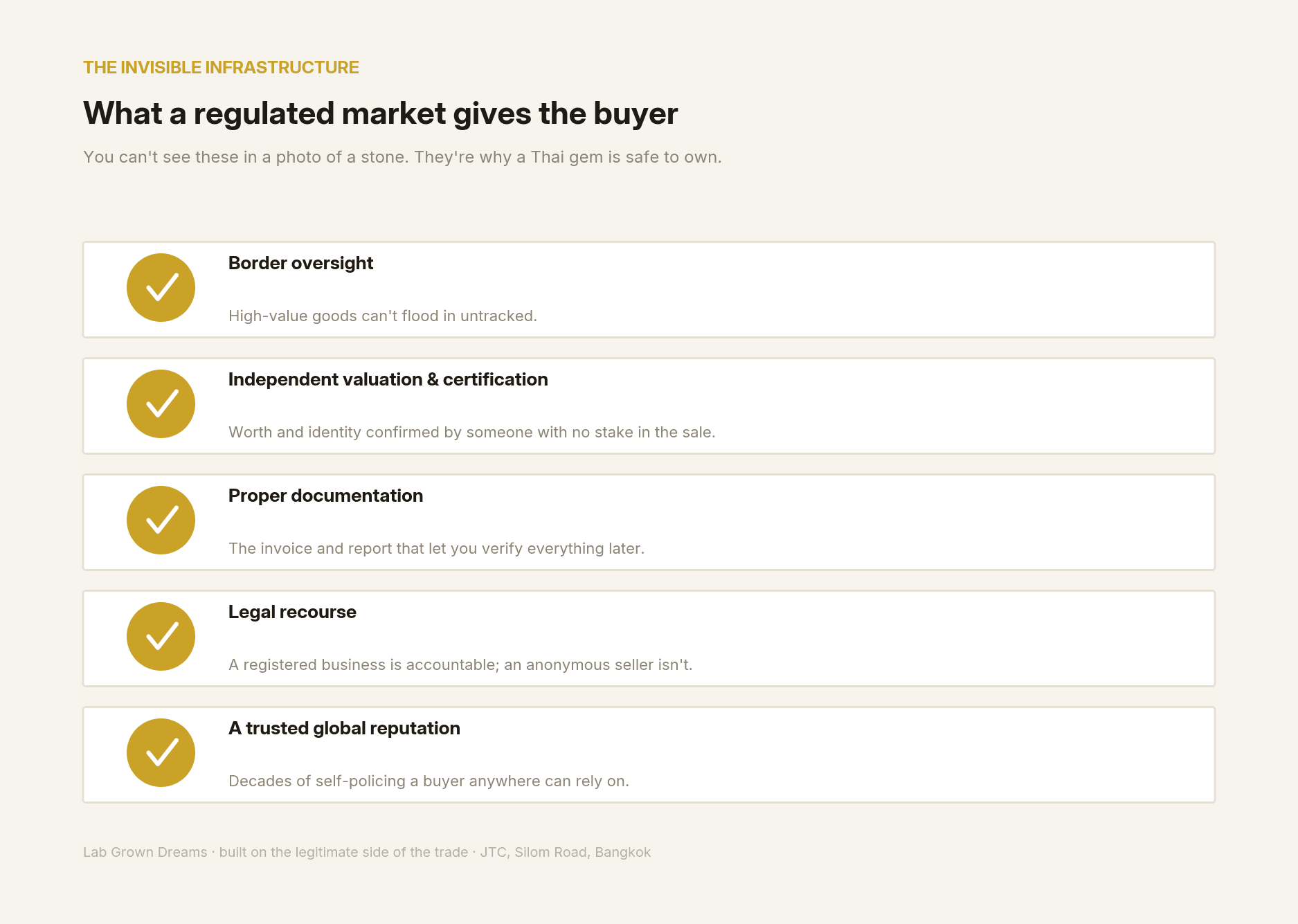
This is why I am genuinely proud to work in this trade, and why I point every nervous first-time buyer to these facts. You get border oversight, so high-value goods cannot simply flood in untracked. You get independent valuation and certification, so the worth and identity of a stone are confirmed by someone with no stake in the sale. You get proper documentation, the invoice and the report that let you verify everything later. You get legal recourse, because a registered business in a regulated market is accountable in a way an anonymous seller never is. And you get the quiet benefit of a trusted global reputation, built over decades by exactly the kind of self-policing that happened last week. These are not things you can see in a photograph of a stone. They are the invisible infrastructure that makes a Thai gemstone a safe thing to own.
Where Lab Grown Dreams Stands in All of This
Lab Grown Dreams is a business built entirely on the legitimate side of this trade. We operate from the Jewelry Trade Center on Silom Road, the heart of the Bangkok gem industry, with over 35 years of family heritage behind us. Every diamond we sell is IGI or GIA certified, every coloured stone can be verified with a GIT or AIGS report, every treatment is disclosed in writing, and every sale comes with a proper invoice. We are, in other words, exactly the kind of accountable, standards-driven business that this whole system exists to support.
I share this story not because we were in that room, but because the standards being defended in it are the standards we live by every day. When the leaders of this industry sit down with Customs to keep the market clean, they are protecting the trust that lets a buyer in London or New York or Dubai send money to a jeweller in Bangkok and know they will receive exactly what they were promised. That trust is the most valuable thing this trade owns, and it is the thing we work hardest to deserve.
If you want to buy a diamond or a gemstone from Thailand and have it made into something beautiful, do it the right way, from a real business inside the real system. You can see exactly how buying from us works, read more about who we are, explore our natural gemstone collection or start a custom piece. Or simply message us on WhatsApp and ask us anything, including to prove every claim on this page. Lab Grown Dreams by KC Gems House, Jewelry Trade Center, 919 Silom Road, Bangkok, part of a trade that takes its credibility seriously, serving buyers worldwide.
Frequently Asked Questions
Is it safe to buy diamonds and gemstones in Thailand? Yes, buying from a legitimate, established business in Thailand is very safe, because the Thai gem trade is one of the most accountable in the world. Active Customs enforcement, professional trade associations that uphold standards, and independent laboratories such as GIT and AIGS all work together. Buying from a registered business at a recognised address, with certification and a proper invoice, gives you multiple layers of protection.
What are the TGJTA and GJPCT? The TGJTA, the Thai Gem and Jewelry Traders Association, and the GJPCT, the Gem, Jewelry and Precious Metal Confederation of Thailand, are two of the leading bodies representing Thailand’s gem and jewellery industry. They uphold professional standards and, as seen in October 2026, assist government agencies such as Customs with expert valuation of seized stones, strengthening the integrity of the whole market.
Why does Thai Customs watch gems and jewellery so closely? Because gems and jewellery are high-value, easily concealed goods, they are a common target for smuggling aimed at evading import duties and taxes. Thai Customs therefore maintains strict oversight at points of entry like Suvarnabhumi Airport, and works with industry experts to value seized goods accurately, which protects tax revenue and the reputation of the legitimate trade.
How do I know a gemstone was imported or sold legally? A legally traded gemstone comes from a registered business and is sold with a proper invoice that identifies the stone, and usually with an independent laboratory report such as GIT, AIGS, IGI, or GIA. A legitimate seller discloses any treatments in writing and can show you the stone and its paperwork. The absence of documentation, certification, or a traceable business is a warning sign.
Does buying a certified stone from Bangkok mean it is legitimate? Independent certification from a recognised lab is a strong sign of legitimacy because it confirms the stone’s identity and quality objectively. Combined with a registered business, a real address such as the Jewelry Trade Center, a proper invoice, and disclosed treatments, it means you are buying inside Thailand’s regulated system rather than the grey market.
What is a public-private partnership in the gem trade? A public-private partnership in the gem trade is cooperation between government agencies, such as Customs, and private industry bodies, such as trade associations, to achieve shared goals like preventing smuggling and ensuring accurate valuation. The October 2026 collaboration between Thai Customs and the TGJTA and GJPCT is a clear example, designed to improve transparency and protect the credibility of Thailand’s gem sector.
Keep reading: How Buying From Us Works About Lab Grown Dreams and KC Gems House The Natural Gemstone Collection Order Custom Jewelry