Lab Emerald vs Natural Emerald: What's the Difference and Which Is Better?

Vinamra Gupta
Author
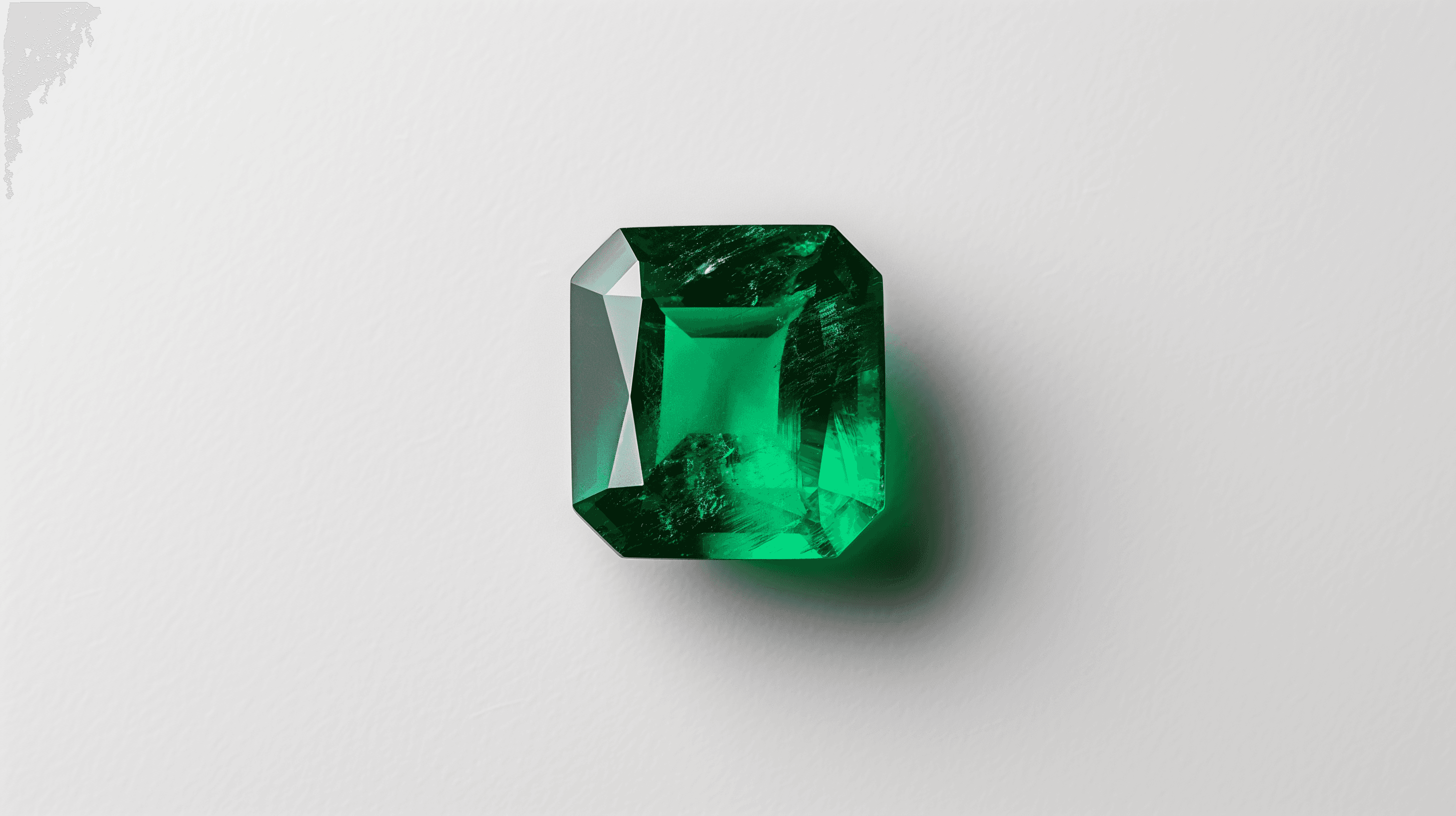
Both lab-grown and natural emeralds are real emeralds. Neither is fake, synthetic in the sense of being an imitation, nor comparable to a glass simulant or dyed green stone.
[Journal]
Lab Emerald vs Natural Emerald: What's the Difference and Which Is Better?
Lab-grown emeralds have transformed the colored gemstone market. Today, consumers can purchase a genuine emerald with the same physical, chemical, and optical properties as a mined emerald — while often saving a significant amount of money.
As lab-grown gemstones become more popular, one stone dominates the conversation: emeralds. Whether you're shopping for an engagement ring, a custom pendant, or a collector's piece, a common question emerges:
"Which is better: a lab emerald or a natural emerald?"
The answer is more nuanced than most buying guides suggest.
Both lab-grown and natural emeralds are real emeralds. Neither is fake, synthetic in the sense of being an imitation, nor comparable to a glass simulant or dyed green stone. They are genuine beryl crystals with the same chemical composition — one grown in a laboratory, the other formed underground over millions of years.
Let's examine the differences.
What is a Lab-Grown Emerald?
Lab-grown emeralds — also called created emeralds or synthetic emeralds — are produced in controlled laboratory environments using one of two primary methods: hydrothermal growth and flux growth.
In the hydrothermal process, an emerald seed crystal is placed inside a pressurized chamber filled with a nutrient-rich solution. Over weeks or months, beryl slowly crystallizes onto the seed, layer by layer, closely mimicking the geological conditions found deep within the Earth.
In the flux method, emerald-forming minerals are dissolved in a molten flux solution. As the solution cools, crystals grow around a seed in a process driven by chemistry rather than pressure.
Both methods produce genuine beryl — the same mineral family as natural emeralds — with the same green color caused by trace amounts of chromium and vanadium.
Today, many of the finest lab-grown emeralds rival the appearance of premium Colombian and Zambian natural stones.
What is a Natural Emerald?
Natural emeralds form over millions of years deep within the Earth's crust. They belong to the beryl mineral family and owe their characteristic green color to trace amounts of chromium, vanadium, or a combination of both.
The most prized natural emeralds come from Colombia, Zambia, Brazil, and Zimbabwe — each region producing stones with subtly different color characteristics and inclusion patterns.
Natural emerald formation is a rare geological event. The right elements, temperature, and pressure must align over an extraordinary timescale. This scarcity is what has made high-quality natural emeralds historically valuable.
Unlike diamonds, emeralds almost never form without internal characteristics. The inclusions found inside natural emeralds are so common they have their own name: jardin — French for "garden" — reflecting the organic, mossy patterns visible within the stone.
Are Lab Emeralds Real Emeralds?
Yes. Lab-grown emeralds are real emeralds.
They are composed of beryllium aluminum silicate — the same mineral compound as natural emeralds — with the same hardness (7.5–8 on the Mohs scale), the same refractive index, the same density, and the same green color produced by chromium and vanadium.
A gemologist examining a lab emerald and a natural emerald side by side cannot distinguish them with the naked eye. Advanced laboratory equipment is required to identify the growth environment.
This is why leading gemological institutions — including the Gemological Institute of America (GIA) and the American Gemological Laboratories (AGL) — issue grading reports for lab-grown emeralds, confirming their identity as genuine gemstones.
How Can You Tell the Difference?
To the naked eye, most consumers cannot distinguish between a lab-grown emerald and a natural emerald of comparable quality.
Even experienced jewelers cannot reliably identify the origin without specialized equipment. Both stones can display the same depth of green, the same brilliance, and similar internal characteristics.
Gemological laboratories use advanced instruments to examine:
Inclusion patterns and internal fingerprints
Fluid inclusions specific to hydrothermal growth
Trace element profiles (chromium, vanadium, and iron ratios)
UV fluorescence behavior
Infrared spectroscopy results
This analysis allows gemologists to determine whether an emerald formed naturally underground or was cultivated in a laboratory — but it requires professional instruments, not a loupe.
Color Differences: Lab vs Natural Emerald
Color is the most important quality factor in any emerald — more so than in diamonds.
Historically, the most prized emerald color is a vivid, slightly bluish-green sometimes described as "Colombian green." Natural Colombian emeralds with this color command significant premiums at auction.
High-quality lab-grown emeralds now routinely achieve:
Vivid, fully saturated green
Excellent transparency
Consistent, even color distribution throughout the stone
Natural emeralds vary considerably by origin. Zambian stones tend toward a deeper, more bluish green. Colombian emeralds are typically warmer and more intensely saturated. Brazilian stones often appear lighter in tone.
Rather than assuming one origin automatically produces better color, focus on the actual grading report and evaluate the stone directly. A well-grown lab emerald can match or exceed the color of a mid-range natural stone at a fraction of the cost.
Clarity Differences: Lab vs Natural Emerald
Emerald clarity is graded differently from diamond clarity. Because inclusions are almost universal in emeralds, the industry uses an "eye-clean" standard rather than expecting flawless material.
Both lab and natural emeralds produce different inclusion types.
Lab emerald inclusions:
Wispy or chevron growth patterns (hydrothermal)
Phenakite or flux residue inclusions (flux-grown)
Generally fewer inclusions overall
Natural emerald inclusions:
Jardin — the characteristic mossy, organic fingerprint
Three-phase inclusions containing solid, liquid, and gas
Surface-reaching fractures, which often require treatment with oils or resins
Lab-grown emeralds typically exhibit fewer and less severe inclusions than natural stones. For most buyers, the practical difference is that lab emeralds are far easier to source in eye-clean quality at accessible prices.
Which is Better for Jewelry?
Both lab and natural emeralds perform beautifully in jewelry, but they carry different practical considerations.
Lab emeralds are an excellent choice for everyday pieces — rings, pendants, earrings, and bracelets — because they are widely available in consistent quality, typically free of fracture-filling treatments, and priced accessibly enough to set in fine platinum or gold without compromise.
Natural emeralds are frequently treated with cedar oil, resin, or other substances to improve the appearance of surface-reaching fractures. Buyers should always ask whether a natural emerald has been treated, and to what degree. Treatment status directly affects value and long-term care requirements.
Not sure which is right for your piece? Chat with us on WhatsApp and our team will help you evaluate specific stones and find the best match for your design, lifestyle, and budget.
Lab Emerald vs Natural Emerald Pricing
Lab-grown emeralds have made exceptional emerald color accessible to a far broader range of buyers.
A high-quality natural Colombian emerald in the 1–2 carat range with vivid color, minimal treatment, and a recognized certificate can retail for several thousand dollars per carat. Fine, untreated examples command significantly more.
By contrast, lab-grown emeralds of equivalent visual quality are typically available at a fraction of that cost per carat — often 70–90% less than comparable natural stones.
As production methods continue to improve and volume increases, lab emerald prices have become increasingly accessible, making them a popular choice for custom jewelry and heirloom-quality pieces that would otherwise be out of reach.
That said, pricing for both lab and natural emeralds ultimately depends on carat weight, color saturation, clarity grade, cut quality, treatment status, and country of origin — not simply which type of emerald you choose.
Common Myths About Lab Emeralds
Myth #1: Lab Emeralds Are Fake
False. Lab-grown emeralds are genuine beryl gemstones with the same chemical composition, crystal structure, and optical properties as natural emeralds. They are not simulants, glass, or dyed stones. The only meaningful difference is origin — laboratory versus underground formation over millions of years.
Myth #2: Natural Emeralds Are Always Higher Quality
False. Natural emerald quality varies enormously. The vast majority of natural emeralds are heavily included and require treatment with oil or resin to look presentable in jewelry. A high-quality lab emerald will outperform a low-quality, heavily treated natural emerald in every visible respect.
Myth #3: Lab Emeralds Don't Have the Same Color
False. The finest lab-grown emeralds achieve vivid, saturated green color that is visually indistinguishable from premium natural stones. Color is determined by chromium and vanadium content — the same elements present in both lab and natural emeralds regardless of how they were formed.
Myth #4: Natural Emeralds Are More Durable
False. Both lab and natural emeralds share the same hardness (7.5–8 Mohs) and the same crystal structure. Long-term wearability depends more on cut quality, inclusion severity, and jewelry setting design than on whether the stone is lab-grown or mined.
Myth #5: Lab Emeralds Will Fade or Change Color Over Time
False. A properly grown lab emerald — whether hydrothermal or flux — will not change color under normal wear conditions. Color stability in emeralds is determined by chromium and vanadium concentration within the crystal structure, which is permanent. A certified, high-quality lab emerald should maintain its appearance for generations.
Myth #6: Natural Emeralds Hold Their Value Better
This depends entirely on quality. Untreated, high-color natural emeralds with certificates from recognized laboratories do carry strong resale potential. However, most natural emeralds on the market are heavily treated and hold limited resale value. Lab emeralds, like lab diamonds, are generally purchased for beauty and wearability — not as investment vehicles — and are priced accordingly.