Natural Ruby vs Lab Grown Ruby

Ansh Gupta
Author
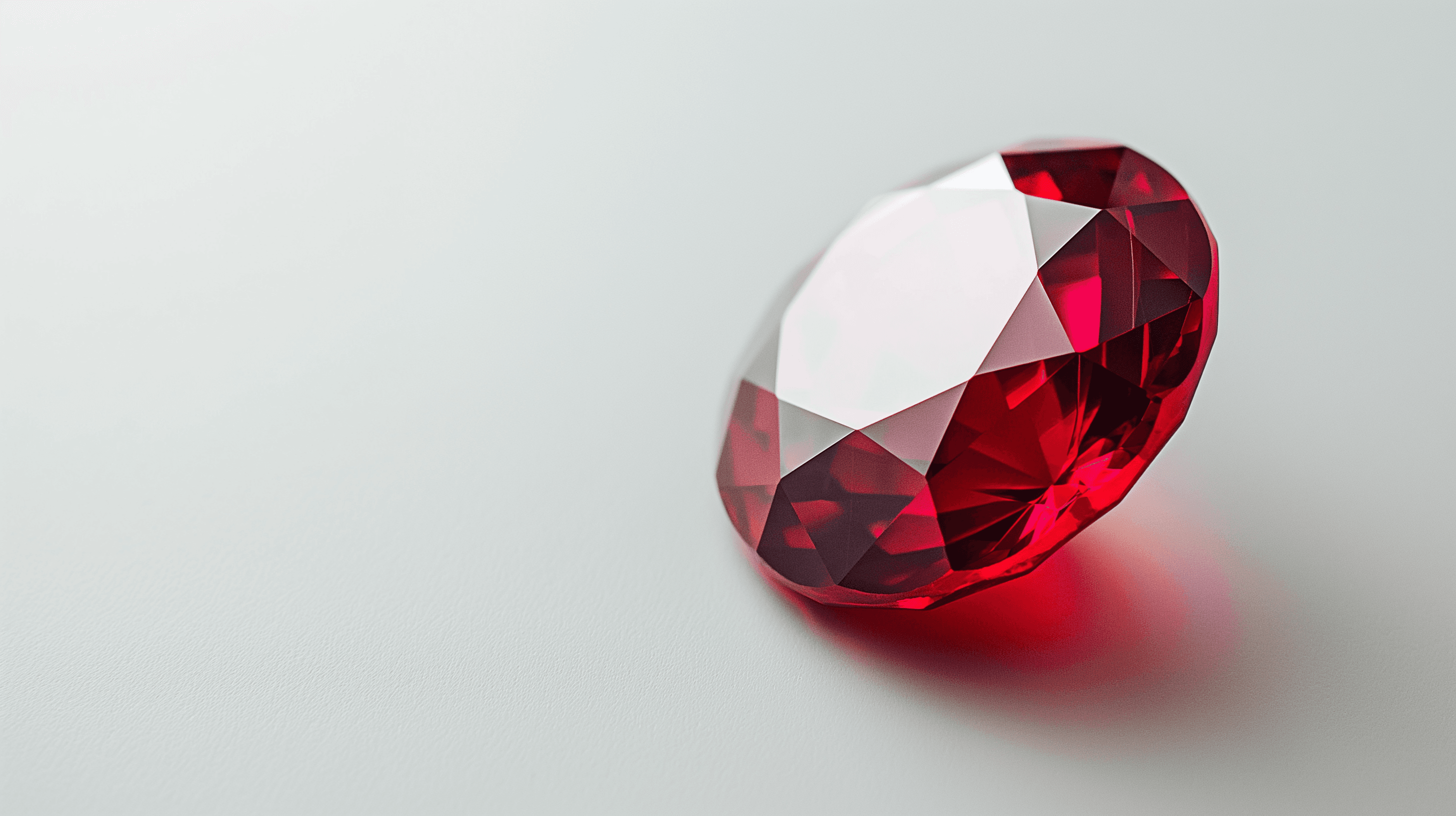
Both natural and lab-grown rubies are real rubies. Neither is fake, nor comparable to a red glass simulant or synthetic spinel imitation.
[Journal]
Natural Ruby vs Lab Grown Ruby: What's the Difference and Which Is Better?
Lab-grown rubies have reshaped what's possible for buyers who want exceptional color without exceptional cost. Today, consumers can purchase a genuine ruby with the same physical, chemical, and optical properties as a mined stone — at a fraction of the price.
As lab-grown gemstones gain mainstream acceptance, rubies have become one of the most discussed. Whether you're looking for an engagement ring centerpiece, a gift with deep personal meaning, or a bold statement piece, one question keeps coming up:
"Which is better: a natural ruby or a lab-grown ruby?"
The answer depends on what matters most to you — and it's more nuanced than most buying guides suggest.
Both natural and lab-grown rubies are real rubies. Neither is fake, nor comparable to a red glass simulant or synthetic spinel imitation. They are genuine corundum crystals with the same chemical composition — one formed deep underground over millions of years, the other grown in a controlled laboratory environment.
Let's examine the differences.
What is a Lab-Grown Ruby?
Lab-grown rubies — also called created rubies or synthetic rubies — are produced in laboratory environments using methods that replicate the natural conditions under which corundum forms. The two most common production methods are flame fusion (Verneuil process) and hydrothermal growth.
In the flame fusion method, aluminum oxide powder and chromium oxide are melted in a high-temperature flame and deposited onto a rotating seed crystal. The result is a large, dense ruby boule that can be cut into gemstones. This method has been in commercial use since 1902 and produces affordable, clean rubies at scale.
In the hydrothermal method, a ruby seed crystal is placed in a pressurized autoclave with a nutrient solution. Over months, corundum slowly crystallizes around the seed — producing rubies that more closely mirror the conditions of natural formation and often display finer optical properties.
Both methods produce genuine corundum with the same chromium-driven red color as natural rubies.
Today, high-quality hydrothermal lab-grown rubies are virtually indistinguishable from premium natural stones in everyday wear.
What is a Natural Ruby?
Natural rubies are a variety of corundum — aluminum oxide — that owe their red color to trace amounts of chromium. The intensity of that color depends on the chromium concentration and the way the stone interacts with light.
The finest natural rubies come from Myanmar (Burma), Mozambique, Thailand, Sri Lanka, and Madagascar. Burmese rubies are historically the most prized, known for their deep, saturated "pigeon's blood" red with a natural fluorescence that makes them appear to glow in daylight.
Natural ruby formation requires an exceptionally specific combination of geological conditions — the simultaneous presence of aluminum, chromium, and an absence of silica (which would otherwise form less valuable minerals). This makes fine-quality natural rubies among the rarest gemstones on Earth.
Unlike diamonds, natural rubies almost always contain inclusions. These internal characteristics — known in the trade as silk (fine rutile needles) — are considered part of the stone's identity and can actually confirm natural origin when assessed by a gemologist.
Are Lab-Grown Rubies Real Rubies?
Yes. Lab-grown rubies are real rubies.
They are composed of aluminum oxide (Al₂O₃) with trace chromium — the same mineral composition as natural rubies — with the same hardness (9 on the Mohs scale), the same refractive index, the same specific gravity, and the same red color caused by chromium absorption.
The Federal Trade Commission (FTC) in the United States and gemological standards worldwide require that lab-grown rubies be disclosed as laboratory-grown — but they are classified as rubies, not imitations.
Leading gemological laboratories including the Gemological Institute of America (GIA), the Gübelin Gem Lab, and the Swiss Gemmological Institute (SSEF) issue grading reports for lab-grown rubies, confirming their identity as genuine corundum gemstones.
How Can You Tell the Difference?
To the naked eye, a high-quality lab-grown ruby and a fine natural ruby of similar color can be visually indistinguishable. Both display the same depth of red, the same brilliance, and comparable transparency.
Even experienced jewelers and gemologists cannot reliably identify a ruby's origin without laboratory instruments. Origin determination requires specialized analysis, not just a trained eye.
Gemological laboratories use advanced techniques to examine:
Inclusion types and growth patterns unique to each formation method
Rutile silk — present in natural rubies, absent in most lab stones
Trace element chemistry (iron, gallium, and titanium ratios)
UV fluorescence characteristics
Infrared and Raman spectroscopy
This analysis establishes origin with certainty — but it requires professional laboratory equipment, not a gemological loupe.
Color Differences: Natural vs Lab-Grown Ruby
Color is the single most important quality factor in any ruby. The ideal ruby color — often described as "pigeon's blood" — is a vivid, pure red with a slight blue undertone and strong natural fluorescence in daylight.
Historically, achieving this color reliably in natural stones requires exceptional geological conditions and significant good fortune. The vast majority of mined rubies fall short of this standard.
High-quality hydrothermal lab-grown rubies now consistently achieve:
Vivid, pure red saturation
Strong chromium-driven fluorescence
Uniform color distribution with minimal zoning
Natural rubies vary significantly by origin. Burmese rubies are prized for their warm, fluorescent red. Mozambican rubies tend toward a slightly darker, more iron-rich tone. Thai rubies are often deeper and less fluorescent.
Rather than assuming natural origin guarantees superior color, evaluate each stone on its own merits. A well-grown lab ruby can match or outperform the color of a mid-range natural stone at a dramatically lower price point.
Clarity Differences: Natural vs Lab-Grown Ruby
Like emeralds, rubies are a Type II gemstone — meaning inclusions are expected and do not necessarily diminish value the way they would in a diamond. An eye-clean ruby of any origin is considered high quality.
Natural and lab-grown rubies produce distinctly different inclusion types:
Natural ruby inclusions:
Rutile silk — fine needle-like inclusions that confirm natural origin
Fingerprint inclusions (healed fractures)
Crystal inclusions of other minerals
Color zoning and growth patterns
Lab-grown ruby inclusions:
Curved striae (flame fusion) — curved growth lines invisible to the naked eye
Chevron or wavy growth patterns (hydrothermal)
Generally fewer and less severe inclusions overall
Lab-grown rubies are typically cleaner than their natural counterparts at the same price point. Eye-clean lab rubies in larger sizes are readily available, whereas equivalent natural rubies are extraordinarily rare and command significant premiums.
Which is Better for Jewelry?
Both natural and lab-grown rubies perform exceptionally well in fine jewelry. The right choice depends on your priorities.
Lab-grown rubies are an ideal choice for everyday wear — rings, earrings, pendants, and bracelets — because they are available in consistent, eye-clean quality, free from the heat treatment concerns that affect most natural stones, and priced so that you can invest in a high-quality setting without compromise.
Natural rubies are frequently heat-treated to improve color and clarity. This is an accepted industry practice, but buyers should always ask about treatment status, as untreated natural rubies carry a meaningful price premium. A gemological certificate from GIA, Gübelin, or SSEF should accompany any significant natural ruby purchase.
Not sure which is right for your piece? Chat with us on WhatsApp and our team will help you find the right stone for your design, lifestyle, and budget.
Natural Ruby vs Lab-Grown Ruby Pricing
Natural rubies are among the most expensive colored gemstones on earth. Fine-quality Burmese rubies with vivid color, minimal treatment, and recognized certificates have sold at auction for over $1 million per carat.
Even commercial-quality natural rubies in the 1–2 carat range can retail for thousands of dollars per carat once heat treatment, origin, and certification are factored in.
Lab-grown rubies of equivalent visual quality — vivid red, eye-clean, well-cut — are typically available at a fraction of that price per carat, often 80–95% less than comparable natural stones.
As production technology improves and output scales, lab ruby prices continue to become more accessible, making fine red gemstones available to a much broader range of buyers than ever before.
That said, pricing for both natural and lab-grown rubies ultimately depends on carat weight, color saturation, clarity, cut quality, treatment history, and country of origin — not simply which type of ruby you choose.
Common Myths About Lab-Grown Rubies
Myth #1: Lab-Grown Rubies Are Fake
False. Lab-grown rubies are genuine corundum gemstones with the same chemical composition, crystal structure, hardness, and optical properties as natural rubies. They are not glass, synthetic spinel, or dyed stones. The only difference is origin — a laboratory rather than a geological formation over millions of years.
Myth #2: Natural Rubies Are Always Higher Quality
False. The vast majority of natural rubies are heavily included, significantly heat-treated, and far from the vivid red color buyers imagine. A high-quality lab-grown ruby will outperform a low-quality, heavily treated natural ruby in color, clarity, and brilliance — at a fraction of the price.
Myth #3: Lab-Grown Rubies Look Pale or Dull
False. Modern hydrothermal lab-grown rubies achieve the same vivid, chromium-driven red as fine natural stones. The characteristic fluorescence that makes rubies appear to glow in daylight is present in high-quality lab stones just as it is in natural Burmese rubies.
Myth #4: Natural Rubies Are Harder and More Durable
False. Both natural and lab-grown rubies are corundum and rank 9 on the Mohs hardness scale — second only to diamond. Their hardness, toughness, and resistance to scratching are identical. Long-term durability in jewelry depends on cut quality, inclusion severity, and setting design, not whether the stone is lab-grown or mined.
Myth #5: Lab-Grown Rubies Will Fade Over Time
False. The red color of a ruby — lab-grown or natural — is caused by chromium atoms embedded within the crystal structure. That chromium is not going anywhere under normal wear conditions. A properly grown lab ruby will maintain its color permanently, just as a natural ruby does.
Myth #6: You Can Always Tell a Lab Ruby From a Natural One
False. Distinguishing a high-quality lab-grown ruby from a fine natural ruby requires laboratory-grade equipment and trained gemologists — not a visual inspection or a loupe. Even experts with decades of experience cannot reliably identify origin by eye alone. This is precisely why gemological certificates from GIA, Gübelin, or SSEF are essential for any significant ruby purchase.