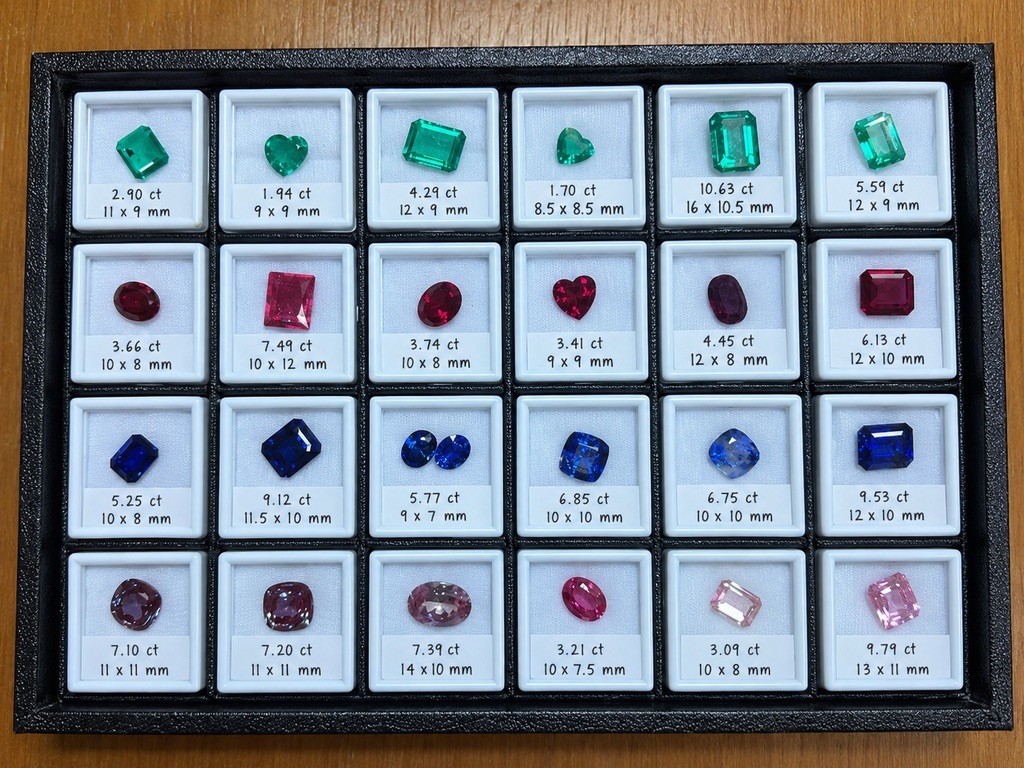
Are Lab-Grown Emeralds Real? An Honest Jeweller's Answer

Updated
Yes, a lab-grown emerald is real emerald. It is real beryl, the same mineral as a mined emerald, with the same chemistry, green and hardness. Here is the honest science, where lab emerald beats mined, and how to avoid the fakes that do exist.

[Journal]
Are Lab-Grown Emeralds Real? An Honest Jeweller's Answer
This is the question I get asked more than almost any other about coloured stones, usually in a slightly worried voice: are lab-grown emeralds actually real, or am I being sold a fancy piece of glass? It is a fair thing to worry about, because the word "lab" makes people assume "fake," and the emerald market in particular has a long history of treatments and trickery that has made buyers cautious. So let me give you the straight answer, as someone who grows, cuts and sets these stones every day.
Yes. A lab-grown emerald is a real emerald. It is real beryl, the exact same mineral as a mined emerald, with the same chemistry, the same green, the same hardness. The only difference is that it grew in a controlled environment instead of in the earth. It is not glass, it is not cubic zirconia, it is not an imitation. In this guide I want to show you exactly why that is true, where lab emerald is actually better than mined, where it is a little more delicate, and how to buy one without getting fooled by the fakes that genuinely do exist.
Are Lab-Grown Emeralds Real Emeralds?
Yes, lab-grown emeralds are real emeralds. An emerald is the green variety of the mineral beryl, coloured by chromium and sometimes vanadium, and a lab-grown emerald is that exact same beryl with that exact same colouring, simply grown in controlled conditions rather than mined. Chemically, physically and optically it is emerald, which is why a gem laboratory will certify it as a lab-grown emerald, not as a simulant.

That chart lays the two side by side, and the headline is simple: on the things that make an emerald an emerald, the mineral, the chemistry, the colour, the hardness, they are identical. Where they differ is origin, clarity, treatment and price, and interestingly most of those differences run in the lab stone's favour for a buyer on a budget. The green you love in an emerald comes from a trace of chromium sitting inside the beryl structure, and that happens in a lab exactly as it happens underground. This is the whole reason a lab emerald can be certified as a genuine gemstone, because that is precisely what it is.
How Are Lab-Grown Emeralds Made?
Lab-grown emeralds are made by recreating the heat, pressure and chemistry that form emeralds in the earth, using one of two established methods: flux growth or hydrothermal growth. Both dissolve the right ingredients and let real beryl crystals slowly grow over weeks or months, producing genuine emerald rather than an imitation of one.
The two methods have been around for decades and are well understood in the trade. Flux growth dissolves the beryl ingredients in a molten flux and lets emerald crystals form slowly as it cools, a process that can take many months. Hydrothermal growth uses hot water under pressure, closer to how emeralds actually form in nature, to deposit layer upon layer of real beryl. The details matter to a gemmologist, but for you as a buyer the important point is the same either way: the output is real emerald, grown slowly and deliberately, not a lookalike cooked up overnight. You can read how lab-grown gems in general are created in our lab-grown gemstone guide.
Are Lab-Grown Emeralds Better Quality Than Mined?
In clarity, often yes. Natural emeralds are among the most included gemstones there are, so heavily included that the trade affectionately calls the internal inclusions the "jardin," French for garden. Lab-grown emeralds are frequently cleaner and more vivid, because they grow without the geological chaos that fractures and clouds most mined stones, and they often need little or none of the fracture-filling treatment that nearly every natural emerald receives.

This is where it gets genuinely interesting, and where you need to keep two different comparisons separate in your head, which is exactly what that chart does. The first comparison is lab emerald versus mined emerald, and there the lab stone is simply a real emerald that is usually cleaner and far cheaper. The second comparison is the one to actually watch out for: real emerald, whether lab or mined, versus a simulant. Green glass, green cubic zirconia, and "emerald doublets," which glue a thin slice of real material over a cheap base, are all pretending to be emerald without being beryl at all. A lab-grown emerald is on the real side of that line. A simulant is not. Almost every "too good to be true" emerald horror story is really a simulant sold as the real thing, which is a dishonesty problem, not a lab problem.
Do Lab-Grown Emeralds Have the Same Hardness and Durability?
Yes, a lab-grown emerald has the same hardness as a mined emerald, because it is the same mineral, sitting at 7.5 to 8 on the Mohs scale. That is hard enough to be a beautiful, wearable gem, but emerald as a species is more delicate than sapphire, ruby or diamond, so any emerald, lab or mined, deserves a little more care, especially in a ring worn every day.

I always have this conversation honestly with clients, because it is the one real trade-off with emerald and I would rather you know it up front. Emerald is softer than corundum and, because of its typical internal character, a little more brittle, so it rewards a thoughtful setting and gentle handling. A bezel or a halo that protects the edges is ideal for an emerald ring, and emerald makes a wonderful pendant or pair of earrings precisely because those pieces take less daily knocking than a ring. Keep it away from ultrasonic cleaners and hard knocks, clean it with warm soapy water and a soft brush, and it will stay gorgeous for a lifetime. None of this is unique to lab emerald, it is simply the nature of emerald, and a lab stone behaves exactly the same way because it is the same mineral.
How Do You Avoid Being Sold a Fake Emerald?
You avoid a fake by insisting on clarity about what the stone actually is, in writing. Ask the one question that matters: is this real emerald, whether lab-grown or mined, or is it a simulant such as glass, cubic zirconia or a doublet? A reputable seller will tell you plainly, disclose any treatment, and offer a report from a recognised gem laboratory for a significant stone.
This is really the heart of it, and it applies whether you buy from us or anyone else. The problem in the emerald market was never lab-grown stones, which are real and honestly a gift to buyers who want that green affordably. The problem has always been disclosure: natural stones sold without mentioning heavy oiling, and simulants sold as genuine emerald. We solve that by labelling every stone for exactly what it is, disclosing any treatment in writing, and offering certification where it counts. When you buy a lab-grown emerald from us, you know you are getting real beryl, you know what has and has not been done to it, and you know what you paid for. That honesty is the entire point of how we work.
Why Buy a Lab-Grown Emerald?
Buy a lab-grown emerald when you want that unmistakable rich green, in a real, certifiable gemstone, without the enormous price of a fine natural emerald. Because lab emeralds are often cleaner and always far more affordable, your budget can go toward a larger, more vivid stone, a finer setting, or a fully custom design built around you.
A fine natural emerald in a good size is one of the most expensive things in the gem world, which puts the classic emerald look out of reach for most people. A lab-grown emerald changes that completely. You get the real stone, the real green, often with better clarity, and you can actually afford to wear it as a serious ring, a statement pendant, or the green centre of a custom piece paired with white diamonds. Because we grow, cut and set in-house in Bangkok, we can build exactly the emerald piece you picture, at factory-direct prices, and ship it worldwide. Explore lab-grown emeralds, see how emerald sits alongside the other coloured stones in our lab-grown coloured gemstones guide, or start a custom design.
Tell us the green you have in mind and the piece you want, and we will show you what is possible. Message us on WhatsApp with your idea, or explore our bridal collection for an emerald engagement piece. Lab Grown Dreams by KC Gems House, Jewelry Trade Center, 919 Silom Road, Bangkok.
Frequently Asked Questions
Are lab-grown emeralds real emeralds?
Yes. A lab-grown emerald is real beryl, the exact same mineral as a mined emerald, with the same chemistry, colour and hardness. It is coloured by chromium and sometimes vanadium just like a natural emerald, and a gem laboratory will certify it as a lab-grown emerald, not a simulant. It is completely different from glass or cubic zirconia, which only imitate the look.
How are lab-grown emeralds made?
Lab-grown emeralds are made by two established methods, flux growth and hydrothermal growth, both of which recreate the chemistry and conditions that form emerald in nature. Real beryl crystals grow slowly over weeks or months, producing genuine emerald. Both methods have been used in the trade for decades and both yield real, certifiable emerald rather than an imitation.
Are lab-grown emeralds better quality than mined ones?
In clarity, often yes. Natural emeralds are heavily included (the "jardin") and almost always fracture-filled with oil or resin, while lab-grown emeralds are frequently cleaner, more vivid, and may need little or no such treatment. They are the same mineral, so the difference is that a lab emerald often gives you a cleaner, brighter stone for far less money.
Are lab-grown emeralds as hard and durable as mined emeralds?
Yes, because they are the same mineral, both sit at 7.5 to 8 on the Mohs hardness scale. That makes emerald a beautiful, wearable gem, but as a species it is more delicate than sapphire, ruby or diamond. Any emerald, lab or mined, benefits from a protective setting and gentle care, especially in an everyday ring.
How much cheaper are lab-grown emeralds than natural?
Lab-grown emeralds cost a fraction of the price of comparable fine natural emeralds, which are among the most expensive coloured stones in the world. This means your budget can buy a larger, cleaner, more vivid green stone, or go toward a finer setting or a fully custom design, without compromising on the fact that it is a real gem.
How do I make sure I am buying a real lab-grown emerald and not a fake?
Ask directly whether the stone is real emerald, whether lab-grown or mined, or a simulant such as glass, cubic zirconia or a doublet, and get the answer in writing. A reputable seller discloses the stone's identity and any treatment, and offers a report from a recognised gem laboratory for a significant stone. We label every stone for exactly what it is.
Can lab-grown emeralds be certified?
Yes. A recognised gem laboratory can test and certify a lab-grown emerald, confirming that it is genuine beryl and that it was grown rather than mined. For a significant stone we recommend certification, because it gives you independent proof of exactly what you own, which is the best protection against the simulants and non-disclosure that have long troubled the emerald market.
Keep reading: