Fancy Cut Lab-Grown Diamonds: The Cutter's Guide to Asscher, Radiant, Trillion and Beyond

Vinamra Gupta
Author
A fancy cut simply means any diamond shape that is not a round brilliant. That is the entire definition. It has nothing to do with quality, price, or fanciness in the everyday sense. Emerald, Radiant, Trillion, Asscher; we have it all.

[Journal]
Fancy Cut Lab-Grown Diamonds: The Cutter’s Guide to Asscher, Radiant, Trillion and Beyond
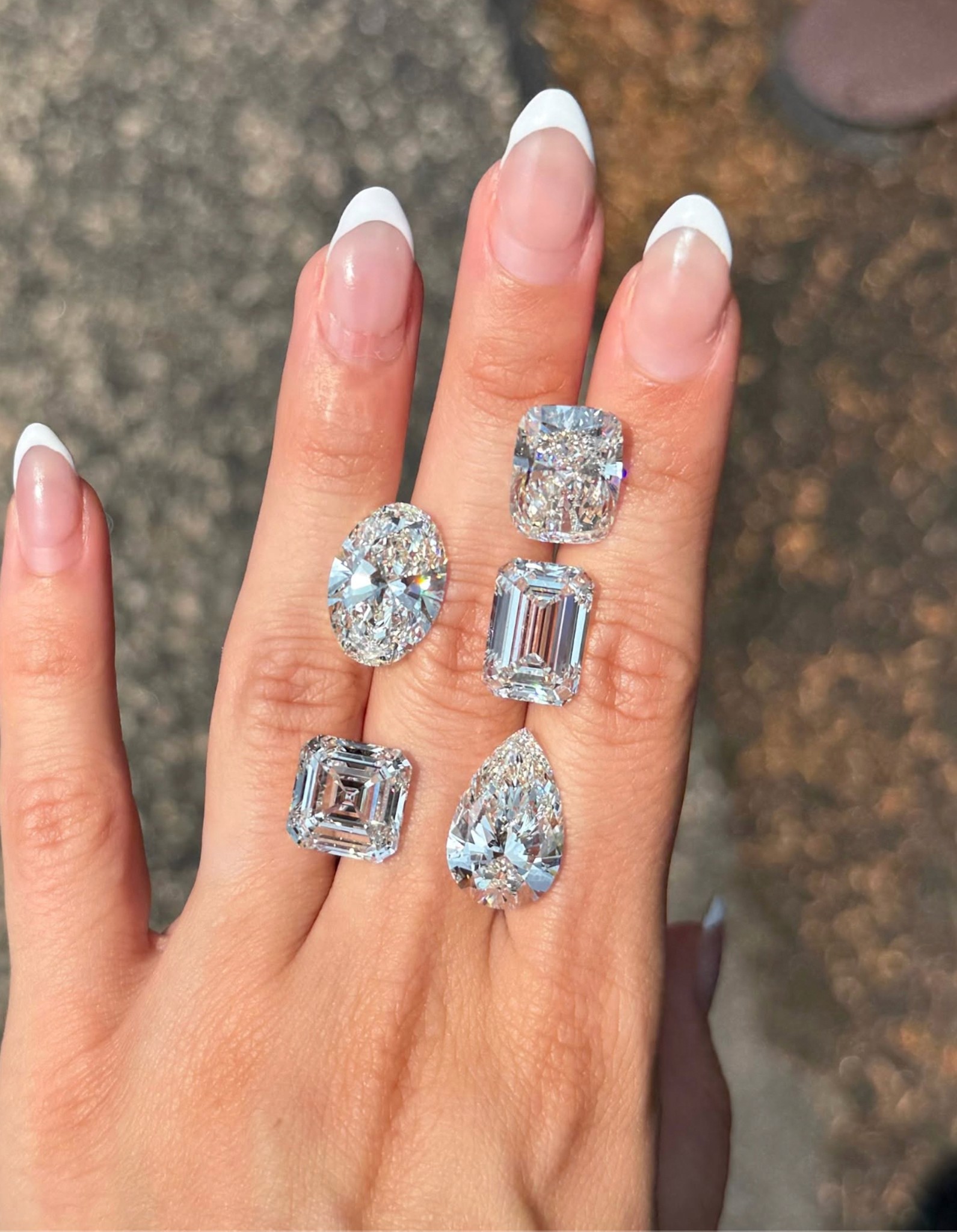
Several different fancy cut lab-grown diamonds together, catching light exclusively at Lab Grown Dreams.
Round diamonds are lovely. They are also what everyone else has. The moment you step outside the round brilliant, you enter the world of fancy cuts, and it is by far the more interesting place to be. It is where personality lives, where value hides, and where a good cutter can give you something nobody else on the street is wearing.
I make these every week, so let me be your guide. This is the honest, insider tour of fancy cut lab-grown diamonds, what each shape does, which ones are having a moment, which one is quietly fading, and how to choose the one that is actually you. By the end you will know more about fancy shapes than most people who sell them.
First, What “Fancy Cut” Actually Means
Let me clear up the terminology, because it confuses people constantly. A fancy cut simply means any diamond shape that is not a round brilliant. That is the entire definition. It has nothing to do with quality, price, or fanciness in the everyday sense. Emerald, asscher, radiant, cushion, pear, marquise, trillion, they are all fancy cuts, which just means “not round.”
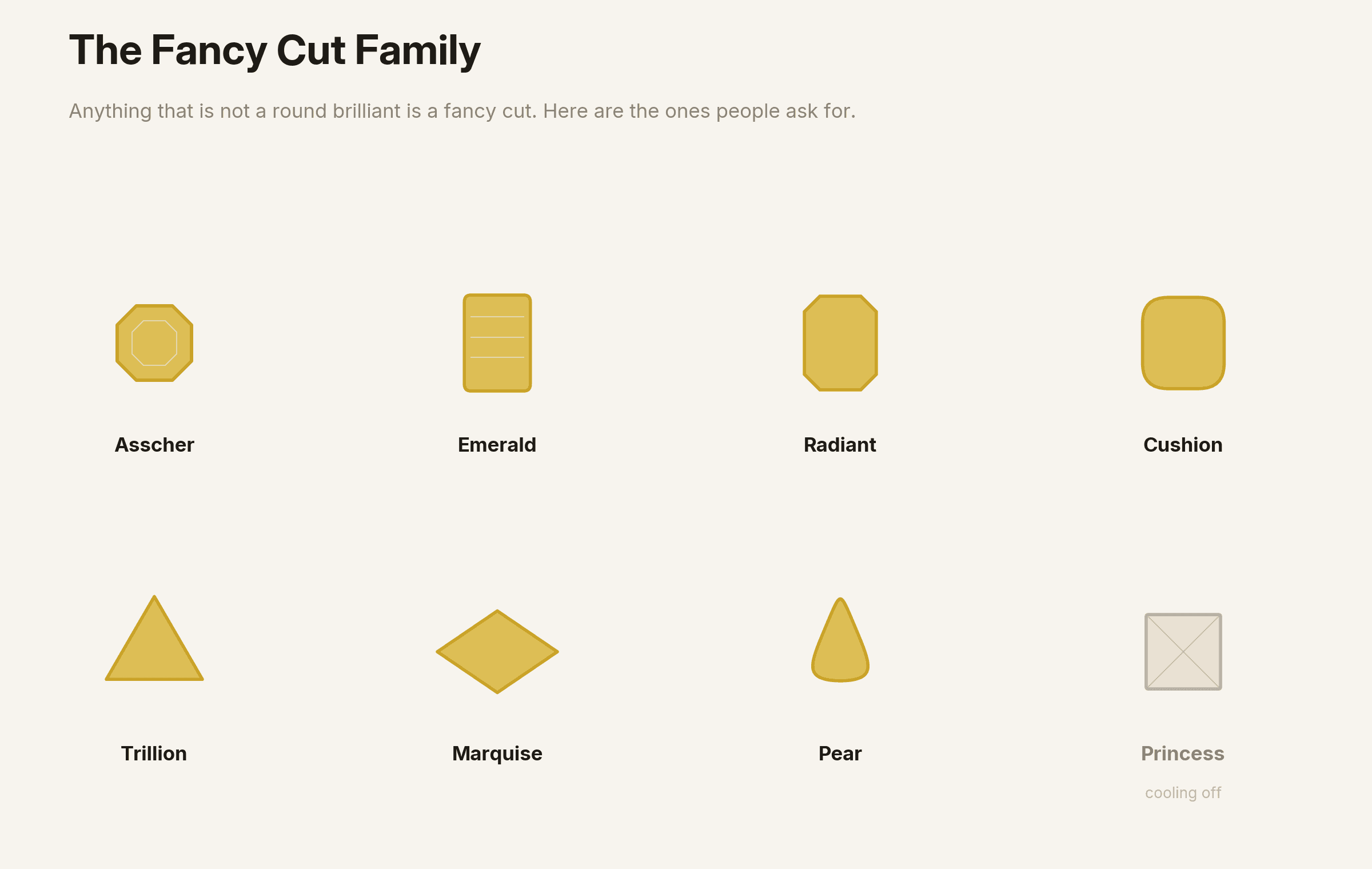
There is a whole family of them, and each has a completely different character. Some sparkle like fireworks. Some are calm and architectural. Some are rare enough that heads turn simply because nobody recognises the shape. The trick is knowing which personality matches yours.
The Two Families That Explain Everything
Before we go shape by shape, here is the one concept that makes all of this click. Fancy cuts split into two families based on how they are faceted, and this single distinction predicts almost everything about how a stone will look.
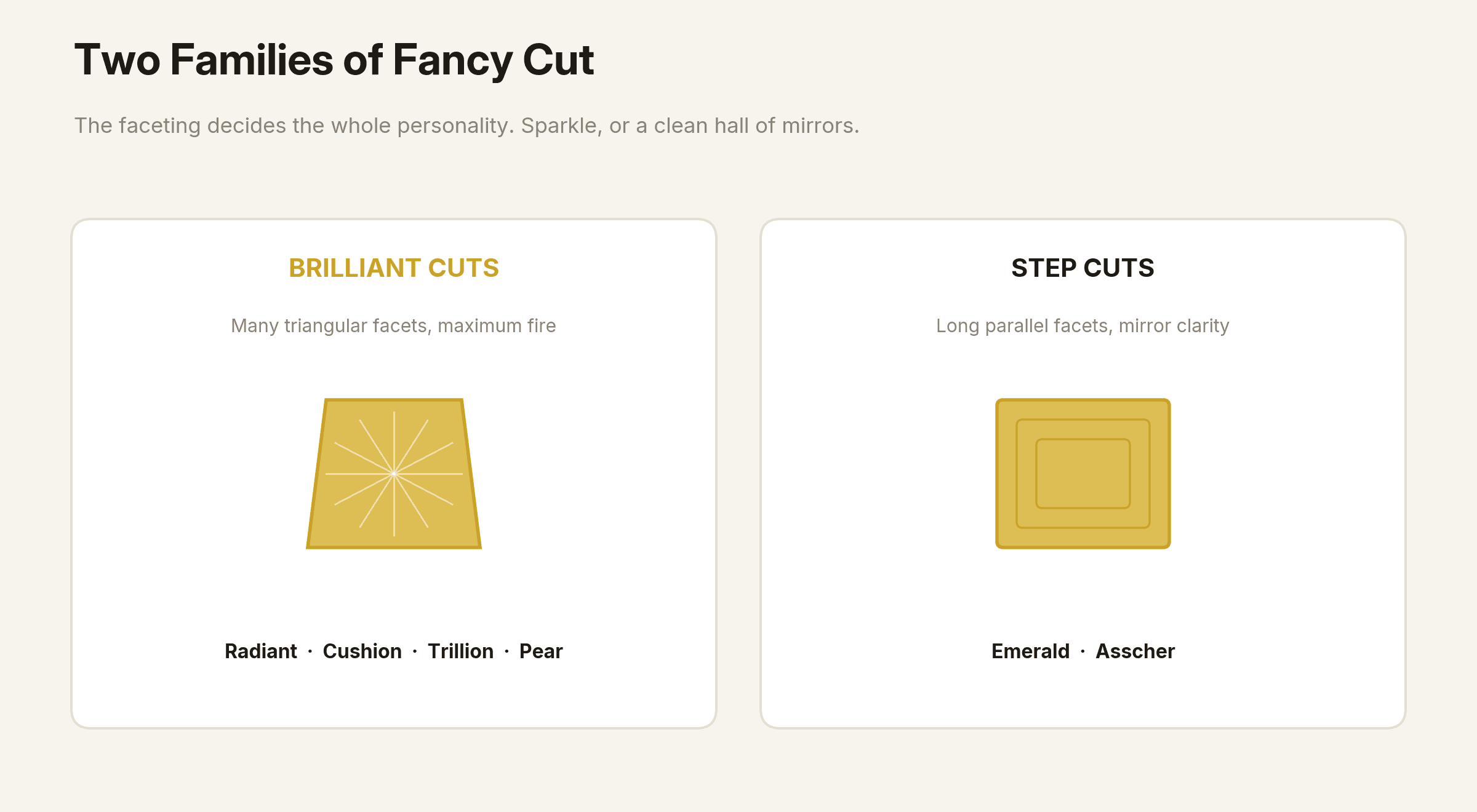
Brilliant cuts have many small facets arranged to bounce light around and maximise sparkle. Radiant, cushion, trillion, pear, and marquise are brilliant-style, so they fire and flash. Step cuts have long, parallel facets arranged like a staircase, which produces a calm, clear, hall-of-mirrors effect instead of sparkle. Emerald and asscher are the step cuts, and they trade fireworks for a cool, sophisticated clarity.
Neither is better. But knowing which family you are drawn to instantly narrows your choices. If you love sparkle, look at the brilliant cuts. If you love clean geometry and understated elegance, the step cuts are calling you.
The Fancy Cuts, One by One
Here is the tour, from the trade’s most-loved to the delightfully unusual.
Asscher: The Art Deco Icon
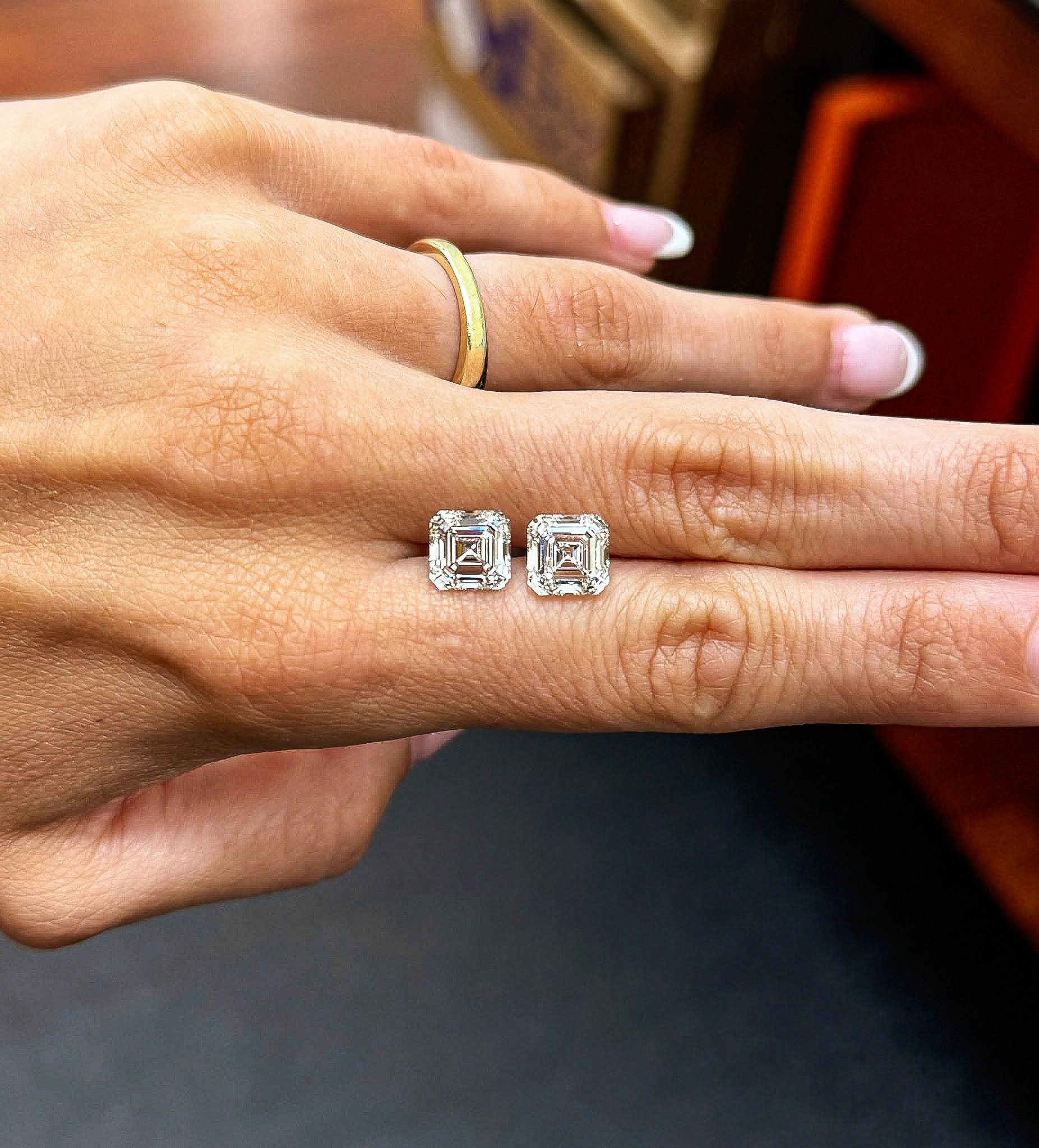
A pair of asscher cut lab-grown diamonds, top-down, showing the concentric step facets.
The asscher is a square step cut with cropped corners, giving it eight sides and an unmistakable Art Deco character. Look into one and you see the famous “hall of mirrors,” concentric squares receding into the stone. It is elegant, vintage, and quietly confident rather than flashy. It surged back into fashion this year, and it is one of my favorite cuts to set because it looks like a piece of design, not just a gem. One honest note: because step cuts are so clear, they hide less, so asscher rewards good clarity. In lab-grown that is easy and affordable to achieve, which is part of why lab-grown asschers look so good for the money.
Radiant: The Best of Both Worlds

If you want a rectangular or square outline but with serious sparkle, the radiant is your cut. It takes the crisp shape of an emerald and fills it with brilliant faceting, so you get clean lines and fire at the same time. Its cropped corners also make it more durable than sharp-cornered shapes, and its faceting is brilliant at hiding inclusions and intensifying colour, which is exactly why it is a favorite for fancy coloured diamonds. The elongated radiant in particular is one of the fastest-rising shapes in the entire market right now.
Emerald: Understated Sophistication
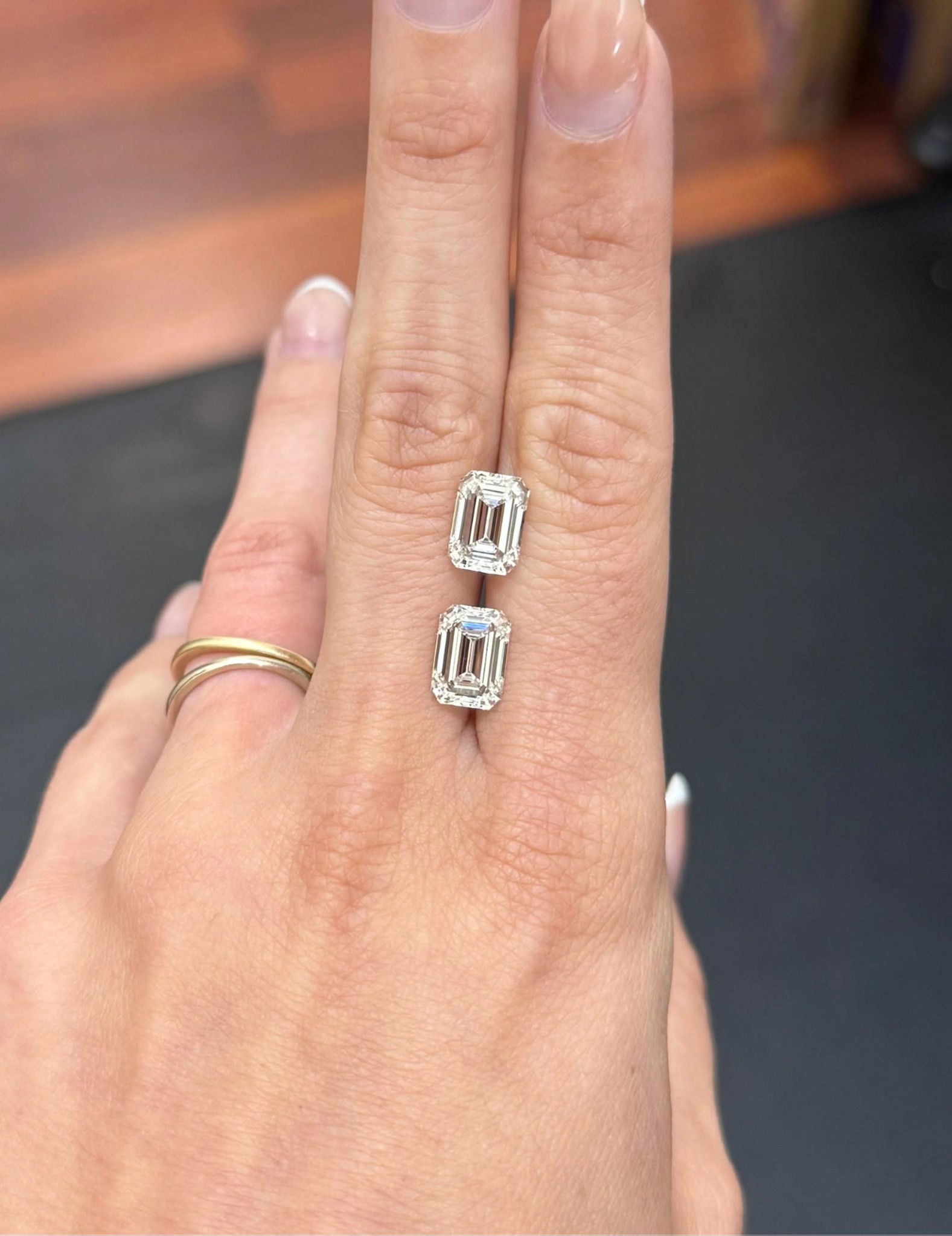
The emerald cut is the step cut most people know, a rectangle with long, elegant facets and beautifully cut corners. It does not sparkle so much as gleam, with flashes of light across those long facets. It reads as sophisticated and timeless, it flatters the finger with its length, and it pairs perfectly with clean modern settings and geometric bands. Like the asscher, it prizes clarity, which lab-grown delivers effortlessly.
Cushion: Vintage Romance
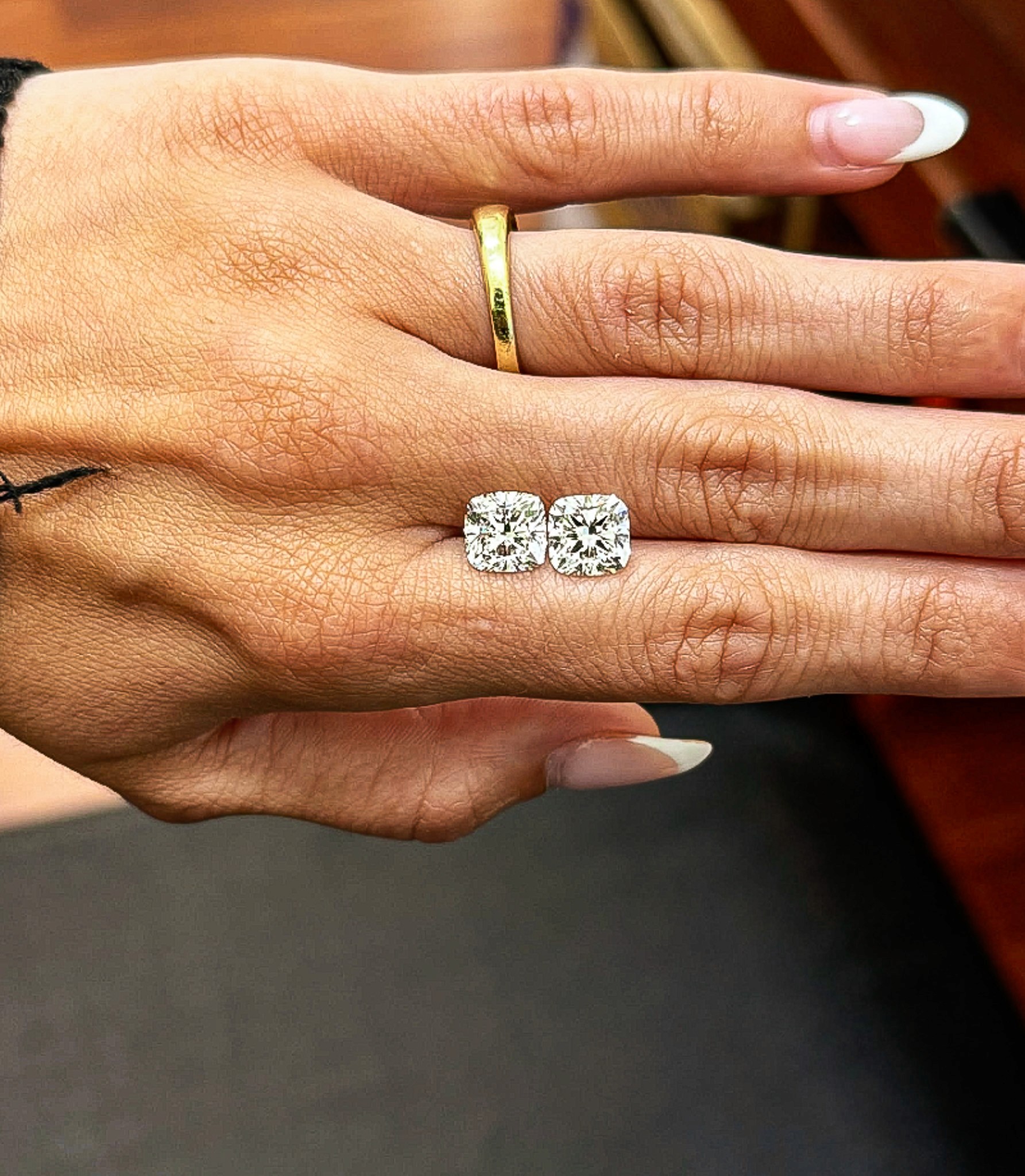
The cushion is a square or rectangle with soft, pillowed corners, hence the name. It gives you vintage warmth and a soft, glowing brilliance, the romantic middle ground between a sharp square and a round. It comes in both classic and elongated versions, and the elongated cushion is currently one of the hottest shapes going, because it keeps the romance while stretching for a larger, more flattering look.
Trillion: The Bold Triangle
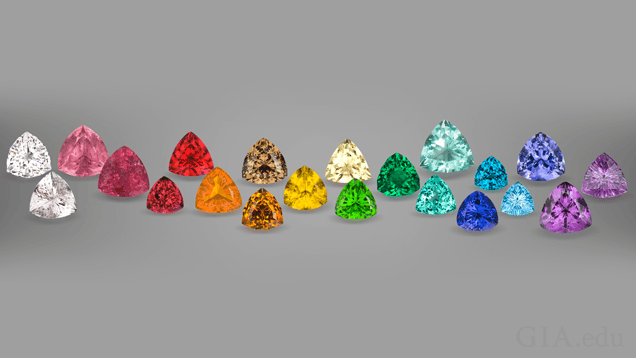
Photo: Robert Weldon, Courtesy of Roz & Gene Meieran Collection (GIA)
The trillion is a triangular brilliant cut, and it is one of the most striking shapes there is. As a centre stone it is bold and architectural, unmistakably modern. Just as often it plays a supporting role as a pair of side stones flanking a larger centre, where its clean lines add drama and width. It is not a shape for someone who wants to blend in, which is exactly why the people who choose it love it.
Marquise: Maximum Drama
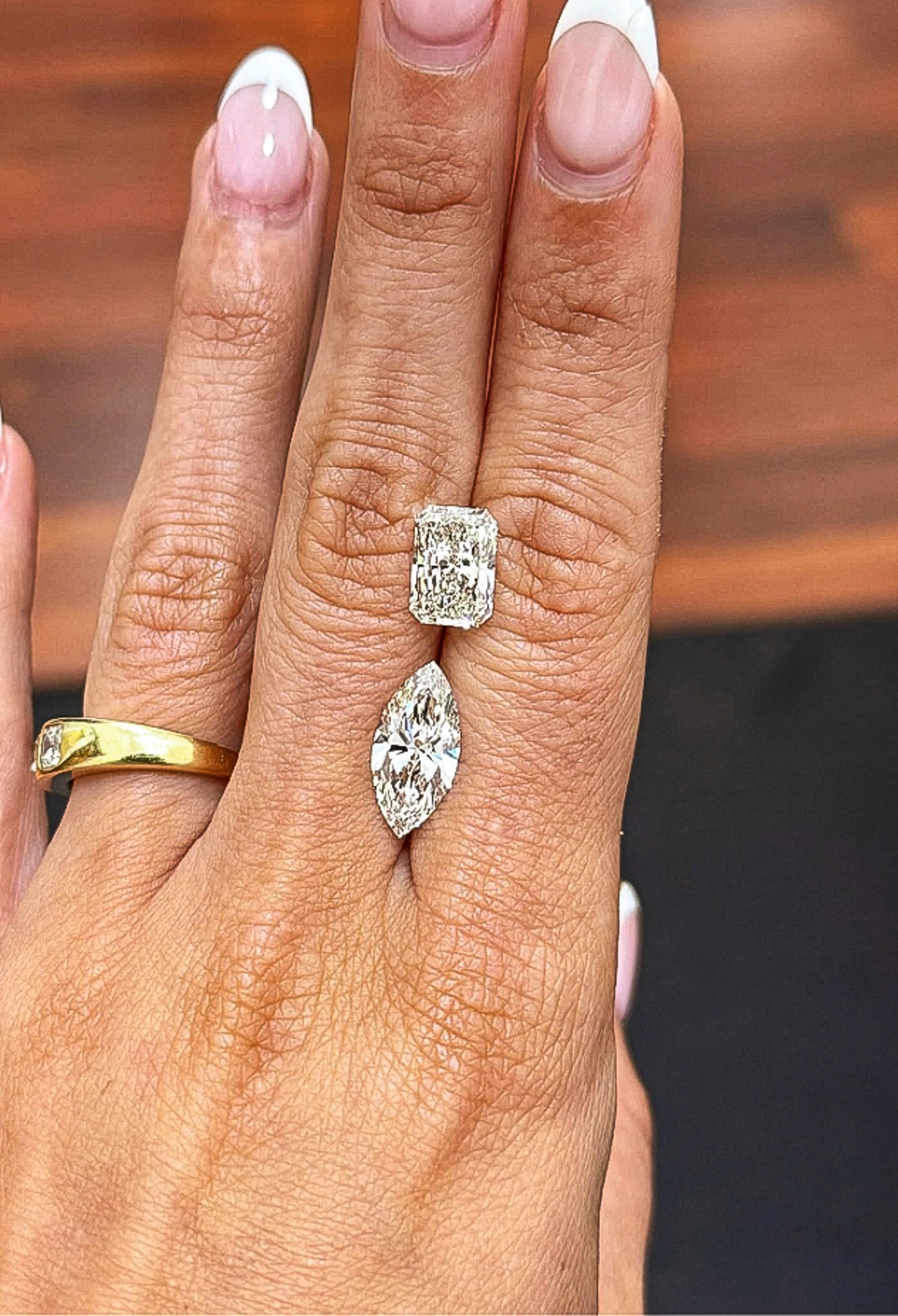
Pointed at both ends and curved in the middle, the marquise stretches the diamond’s footprint further than almost any other cut, so it looks large for its weight and elongates the finger beautifully. It is regal and dramatic, a real statement. Because it has points, it wants a setting that protects those tips, which is a simple thing to design in from the start.
Pear: The Modern Favorite
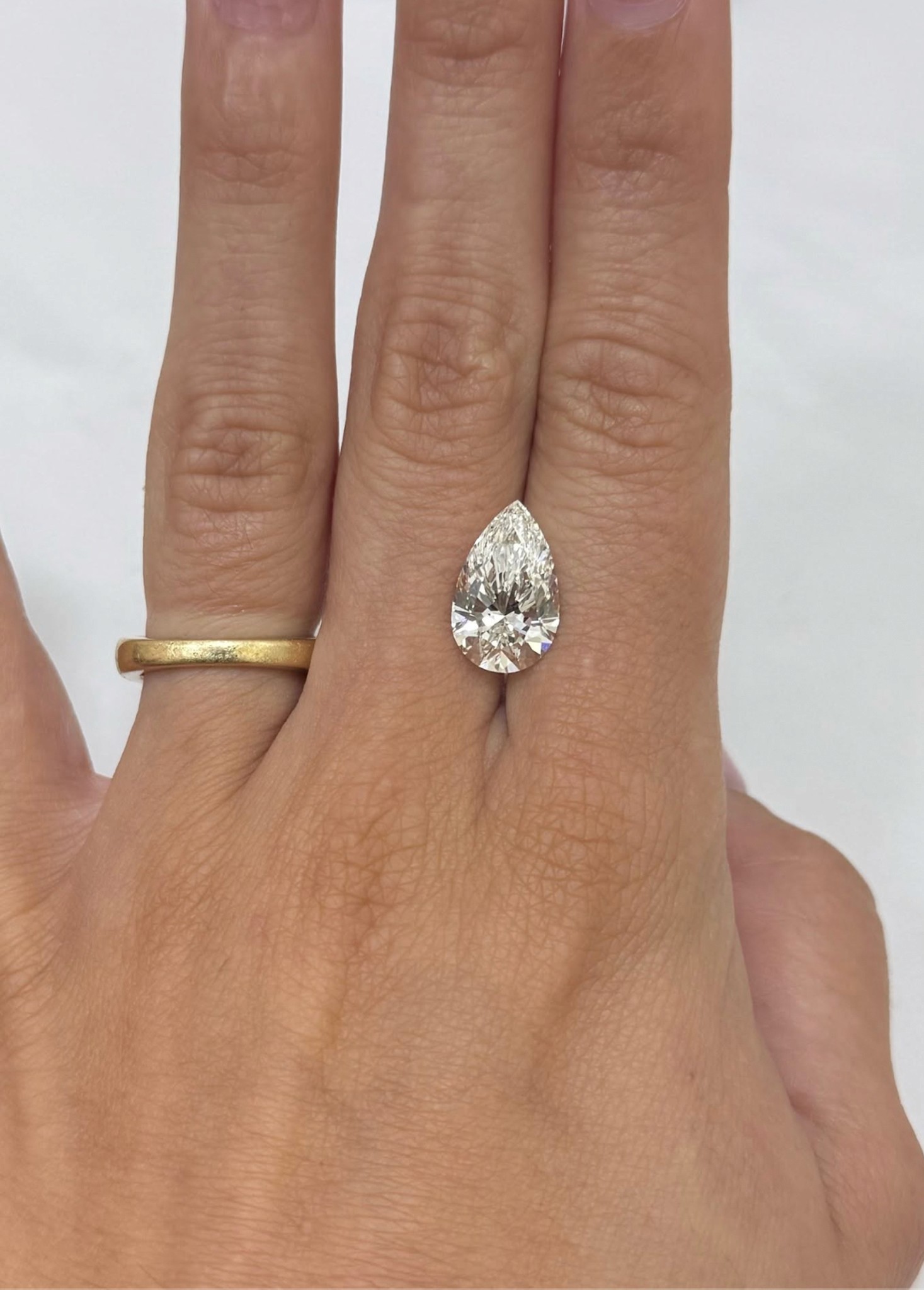
Half round, half marquise, the pear or teardrop tapers to a single point and is rising fast as the natural next step for people who love the oval but want something more distinctive. Worn with the point outward it elongates the finger and carries real presence for its carat. It is bold and directional without being difficult, which is a rare and lovely combination.
Princess: Beautiful, but Cooling Off
I will always be honest with you, and the princess is worth a fair word even as it fades. It is a square brilliant with sharp corners and lots of sparkle, and it was hugely popular for years. Right now buyer preference is drifting away from its sharp square silhouette toward the softer cushion and the brilliant radiant. It is still a beautiful, high-sparkle, good-value cut, so if you love it, love it. Just know you are choosing it for you, not for the trend.
Which Fancy Cuts Have Momentum
If you like to know where the wind is blowing before you choose, here is the honest direction of travel I am seeing in the market and at my own bench.
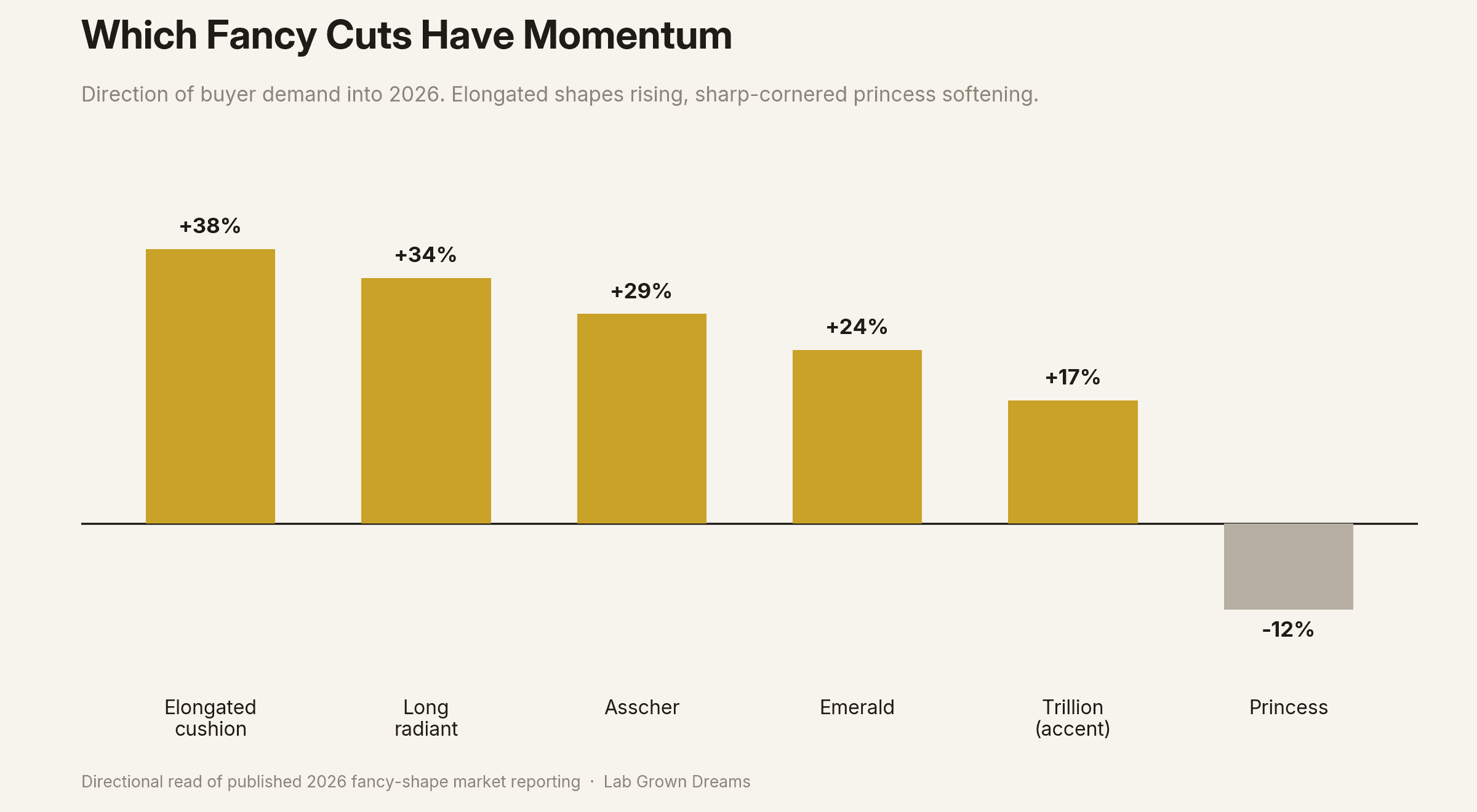
The clear story of 2026 is elongation and softness. Elongated cushion and long radiant are surging, asscher and emerald are riding a strong vintage revival, trillion is having a moment as both a centre and a side stone, and the sharp-cornered princess is the one cut genuinely cooling off. Buyers want visual size and softer geometry, and the shapes that deliver both are winning. If you want the full impartial background on how shape and faceting work, the GIA guide to diamond shapes is the neutral place to read more, and every stone I set carries a certificate you can verify yourself.
Why Fancy Cuts and Lab-Grown Are Made for Each Other
Here is the part that genuinely excites me as a cutter. Fancy cuts and lab-grown stones are a perfect match, for three real reasons.
First, value. Many fancy cuts already cost less than a round of the same weight, and lab-grown drops the price again, so you can afford a bigger, cleaner, more dramatic stone than you imagined. Second, clarity on demand. The step cuts, asscher and emerald, need good clarity to look their best, and lab-grown makes high clarity affordable, so those cuts look spectacular without a spectacular price. Third, freedom to be bold. When the stone costs a fraction of mined, choosing an unusual shape like a trillion or a marquise stops being a nervous, expensive gamble and becomes a fun, comfortable decision. Lab-grown is what makes experimenting with shape genuinely joyful.
We also cut the same fancy shapes in lab-grown colour, and radiant and cushion in particular make coloured stones sing, because their faceting concentrates and deepens the colour.
A Few Honest Pointers Before You Choose
Some plain advice from the bench for anyone shopping fancy.
See it in person or on real video, never just a spec sheet, because fancy cuts vary far more than rounds and the individual stone matters enormously. Match the shape to the setting early, since pointed cuts like marquise and pear want protective settings and step cuts pair best with clean geometric bands. And put clarity first for step cuts, sparkle-hiding faceting first for busy lives. This is exactly the kind of thing a proper design conversation sorts out, and here is what to bring to that first consultation so it goes smoothly.
Have Yours Made at the Source
The best thing about fancy cuts is that they are personal by nature, which makes them the most rewarding stones to have made into something custom rather than bought off a shelf. Whether you are drawn to the Art Deco calm of an asscher, the fire of a radiant, or the bold triangle of a trillion, the shape is only the beginning of a piece that is entirely yours.
Start your design online or message me on WhatsApp with the shape you are picturing, and I will show you real fancy cut stones so you can see the personality with your own eyes. Lab Grown Dreams, Silom Road, Bangkok, and worldwide by video.
Frequently Asked Questions
What is a fancy cut diamond? A fancy cut is any diamond shape other than a round brilliant. This includes emerald, asscher, radiant, cushion, pear, marquise, trillion, and more. The term describes the shape only and has nothing to do with quality or price.
What is the difference between a step cut and a brilliant cut? Step cuts, such as emerald and asscher, have long parallel facets that create a clear, mirror-like effect rather than sparkle. Brilliant cuts, such as radiant, cushion, and pear, have many small facets that maximise fire and sparkle. The faceting style defines the stone’s whole character.
Which fancy cut diamond is most popular in 2026? Elongated shapes are leading in 2026, with elongated cushion and long radiant rising fastest, alongside a strong vintage revival for asscher and emerald. The sharp-cornered princess cut is the main shape declining in popularity.
Are fancy cut lab-grown diamonds cheaper than round? Many fancy cuts cost less than a round diamond of the same carat weight, and choosing lab-grown reduces the price further. This lets buyers afford a larger or higher-clarity fancy cut stone than they could in a mined round.
What is an asscher cut diamond? An asscher cut is a square step cut diamond with cropped corners and a high crown, producing a distinctive Art Deco “hall of mirrors” effect. It is prized for vintage elegance and clean geometry, and because it is a step cut, it looks best with good clarity.
What is a trillion cut diamond used for? A trillion is a triangular brilliant cut. It is used both as a bold, modern centre stone and, very commonly, as matched side stones flanking a larger centre diamond, where its clean lines add width and drama.
Where can I buy fancy cut lab-grown diamonds in Bangkok? Lab Grown Dreams cuts and sells fancy cut lab-grown diamonds directly from the Jewelry Trade Center in Bangkok, including asscher, radiant, emerald, cushion, trillion, marquise, and pear, each certified and viewable in person or on video before purchase.
Keep reading: Oval vs Round Diamond: The Shape Race of 2026, Settled by a Cutter The 3 Carat Look for the Price of One East-West Engagement Rings: Why Everyone Turned Their Diamond Sideways Shop Certified Lab-Grown Diamonds